
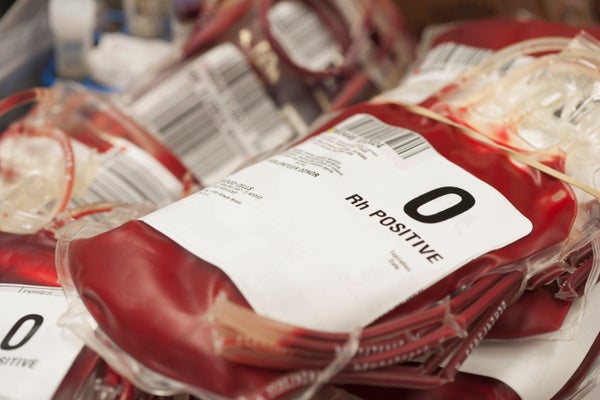
Scientists have converted the blood type of a donor kidney and transplanted the organ into a person. The procedure — the first of its kind — could improve access to donor organs, specialists say, because the blood type of the donor would no longer matter.
Currently, organs from deceased donors can be transplanted into people only if they have a compatible blood type. This is because the recipient’s immune system can produce antibodies to attack and destroy the donated organ if the donor and recipient have different antigens, which come in two types: A and B. Organs that are blood type O do not have A or B antigens, so anyone can receive them.
Researchers from Canada and China used an enzyme to remove type-A antigens from a donor kidney. The enzyme converts type-A blood into type-O, says study author Stephen Withers, a chemist at the University of British Columbia in Vancouver, Canada. The type-O kidney was then transplanted into a 68-year-old brain-dead man in Chongqing, China. The organ remained healthy for two days before showing signs of rejection. It produced urine for six days. The results are published in Nature Biomedical Engineering today.
On supporting science journalism
If you're enjoying this article, consider supporting our award-winning journalism by subscribing. By purchasing a subscription you are helping to ensure the future of impactful stories about the discoveries and ideas shaping our world today.
The enzyme was first identified in 2019 by some members of the same team. In 2022, they showed that a type-A lung could be converted into a type-O one, although the organ wasn’t transplanted into a person.
The results are groundbreaking, says Natasha Rogers, a transplant clinician at Westmead Hospital in Sydney, Australia. They could improve access to donor organs and reduce transplant wait lists. If the blood type of the organ was no longer a barrier for transplantation, physicians could focus on things such as matching other antigens unrelated to blood type, which are important in terms of how long a transplant will last, she adds
What’s next?
Living donors can give their organs to people with different blood types, but the recipient first has to undergo multiple treatments to lower their antibody levels, Rogers says. However, for deceased donors, there is not enough time for the recipient to undergo the treatments before the donor organ becomes unusable, she adds. The treatment also affects the recipient’s immune system, increasing the risk of infection.
Treating the donor organ instead of the recipient is a breakthrough, says Rogers. The study shows that a person could initially receive the same kind of immunosuppression given for transplants between people with matching blood types to reduce the risk of rejection. But more trials in brain-dead and trials in living people will be needed before the enzyme can be used routinely, she adds, including adjusting treatment for the organ or recipient to help the organ function for longer.
This article is reproduced with permission and was first published on October 3, 2025.