
Hurricane Ian slammed into southwest Florida as a Category 4 storm in September last year, killing 149 people — the most deaths attributable to a single hurricane in the state in nearly a century. But the official death count didn’t include one of the most gruesome ways people died as a result of the storm.
A study published this week found that Hurricane Ian led to a spike in cases of vibriosis, a life-threatening illness caused by a water-borne bacteria called Vibrio, in Florida. In Lee County, where Ian made landfall, 38 people were sickened by the bacteria and 11 people ultimately died in the month following the storm — the highest number of Vibrio cases in a single month in Florida in more than 30 years. There had been no reported cases of Vibrio in the state in the week leading up to the hurricane.
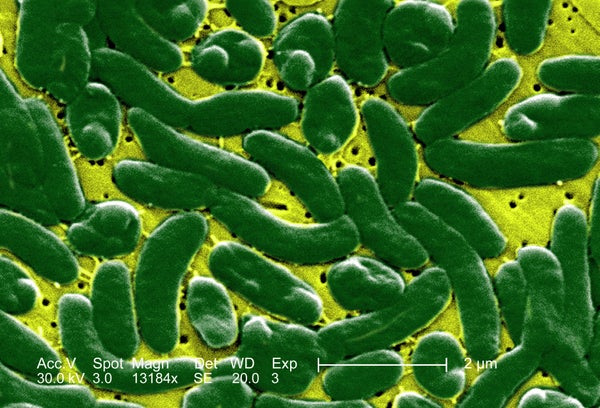
There are many species of Vibrio, including Vibrio cholerae — the cause of the diarrheal disease cholera, which kills tens of thousands of people per year in the Global South. Vibrio vulnificus, commonly referred to as “flesh-eating bacteria,” is less common globally but more deadly, and it’s becoming more pervasive in the U.S. Vibrio vulnificus kills an estimated 1 in 5 people who are exposed to it, usually either by eating uncooked shellfish or by making contact with the bacteria via an open wound. Three people died after consuming shellfish tainted by Vibrio vulnificus or otherwise being exposed to the bacteria in New York and Connecticut earlier this year.
On supporting science journalism
If you're enjoying this article, consider supporting our award-winning journalism by subscribing. By purchasing a subscription you are helping to ensure the future of impactful stories about the discoveries and ideas shaping our world today.
Past research has shown that warming ocean surface temperatures are leading to more Vibrio bacteria in the world’s oceans, particularly in the Atlantic, which is heating up at an alarming and unprecedented rate. A study published in Nature this year — the most comprehensive scientific assessment of how climate change is influencing the distribution of the bacteria to date — predicted that Vibrio vulnificus is likely to be present in every eastern U.S. state by the end of this century.
The study published this week, led by Rita Colwell, a microbiologist at the University of Maryland and one of the foremost Vibrio researchers in the nation, is among the first to make a direct link between a specific hurricane and a spike in cases of vibriosis. Colwell and her colleagues found that flooding brought on by Hurricane Ian caused millions of gallons of water to run into the ocean, carrying nutrients with it. The storm also stirred up sediment and warm water off the coast of Florida. The runoff, sediment, and high sea-surface temperatures triggered an explosion of Vibrio vulnificus and other types of Vibrio bacteria in the waters off the Florida coast, growth the researchers were able to document using satellite observations and shellfish samples from October 2022.
Gabriel Filippelli, a climate change researcher and director of Indiana University’s Environmental Resilience Institute, said he would have expected Hurricane Ian’s impacts to produce a “blip” in Vibrio abundance off Florida’s coast “and then a recovery back to baseline.” But that’s not what the study says happened. “It actually ramped up not only the abundance of Vibrio but some of the particular species that are problematic,” Filippelli, who was not involved in the research, said.
Colwell wasn’t surprised by her findings — the ocean water around Florida was abnormally warm last year and has continued to warm since. Her own prior research has shown that temperature anomalies lead to the growth of these harmful bacteria. Warm water also breeds stronger hurricanes, and adding a storm to conditions that already favored Vibrio had a predictable outcome. “We took samples and, sure enough, we found lots of Vibrio,” Colwell said.
The results, she said, signal that public health officials everywhere, but particularly in hurricane-prone states, need to be aware of the potential threat that Vibrio bacteria pose to their communities. Climate change continues to create conditions that are conducive to larger and more intense storms, which could mean more vibriosis in humans as time goes on.
Filippelli hopes this study and other research to come will help local governments limit injuries and death during and after big storms. With the right data, local public health departments would be able to warn communities about the potential for toxins in shellfish and waterways following a hurricane or extreme flooding event. “That’s kind of the point of doing a lot of this,” Filippelli said. “It’s not just watching the climatic horror show emerge but trying to get ahead of it.”
This story was originally published by Grist, a nonprofit media organization covering climate, justice, and solutions.