
CLIMATEWIRE | Congress’ oversight arm has issued an unprecedented warning about the risks facing federal disaster aid.
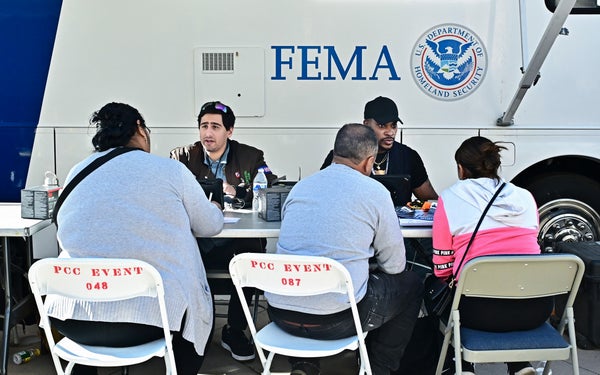
The Government Accountability Office said staffing levels and other workforce issues at the Federal Emergency Management Agency “has limited its capacity to provide effective disaster assistance." It added that FEMA “needs to strengthen its disaster workforce by addressing staffing gaps."
A staffing shortage that persisted from 2019 to 2022 “continues to grow” and left the agency with minimal staffing when Hurricane Milton hit Florida in October, days after Hurricane Helene deluged the state and large parts of the Southeast, GAO found.
On supporting science journalism
If you're enjoying this article, consider supporting our award-winning journalism by subscribing. By purchasing a subscription you are helping to ensure the future of impactful stories about the discoveries and ideas shaping our world today.
The warning coincides with President Donald Trump's threats to shutter FEMA, and it came two weeks after his administration fired at least 200 people from the agency.
The report marks the first time GAO put disaster aid on its annual "High-Risk List," which highlights areas of the federal government that are “seriously vulnerable” to waste, fraud and abuse or need transformation. In addition to FEMA's staffing problems, the report noted that “natural disasters have become costlier and more frequent.”
The GAO did not mention Trump or the FEMA firings that were carried out by his administration.
Trump, who has assailed FEMA’s response to flooding caused by Helene in western North Carolina, created a council to review whether the agency should be disbanded. It's led by Homeland Security Secretary Kristi Noem and Defense Secretary Pete Hegseth.
FEMA staffing is only one problem the GAO found with disaster response. Others include the fragmentation of federal disaster response across more than 30 entities and a complex process for individuals to get emergency help after a disaster.
“Survivors face numerous challenges receiving needed aid, including lengthy and complex application review processes,” the GAO said, echoing a concern that has been raised for years. “Reforming the federal government’s approach to disaster recovery and reducing fragmentation could improve service delivery to disaster survivors.”
Numerous federal entities provide disaster aid, including the departments of Housing and Urban Development, Transportation and the Small Business Administration.
The GAO urged Congress to create an independent commission “to recommend reforms to the federal government's approach to disaster recovery.” It also recommended that Congress strengthen HUD’s disaster program so the money can be distributed more quickly.
GAO’s latest High-Risk List includes 38 areas including the federal government’s flood insurance program and the potential cost to the federal government from climate change. Both areas have been on the list for years.
The White House and FEMA did not respond to requests for comment.
Reprinted from E&E News with permission from POLITICO, LLC. Copyright 2025. E&E News provides essential news for energy and environment professionals.