
Every time generative artificial intelligence drafts an e-mail or conjures up an image, the planet pays for it. Making two images can consume as much energy as charging a smartphone; a single exchange with ChatGPT can heat up a server so much that it requires a 16-ounce bottle’s worth of water to cool it. At scale, these costs soar. By 2027 the global AI sector could annually consume as much electricity as the Netherlands, according to one 2023 study. And recent research in Nature Computational Science identifies another concern: AI’s outsize contribution to the world’s mounting heap of electronic waste. The study found that generative AI applications alone could add 1.2 million to five million metric tons of this hazardous trash to the planet by 2030, depending on how quickly the industry grows.
Such a contribution would add to the tens of millions of tons of electronic products the globe discards annually. Cell phones, microwave ovens, computers, and other ubiquitous digital products often contain mercury, lead, or other toxic substances. When improperly discarded, they can contaminate air, water and soil. The United Nations found that in 2022 about 78 percent of the world’s e-waste wound up in landfills or at unofficial recycling sites, where laborers risk their health to scavenge rare metals.
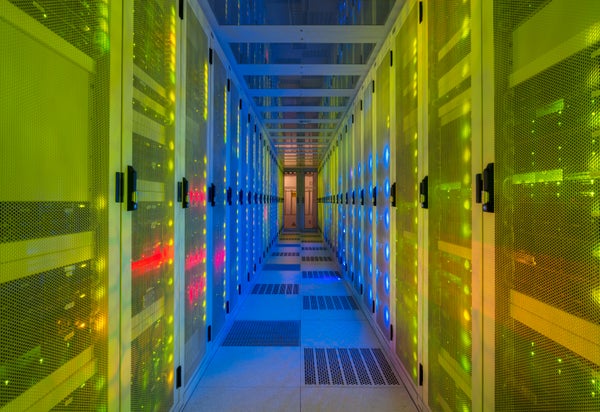
The worldwide AI boom rapidly churns through physical data-storage devices, plus the graphics-processing units and other high-performance components needed to process thousands of simultaneous calculations. This hardware lasts anywhere from two to five years, but it’s often replaced as soon as newer versions become available. Asaf Tzachor, a sustainability researcher at Israel’s Reichman University, who co-authored the new study, says its findings emphasize the need to monitor and reduce this technology’s environmental impacts.
On supporting science journalism
If you're enjoying this article, consider supporting our award-winning journalism by subscribing. By purchasing a subscription you are helping to ensure the future of impactful stories about the discoveries and ideas shaping our world today.
To calculate just how much generative AI contributes to this problem, Tzachor and his colleagues examined the type and volume of hardware used to run large language models, the length of time that these components last and the growth rate of the generative AI sector. The researchers caution that their prediction is a gross estimate that could change depending on a few additional factors. More people might adopt generative AI than the authors’ models anticipate, for example. Hardware design innovations, meanwhile, could reduce e-waste in a given AI system—but other technological advances can make systems cheaper and more accessible to the public, increasing the number in use.
This study’s main value comes from its attention to AI’s broad environmental impacts, says Shaolei Ren of the University of California, Riverside, who studies responsible AI and was not involved in the research. “We might want these [generative AI] companies to slow down a bit,” he says.
Few countries mandate the proper disposal of e-waste, and those that do often fail to enforce their existing laws on it. Twenty-five U.S. states have e-waste management policies, but there is no federal law that requires electronics recycling. In February 2024 Senator Ed Markey of Massachusetts introduced a bill that would require federal agencies to study and develop standards for AI’s environmental impacts, including e-waste. That bill, the Artificial Intelligence Environmental Impacts Act of 2024 (which has not passed in the Senate), proposes a reporting system, but it would be voluntary, and AI developers would not be forced to cooperate. Some companies, however, claim to be taking independent action. Microsoft and Google have pledged to reach net zero waste and net zero emissions, respectively, by 2030; achieving these aims would most likely involve reducing or recycling AI related e-waste.
Companies that use AI have numerous options to limit e-waste. It’s possible to squeeze more life out of servers, for instance, through regular maintenance and updates or by shifting worn-out devices to less intensive applications. Refurbishing and reusing obsolete hardware components can also cut waste by 42 percent, Tzachor and his co-authors note in the study. And more efficient chip and algorithm design could reduce generative AI’s demand for hardware and electricity. Combining all these strategies would reduce e-waste by 86 percent, the study authors estimate.
There’s another wrinkle as well: AI products tend to be trickier to recycle than standard electronics because the former often contain a lot of sensitive customer data, says Kees Baldé, an e-waste researcher at the U.N. Institute for Training and Research, who wasn’t involved with the study. But big tech companies can afford to both erase those data and properly dispose of their electronics, he points out. “Yes, it costs something,” Baldé says of broader e-waste recycling, “but the gains for society are much larger.”