
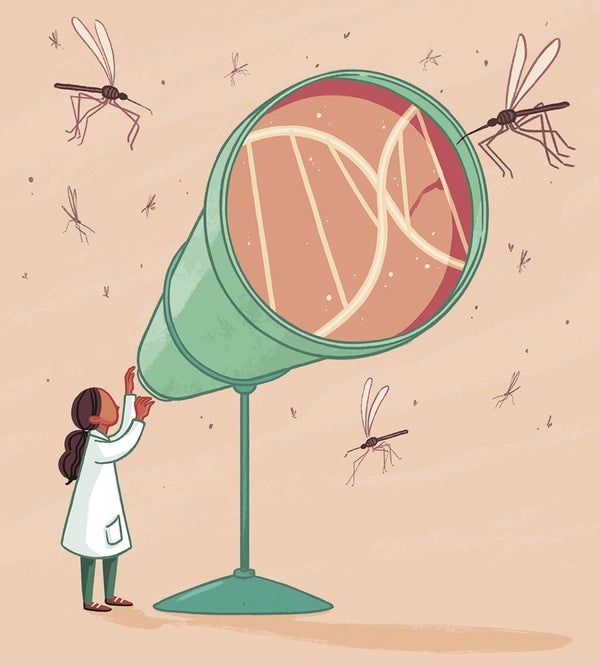
In 2018 the World Health Organization proposed a “10+1” initiative for malaria control and elimination that targets 10 African countries plus India, which together host 70 percent of global cases. Although this approach is promising, it is missing an important component: genomic surveillance. Drug resistance threatens all of the progress made so far against malaria, but genomic surveillance can detect resistance years before the first warning signs appear in clinics. It can answer critical questions about how resistance emerges and spreads and can help control the balance of interventions, preserve the useful life of already existing drugs and ensure effective treatment.
I call on the WHO, global health partners and the malaria community to incorporate mandatory genomic surveillance by making it a major intervention in countries that have the highest malaria burden. This genomic information can help malaria-control programs use quality data sets for regular monitoring of drug resistance, provide evidence-based decision-making around malaria policy and assist in managing the spread of resistance.
The countries most affected by malaria all had a first-line drug that ended up becoming resistant. In African countries, toward the end of the 20th century, chloroquine was the drug of choice, but malaria parasites grew resistant to it. That drug was then replaced with a combination of pyrimethamine and sulfadoxine in the early 2000s, and resistance again occurred. Now the parasites are becoming resistant to the current first-line artemisinin-based combination therapies (ACTs). Artemisinin resistance is conferred by the kelchl3 gene, which is located in the propeller region of chromosome 13.
On supporting science journalism
If you're enjoying this article, consider supporting our award-winning journalism by subscribing. By purchasing a subscription you are helping to ensure the future of impactful stories about the discoveries and ideas shaping our world today.
Although mutation in this gene has occurred in Southeast Asia and is spreading around the region, there are fears that it will also spread to Africa, as happened with the drugs before ACTs. The more drugs we use to treat malaria parasites, the more resistant they become as a result of selective pressure, which creates the preconditions for resistance. Because we know this biological response from the parasites is inevitable, we should put in place measures to track down these changes when they arise: doing so would help us prevent the spread of the disease, investigate emergence of resistance and subsequently preserve the efficacy of the current first-line antimalarial treatment.
With advances in genomic technology, scientists have been able to analyze malaria parasites from the patients carrying them and the mosquitoes transmitting them. Such analysis has become a source of relevant information for both drug and insecticide resistance. Research shows that genomic surveillance has helped us understand how different mosquito species arise and transmit malaria to humans, which in turn has led to a better targeting of interventions as vectorial capacity becomes better understood.
Such surveillance has enabled greater knowledge of changing transmission intensity and parasite gene flow, including drug-resistant genes, and has aided in quantifying the risks of importing malaria from a country that is burdened with the disease. But work using genomic surveillance as a tool has mostly transpired within the realm of research, with only a few examples of its application in the field where malaria burden remains high.
Genomic surveillance has been used in countries that have eliminated malaria to prevent its resurgence and in countries that are in a malaria-elimination phase. It should not be any different for the African countries that have the highest malaria burden. Lessons learned from poliomyelitis show that genomic surveillance played a huge role in controlling the infection. Public health officials have been able to use quality data to learn where this virus emerged from, map the transmission network and determine where to direct their vaccination efforts.
It is time for genomic surveillance to move from mainly academic research into the field where malaria deaths occur. I propose that the WHO should incorporate a new “tool kit” that includes malaria genomics in its eradication plans. Such a kit would provide valuable information that would make national programs fighting the disease, especially in the African countries included in the 10+1 initiative, far more effective. As with any public health crisis, the more we know, the better.