
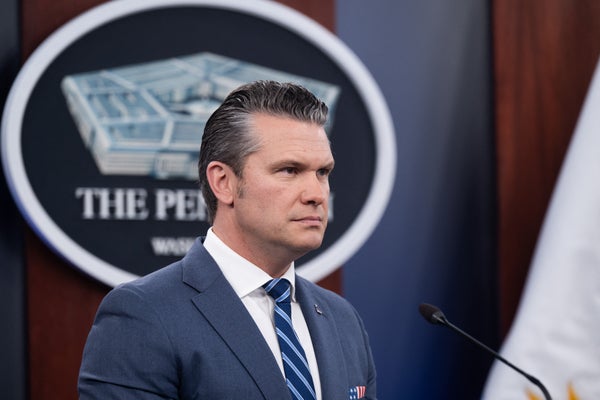
The U.S. military will no longer require service members to be vaccinated against the flu, Secretary of Defense Pete Hegseth said in a social media post on Tuesday, a decision that some health experts say could endanger troops.
“The War Department is once again restoring freedom to our Joint Force. We are discarding the mandatory flu vaccine requirement, effective immediately,” Hegseth wrote in the post.
The policy stands in contrast to the current recommendations of the U.S. Centers for Disease Control and Prevention (CDC), the country’s highest public health body, which says all Americans over the age of six months who do not have contraindications should get the annual flu shot. The CDC estimates that the vaccine saved some 12,000 lives and prevented about 180,000 hospitalizations during the 2024–2025 flu season.
On supporting science journalism
If you're enjoying this article, consider supporting our award-winning journalism by subscribing. By purchasing a subscription you are helping to ensure the future of impactful stories about the discoveries and ideas shaping our world today.
“Flu vaccines are the best tools we have to protect people from severe disease,” says Jennifer Nuzzo, a professor of epidemiology at Brown University. The vaccine might not always prevent the flu, but it effectively lowers the risk of hospitalization and severe disease, she explains.
It's also a matter of national security, experts say. “I can’t understand why you would make this decision if troop readiness was important,” says Michael Osterholm, director of the Center for Infectious Disease Research and Policy at the University of Minnesota. The data behind the flu vaccine are “clear and compelling” on both safety and the vaccine’s ability to reduce serious illness hospitalizations and deaths, he says. “The data have been repeatedly confirmed to show that across all ages.”
“This is an irresponsible decision that will undermine the medical readiness of our troops,” says Georges Benjamin, CEO of the American Public Health Association. “[Hegseth] clearly demonstrates his unfitness to command our nation’s military forces.”
“In the military, vaccination is not political theater. It is force protection. Troops live and work in close quarters, where influenza can spread quickly and sideline otherwise healthy service members,” Richard Ricciardi, a professor at the George Washington University School of Nursing, who served in the U.S. Army for more than three decades, told CNN.
Notably, some of the first reported U.S. cases of flu during the 1918 pandemic were in soldiers from Kansas who carried the virus with them into their camp, where it then is believed to have spread to the rest of the country and on to the rest of the world.
“If fewer military personnel are vaccinated against the flu, it would likely mean more troops getting sick during the flu season, which would compromise the battle readiness of our armed forces and increase the health care costs that the U.S. government pays,” Nuzzo says. “With an increasing number of global engagements that seems like a particularly shortsighted policy.”
Editor’s Note (4/21/26): This is a breaking news story and will be updated.