
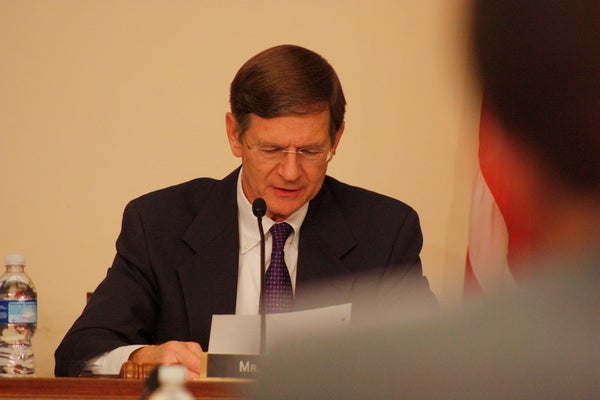
The House Science, Space and Technology Committee is scheduled to hold a hearing next week on “Making the Environmental Protection Agency Great Again.”
The hearing is likely to delve into the subject of the “Secret Science Reform Act,” pushing it another step closer to reality. Science Chairman Lamar Smith (R-Texas) has said it is one of his priorities this year.
The bill would require U.S. EPA to use only “transparent or reproducible” science to develop regulations and that such scientific data be posted online so that they can be scrutinized.
On supporting science journalism
If you're enjoying this article, consider supporting our award-winning journalism by subscribing. By purchasing a subscription you are helping to ensure the future of impactful stories about the discoveries and ideas shaping our world today.
The Science panel has scheduled a full committee hearing for 11 a.m. Feb. 7. The controversial science reform act has not yet been introduced but could be by that time.
Proponents argue that the legislation would simply make science transparent and allow for independent scrutiny to ensure science is not politically tainted before it influences policy. Democrats and scores of scientific organizations say the measure would have a crippling effect, since large-scale studies are not easy to reproduce and some industry or private data can’t be made public.
President Obama pledged to veto the bill if it ever passed both chambers, but it never advanced to the Senate floor for a full vote.
Witnesses for the majority will include energy attorney Jeff Holmstead of the Bracewell LLP firm; Jason Johnston, a professor at the University of Virginia School of Law; and Kimberly White, a senior director at the American Chemistry Council. The ACC has released public statements in support of the bill. Johnston has defended lawmakers who refuse to adapt climate policy and has called EPA’s Clean Power Plan a “cynical use of regulatory power.”
Witnesses for the Democratic minority include Rush Holt, CEO of the American Association for the Advancement of Science. AAAS has cautioned that the bill would have a chilling effect on science.
Reprinted from Climatewire with permission from E&E News. E&E provides daily coverage of essential energy and environmental news at www.eenews.net.