
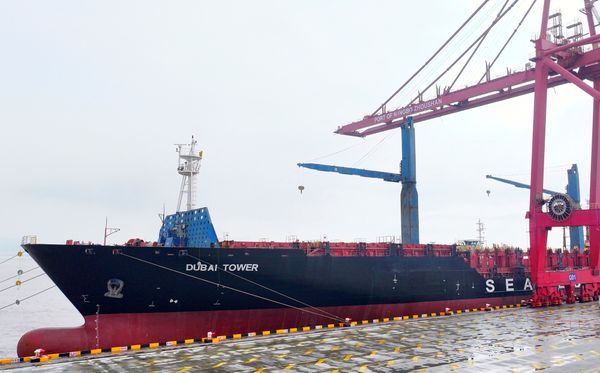
A warming climate and a dearth of summer sea ice have opened the Arctic to cargo shipping—a reality that seemed impossible just decades ago.
Some countries believe the Arctic route could provide an alternative for international traders seeking to avoid the conflict-stricken Red Sea and Strait of Hormuz.
Already, one Chinese company has started container ship voyages during the summer on the Northern Sea Route, which runs along the northern coast of Russia to Europe via the North Sea. China especially views the route as an “Ice Silk Road” that avoids Middle East trouble spots.
On supporting science journalism
If you're enjoying this article, consider supporting our award-winning journalism by subscribing. By purchasing a subscription you are helping to ensure the future of impactful stories about the discoveries and ideas shaping our world today.
The decision to try the Northern Sea Route is also, at least in part, practical: The subpolar route is shorter than the standard one—so the trip takes about 20 days compared with around 40. And it may be cheaper for Asian exporters than the regular path. The latter goes through the Strait of Malacca, which connects the Indo-Pacific with the Indian Ocean, and the Bab al-Mandab Strait, which connects the Red Sea to the Indian Ocean via the Gulf of Aden.
“The Arctic shipping routes offer an alternative trade corridor with the potential to overcome the Malacca Dilemma—China’s lack of control over strategic shipping lanes,” says Arctic shipping analyst Malte Humpert, who founded the nonprofit Artic Institute in Washington, D.C.
The move is also seen as a sign of growing economic cooperation between Russia and China, he adds. China uses the Northern Sea Route to deliver cargo to Europe, and Russia uses it to deliver oil to Asia. The conflicts in the Middle East make it more attractive. “The situation around Hormuz and the Red Sea has encouraged some niche container operators to give the [Northern Sea Route] a try,” Humpert says.
None of this would be possible without climate change. According to the National Snow and Ice Data Center (NSIDC), a National Oceanic and Atmospheric Administration–funded research group, 17 summers with the lowest sea-ice cover on record have occurred in the past 20 years. NASA data, meanwhile, show the Arctic sea-ice extent is shrinking by about 12 percent every decade.
The shrinking ice cover will “absolutely” result in increased shipping along the Northern Sea Route during the summer months, says Anastasios Leonburg, a marine risk consultant for the insurer Allianz Commercial and a former merchant ship captain. “The implication for shipping is more accessible routes and more navigable seasons,” he says.
Expanding Arctic shipping is also triggering environmental concerns. Campaigners worry it will result in more black carbon emissions from shipping fuel that could cause the sea ice to melt more quickly. For this reason, the use of heavy fuel oil—a cheap, high-energy, tarlike material that is left over from refining crude oil—has been banned in the Arctic by the International Maritime Organization since 2024, but loopholes still exist.
The Oslo-based environmental watchdog Bellona Foundation analyzed a journey on the Northern Sea Route last year by a large Chinese cargo ship named Istanbul Bridge. The group’s analysis found the ship may not have been built to properly withstand ice along the route—exposing it to potential accidents—and that it may have used heavy fuel oil.
Given geopolitical tensions, new international agreements to govern Arctic shipping seem unlikely. Russia alone sets regulations for the Northern Sea Route—and environmentalists fear that, without enforcement, efforts to open the region to global shipping risk destroying the fragile ecosystem that made the shortcut available in the first place.