NONFICTION
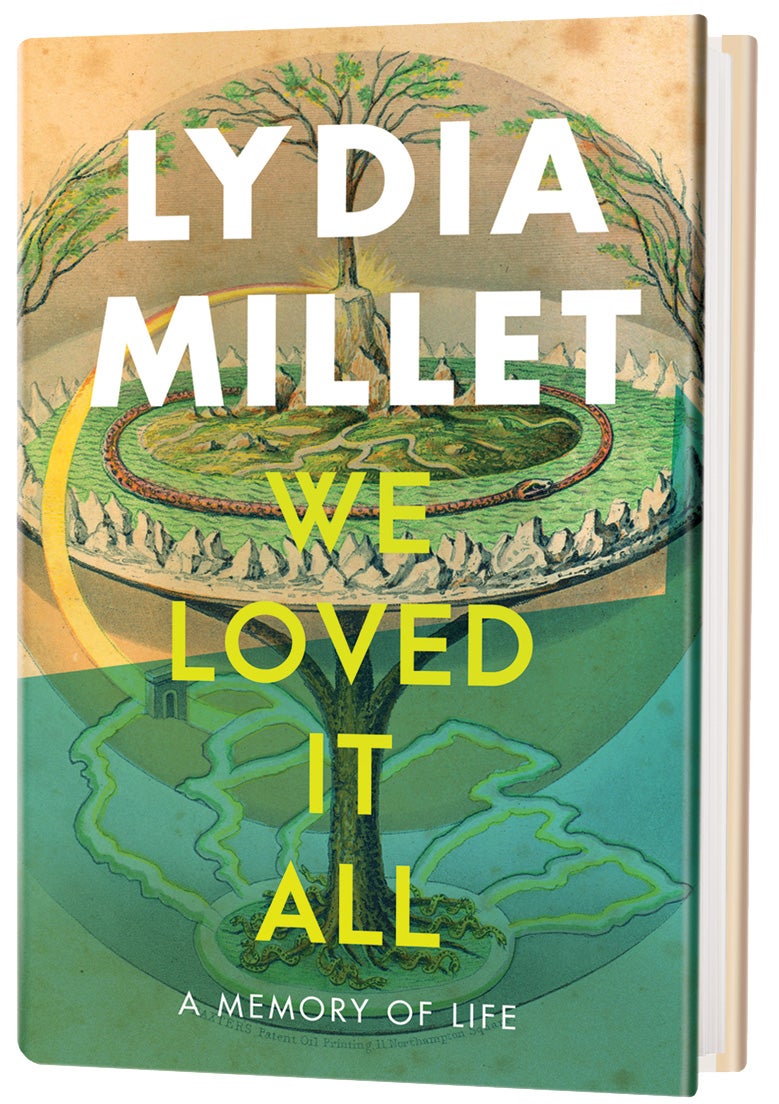
We Loved It All: A Memory of Life
by Lydia Millet.
W.W. Norton, 2024 ($27.99)
“In the beginning,” Lydia Millet writes at the start of her latest book, “we gave names to every creature that we found ... home was a garden, then—a garden in the wild.” This opening casts a moving spell that remains with the reader through three sections of potent vignettes that blend personal stories, ecology and history. Terry Tempest Williams called it a “transformative anti-memoir,” a fitting description for a book about loss on a scale we can hardly fathom—grief for an Eden we glimpsed and ruined, at great cost to ourselves and other species.
On supporting science journalism
If you're enjoying this article, consider supporting our award-winning journalism by subscribing. By purchasing a subscription you are helping to ensure the future of impactful stories about the discoveries and ideas shaping our world today.
In 2012 Millet published an op-ed in the New York Times about the toys we play with as children and what will happen when human activity causes the extinction of our “youthful menagerie” of polar bears, elephants and tigers. The op-ed feels like a precursor to We Loved It All—where does the childhood love of nature go? How do we go on to tolerate the impoverishment of existence as nature degrades in front of our eyes and species are lost? Can culture and selfhood reshape themselves in the absence of all this beauty?
Millet’s philosophical and eulogistic tone echoes the past tense of the title. “Our old home is gone,” she writes, before making a case for remembering and honoring the co-evolution of the human animal and other species. She urges respect for the staggering interconnectedness of existence. Millet—writing with all the narrative talent of a Pulitzer Prize–nominated novelist—suggests we are in many ways already haunted by the sins of attempting to sever this connection, even if we preserve the remaining wonders.
In an era of literature where it has become fashionable to make climate change a plot point, it is refreshing to read a book that is both emphatically beautiful at the line level and deeply insightful at an ecological level. Millet has spent decades immersed in environmental work with the Center for Biological Diversity in Arizona. We benefit from her experiences: anecdotes about heat-stricken flying foxes, passenger pigeons, ibex, pit ponies and predacious snails ground the work in earthly, high-stakes reality.
To explore daunting and existential questions about the “extraordinary experience of being, even within a so-called ordinary life,” this anti-memoir does get deeply personal. We hear tales about Millet’s emotionally restrained father on his deathbed, her ex-husband rescuing people injured in an explosion, her life as a parent, her grandfather abroad among prolific huntsmen, and her work experiences copyediting for Hustler magazine. These stories remind us of our own awe, suffering and generational complicity in the destruction of the natural world—the frogs we have stepped on, the atrocities we’ve witnessed, the resources we’ve used.
Millet enters her most profound terrain when questioning human exceptionalism, which she likens to a troubling form of supremacy. She notes the heresy of evoking anthropomorphism and imagining the minds of plants—and our likely underappreciation of animal cognition and intelligence: “What do the others know that we never will? What do they see, hear, and feel that we never have?” In broaching the question of rights for nonhuman animals she asks who or what deserves a life without suffering.
We Loved It All maintains a concern with language and story throughout. “Language was made of animals. As was art,” Millet writes, reflecting on the animal-shaped glyphs that later became human language. She writes movingly of the new terms we have invented to capture the nuances of the Anthropocene—such as “endling” (the last of a species) and “species loneliness.” In doing so, she also seems to question the idea of literacy—not just in its conventional literary sense but with respect to scientific and cultural literacy. Our species may lack the ability to recognize the magnitude of what human action has done to the planet and to reckon with the consequences.
The next step is questioning the stories—and even lies—we have told ourselves to justify human behavior and its gruesome impact on other species, namely, “our monomythic story of progress and triumph—the superstory that captures us all.” Millet believes we ultimately will find ourselves “surprised into speechlessness, standing among the ruins. Led into a dead end by a story that proved untrue.”
These are, obviously, not tales of easy wonder. Yet We Loved It All is run through with wonder, even when it’s painful. Millet’s beautiful prose helps us face, and process, the gut-twisting experience of watching human error unfold.