
Whenever I get coffee with a mathematician, I always ask which of the seven Millennium Problems they think will be next to fall. These are math’s most famous open questions. Solve one, and you’ll win a $1-million prize—but it’s only happened once since the Clay Mathematics Institute announced the list in 2000.
Mathematicians often use the Millennium Problems as a kind of yardstick, lending prestige to their own work by counting how many degrees separate it from a million-dollar payout. I think of them as a way to sense movement in a discipline where breakthroughs often take decades to unfold.
And I’ve recently begun hearing a totally new answer to my query on which will fall first. Lately mathematicians have been flagging one of the seven problems which experts previously told me was centuries beyond their grasp. It concerns mathematicians’ attempts to understand something far more familiar than imaginary numbers or string theory: the perplexing movements of fluids.
On supporting science journalism
If you're enjoying this article, consider supporting our award-winning journalism by subscribing. By purchasing a subscription you are helping to ensure the future of impactful stories about the discoveries and ideas shaping our world today.
We’ve all been enthralled by a crashing wave or cascading waterfall. These intricate flows bely deep mathematical challenges—the ones that keep us from comprehending exactly how planes fly or from perfectly predicting next week’s weather. Mathematicians have been wrestling with the equations that rule over these flows for centuries. All the while, a single basic question about these equations has eluded them, despite the addition of a million-dollar bounty.
A sustained run of recent breakthroughs, however—some trumpeted for their use of artificial intelligence—has now convinced some prominent mathematicians that victory is close at hand. Meanwhile, others still question how far the AIs can carry us—and whether a deeper, more worldly understanding might be the more viable path.
A Timeless Trance
Say you want to mathematically capture the flow of a river. As a starting point, you’d need a perfect snapshot of the river at a single point in time, down to the position and velocity of every last droplet. Then well-known conservation laws—of energy, of momentum—would govern what happens to the fluid next. Drop a rubber duck into that roiling flow, and the laws should determine every move it makes, whether for the next 20 minutes or 20,000 years.
These laws, applied to water or any other “incompressible” fluid, take the form of four equations: the three-dimensional Navier-Stokes equations. Literally every possible way for a fluid to swirl, from a tranquil sea to a roaring tsunami, is its own distinct solution to these equations.
It’s this limitless menagerie of flows concealed within the simple-looking equations that confound mathematicians. They want to be sure the Navier-Stokes equations are mathematically sound—that they always make sense, never failing to describe reality. They want to rule out that within that vast menagerie, rare monstrosities lurk.
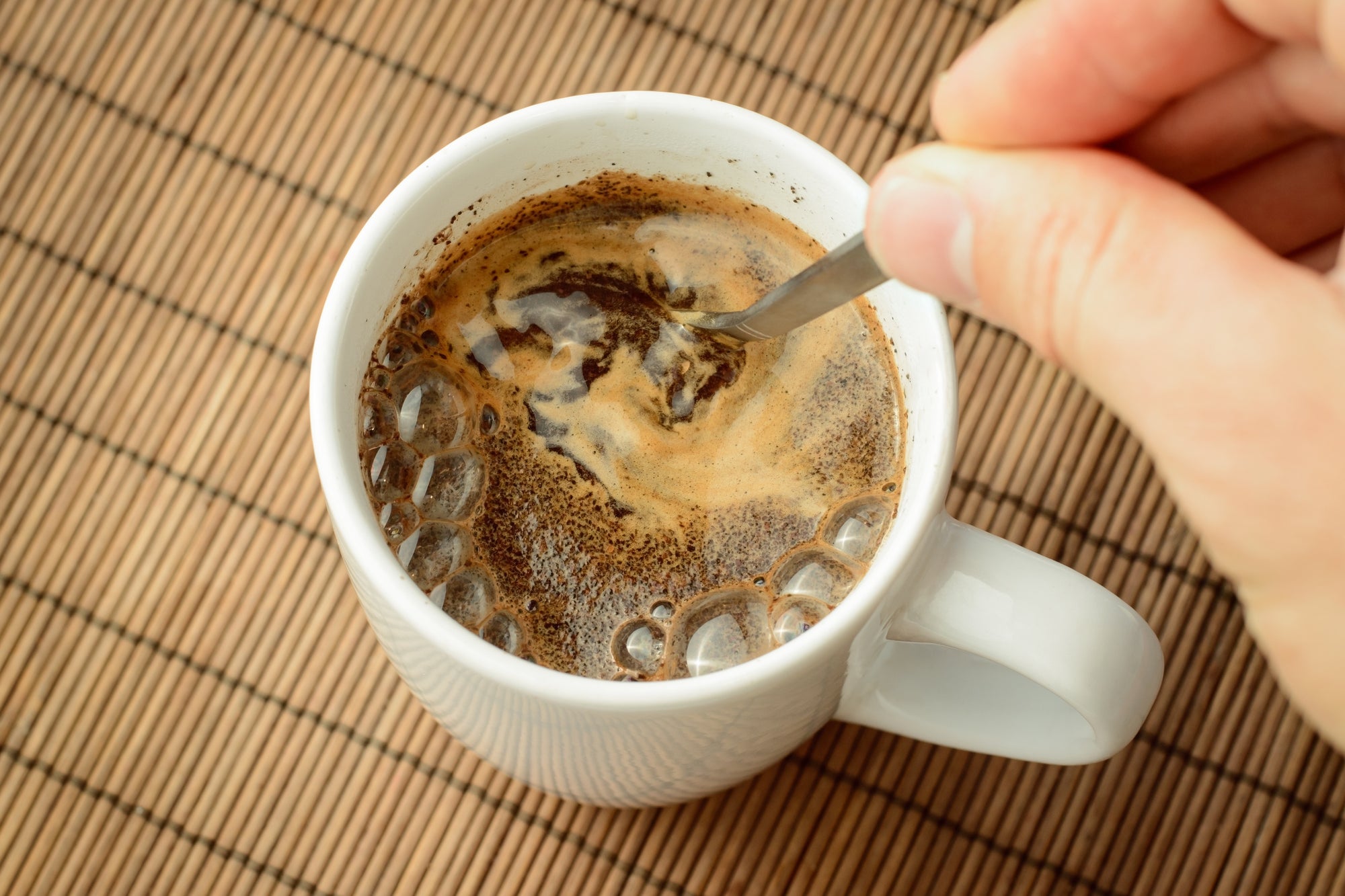
Mathematicians call these hypothetical flows “blowups”: solutions to the Navier-Stokes equations where the fluid’s speed becomes infinite. If a whirlpool or streamline can intensify beyond math’s breaking point—the equivalent of a tiny tornado suddenly swirling through your coffee—then the equations can’t be fully trusted.
iStock/Getty Images
The Millennium Problem asks whether the Navier-Stokes equations can “blow up” in this way. Whether, starting from simple laws of physics, you can construct strange fluids that would tear reality apart. Now, after a quarter-century trickle of progress on the problem, some say it’s on the verge of cresting into a flood.
The new advances start by removing friction from the equation. Friction is essential to fluids—it’s what gives them “viscosity,” which is, among other things, how fish are able to swim, using the water’s friction to thrust themselves forward. But viscosity—this feedback between the motion and the medium—also makes a fluid’s math especially hard to tame.
So mathematicians hope the easiest way to find a blowup in the Navier-Stokes equations is to first find it in their frictionless cousins, the Euler equations. “The natural path to Navier-Stokes would be to go through Euler,” says Javier Gómez-Serrano, a mathematician at Brown University.
In 2022 this approach worked for a variant of the Millennium Problem pertaining to compressible fluids, such as air—the feat landed mathematician Frank Merle this year’s illustrious Breakthrough Prize in Mathematics.
But incompressible fluids such as water bring extra complications. A person diving into one end of a swimming pool will raise the level of a floating buoy at the other. Everything affects everything else, making the math much harder. So many theorists have turned toward machines to hunt for a blowup in the sprawling landscape of possibilities.
Glimpses of Infinity
Last September a group of mathematicians including Gómez-Serrano reported in a preprint that they had seen glimpses of infinities on their computer screens. They were simulating a frictionless fluid trapped within a cylinder, like coffee swirling in a cup. And the AI they were working with—built in collaboration with Google’s DeepMind team—located a point near the cup’s edge where the fluid’s speed appeared infinite.
“I want to discover a blowup. I don’t care whether it’s with or without AI,” Gómez-Serrano said during a colloquium at Columbia University in March. “This is a tool that allowed me to go farther, so I used it.”
It might take years for the team to mathematically prove that the purported blowup really obeys the Euler equations. And the Clay problem demands blowup in an infinite fluid—less a cup of coffee, more a boundless sea. Yet the result suggested that computer-assisted sifting might someday crack the Euler equations—and, perhaps, Navier-Stokes.
The AI in question has little in common with the large language models now disrupting practically every sector of society. But that hasn’t stopped some experts from citing the development as an omen that computers are coming to claim Navier-Stokes first and all of math’s other open problems next, leaving an uncertain role at the field’s frontier for human minds.
In February, though, three mathematicians showed in another preprint that this AI revolution may actually be nowhere near blowing up Navier-Stokes. The DeepMind computer, like other simulations, assumes the fluid spins around a central axis. Many mathematicians agree that a blowup can have this “axial symmetry,” and it’s what simplifies their simulations enough for modern computers to handle. But the new proof showed that practically any blowup of the Euler equations that has this symmetry won’t carry over to Navier-Stokes. Adding back the friction would make such an infinity finite. Your coffee’s viscosity will keep this particular tiny tornado from ever erupting.
“It doesn’t look promising,” says Vlad Vicol, a mathematician at New York University, who co-authored the preprint. “For axial symmetry, it would really require a miracle.” Merle agrees. “The paper shows that the method, as it stands, does not work,” he says.
Still, if the DeepMind team finds a blowup of the Euler equations for an infinite fluid, it would be “an incredible achievement,” Vicol emphasizes. “And I think that maybe this is actually within the reach of this program,” he says. “Our paper basically says that just because you understood the Euler equations, you don’t get the Navier-Stokes equations for free.”
But if blowup is possible for the Navier-Stokes equations, the proof implies, it might arise from the intricate feedback between viscosity and flow. “It has to be some kind of interplay,” Vicol says. “That’s what we’re seeing.”
To get at that interplay, mathematicians would need to eschew the simplifying tricks that computers require. In fact, surfacing a blowup from the mathematical depths might demand an innate feeling for how the equations should come together—that is, an understanding of fluids too squishy to embed in any current AI’s vast assemblage of numbers.
Riding the Wave
Steve Shkoller has been developing this ineffable sense for the sea since he was five years old, growing up in San Diego.
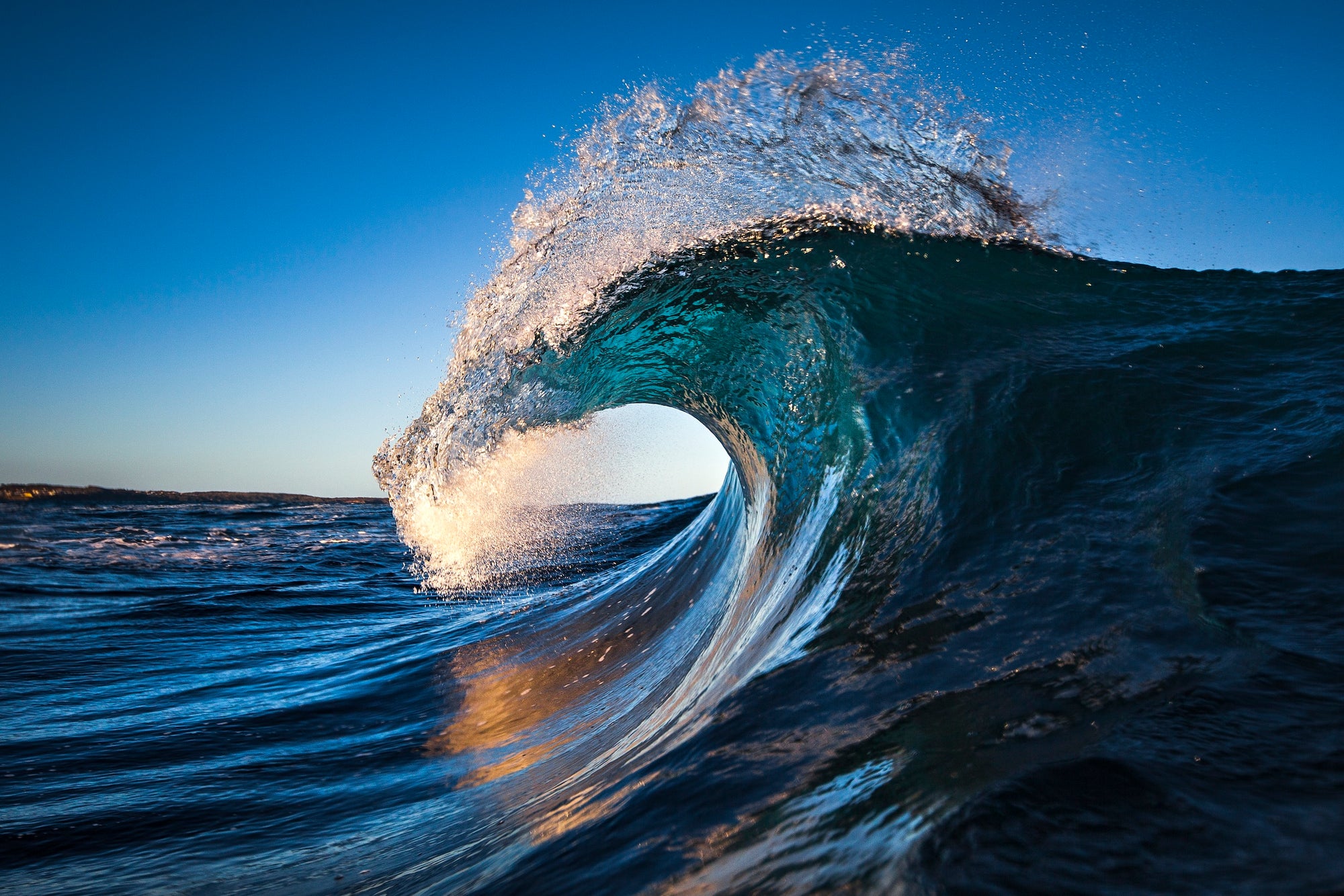
“When you surf from when you’re young, the ocean gives you this feel for motion that the equations alone do not,” he says. Shkoller is now a math professor at the University of California, Davis, but still spends at least two hours a day on the ocean near his home in Marin County. It’s where he does his best thinking. “You have a sense of timing, geometry, position—you kind of feel like the wave is a living thing,” he says. “And you just get these ideas.”
Philip Thurston/Getty Images
When a muscle tear last fall immobilized him for the better part of a year, both of his twin loves—surfing and mathematics—suddenly felt out of reach. One day in October, convalescing on his couch, he closed his eyes and strained to imagine himself back on the water. “I was trying to feel the energy. And then, simultaneously, I was thinking about math.”
As he “mind-surfed” on a gargantuan wave, he began to imagine it as a feature with infinite velocity—a shifting, life-sized picture of blowup. And seeing it, he decided that the AI folks and others like them were missing the point.
Many of the recent, computer-driven Euler breakthroughs pictured blowup as a somewhat static feature—what’s called a “self-similar” shape. Imagine a freeze-frame of a great wave in which no matter how much you zoom in on its crest, you see the same form of curling tip.
There’s good reason to guess that blowups would be self-similar. Despite fluids’ chaotic math, near-identical whorls and gyres tend to emerge at almost every scale. Time and again, mathematicians have uncovered features in fluids that have this astonishing symmetry and exploited it to make the math manageable. Many of them therefore assumed blowups would be no different. But in doing so, the researchers gave up what Shkoller viewed as the essence of fluids: change.
An ocean wave might look from afar like a single cohesive form. But no drop of water actually ventures far from its starting point—the wave’s aqueous contents turn over every moment. Maybe this change wasn’t an obstacle to be ignored, Shkoller mused. Maybe it was the key ingredient, the very origin of the blowup everyone sought.
He grabbed his iPad and began to turn this suspicion into math.
Over the next week, he laid on his back for 12 hours a day with the tablet held aloft, scribbling equations and sketches to construct a simplified picture of a blowup drawn from the depths of his intuition. “The first three days, I was so excited, I couldn’t even sleep,” he says.
His “wave,” the shape of his infinite-velocity fluid feature, wasn’t self-similar or static. “You’re making a movie rather than one frame of the film,” Shkoller says. Moreover, he derived his blowup from the constant turnover of fluid entering and exiting the “wave”: “Imagine every frame of the movie, you bring in an entirely new cast.” Then he proved that a blowup of the true Euler equations could precisely follow his mathematical sketch.
In March, Shkoller posted a hefty proof to the preprint server arXiv.org. It’s more than 100 pages long and filled with dense mathematics, so it will likely take the community many months to verify it. But initial takes are promising. “No one thought it would be possible to really prove this,” says Scott Armstrong, a mathematician at New York University. “Steve appears to have done it.”
Although the proof doesn’t rely on a boundary like the DeepMind work does, it uses other shortcuts that the Millennium Problem won’t allow. And even without them, Vicol’s admonition still applies; adding friction to the mix is likely to kill Shkoller’s blowup, too, so that it won’t carry over to Navier-Stokes.
But his key insight, Shkoller believes, will carry over, because it taps into a deep truth that he has felt firsthand throughout his life.
“You’re in an environment that’s constantly changing. Every wave is different,” he says—much like the insights that wash over him as he floats on his surfboard, staring at the sea. “They just kind of hit you—like, why didn’t I think of this before?”