
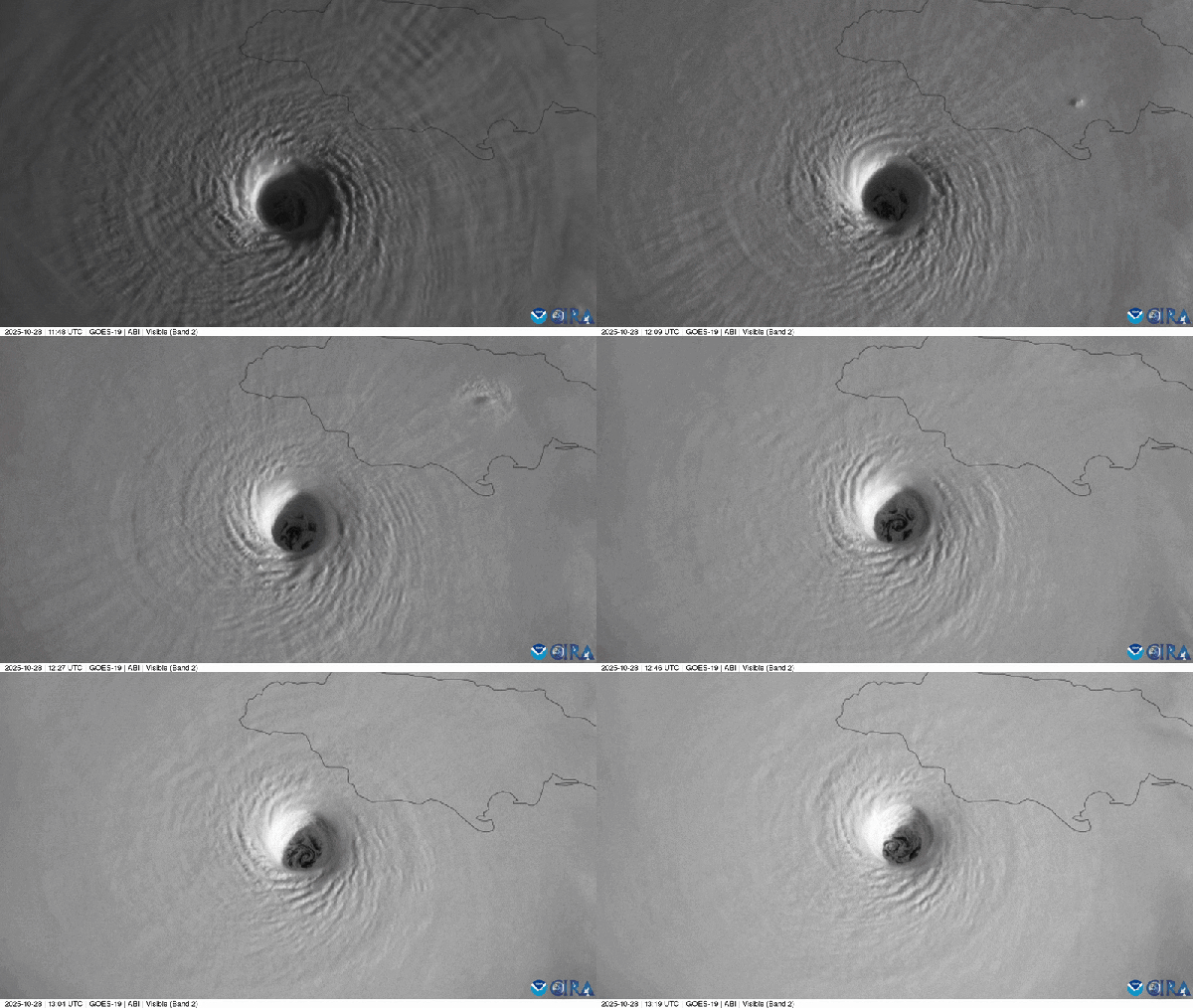
Hurricane Melissa was already one of the most powerful hurricanes ever recorded in the Atlantic Ocean—and now scientists have confirmed a new way it neared superlative status.
Newly released data show that Hurricane Melissa produced a wind gust of 252 miles per hour—just 1 mph shy of the fastest wind gust ever measured on Earth, according to the World Meteorological Organization, and 4 mph faster than the most powerful gust ever measured in a tropical cyclone at sea.
The previous record-holding storm, 2010’s Typhoon Megi, was located in the Pacific Ocean, where warmer waters typically permit the most powerful tropical cyclones to grow a little stronger than those in the Atlantic Ocean. “It’s actually quite amazing to see a sounding that breaks that record,” says Holger Vömel, an atmospheric scientist at the National Center for Atmospheric Research in Boulder, Colo., who worked with National Oceanic and Atmospheric Administration meteorologists to verify the measurement was not the result of an instrument error.
On supporting science journalism
If you're enjoying this article, consider supporting our award-winning journalism by subscribing. By purchasing a subscription you are helping to ensure the future of impactful stories about the discoveries and ideas shaping our world today.
LISTEN: Hurricane Melissa Was One of the Strongest Atlantic Storms Ever. Here’s Why
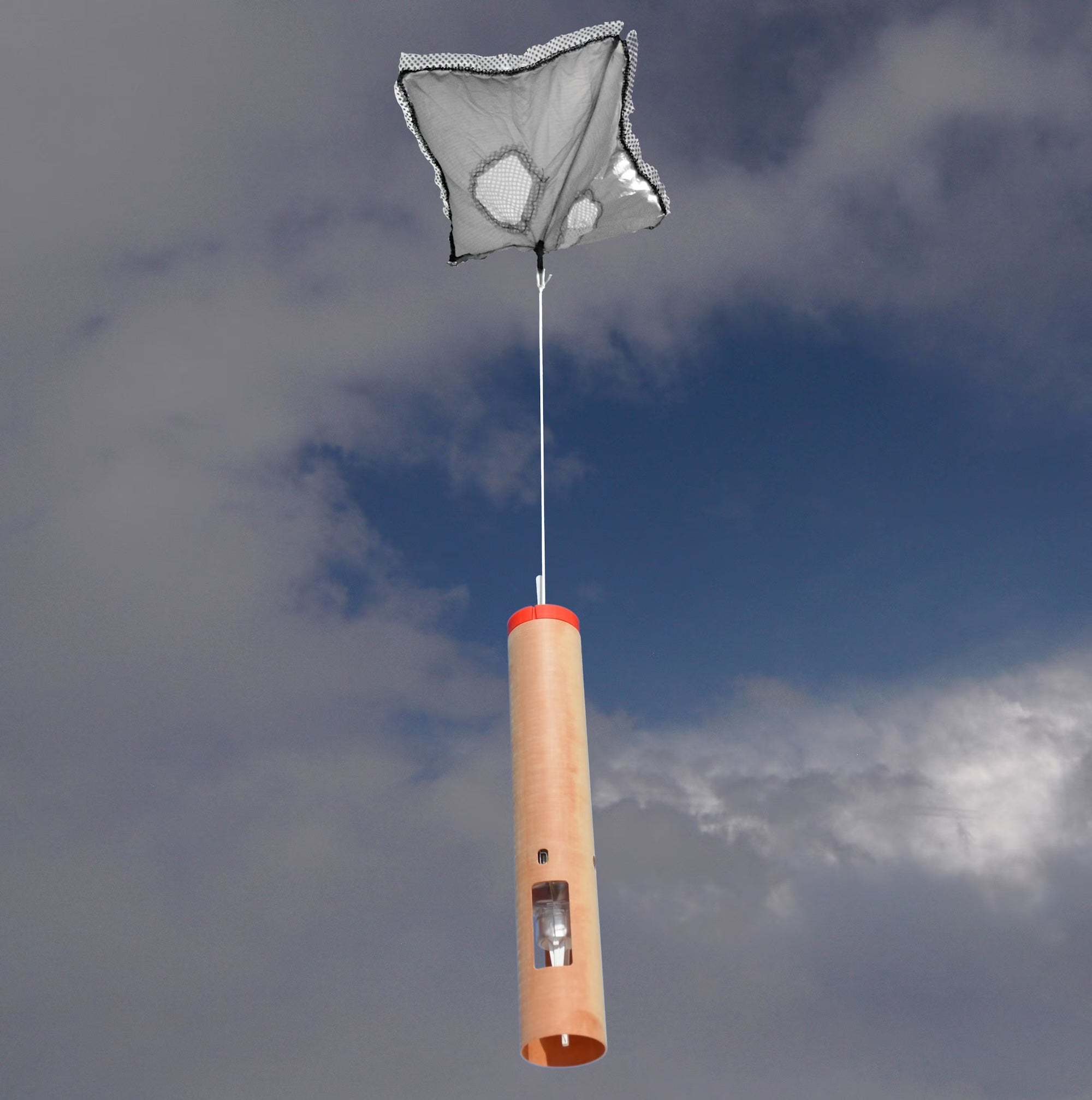
An NRD41 dropsonde, like the ones dropped into Hurricane Melissa, with Hurricane Irma in the background. Dropsonde technology is developed by the National Science Foundation National Center for Atmospheric Research and manufactured by Vaisala.
Holger Vömel/NSF NCAR
There’s an important distinction between these powerful gusts—transient bursts of wind—and the sustained winds that dictate a storm’s ranking on the Saffir-Simpson scale. This system of five categories is based on the strongest wind that lasts for one minute. Gusts do not need to persist and therefore can clock at much higher speeds than sustained winds can.
Hurricane Melissa’s sustained wind speeds reached a remarkable 185 mph, just 5 mph short of the Atlantic Ocean record. It achieved this monstrous strength because of its slow journey over abundant warm ocean waters.
Scientists measure wind speeds and other vital data from the top of the storm to the Earth’s surface with an instrument called a dropsonde, which was released from a Hurricane Hunter aircraft.
Vömel has helped examine previous potential record-breaking measurements. “I have a full understanding of all the gory details of how these measurements are taken,” he says. “I can look at it and see if there’s anything suspicious.” In one notable case, he helped show that an apparently record-breaking measurement from Hurricane Katrina in 2005 was just an artifact of a malfunctioning instrument. But the observations from Hurricane Melissa checked out. “Everything behaved exactly as it was intended to,” he says.
The observation wasn’t quite high enough to shatter the current record for the fastest wind ever measured on Earth: 253 mph achieved by a 1996 tropical cyclone that hit Barrow Island in Australia. But Vömel says that’s not a fair comparison. The 1996 storm’s record was measured at 10 meters (33 feet) above the ground. The one from Hurricane Melissa was made 20 times higher up and over the ocean. Natural and artificial topography on land can channel wind in ways that speed it up—which is not the case inside a hurricane.*
Besides these newly confirmed data, Hurricane Melissa was nearly record-setting in other ways: The storm reached a minimum central pressure of 892 millibars—making it tied for the third strongest hurricane on record in the Atlantic. And its sustained wind speeds tied it for second place in the Atlantic.
Hurricane Melissa also broke records in its devastation: it was the strongest storm to ever make landfall in Jamaica, and it caused the second-highest recorded rainfall in the nation since 2000.
“These storms must be taken seriously,” Vömel says. “This is a record-breaking sounding, and it’s really amazing that we can observe that. But there’s also people on the ground who suffered through that.”
*Editor’s Note (11/21/25): This paragraph was edited after posting to correct the height at which the 1996 storm’s record was measured.