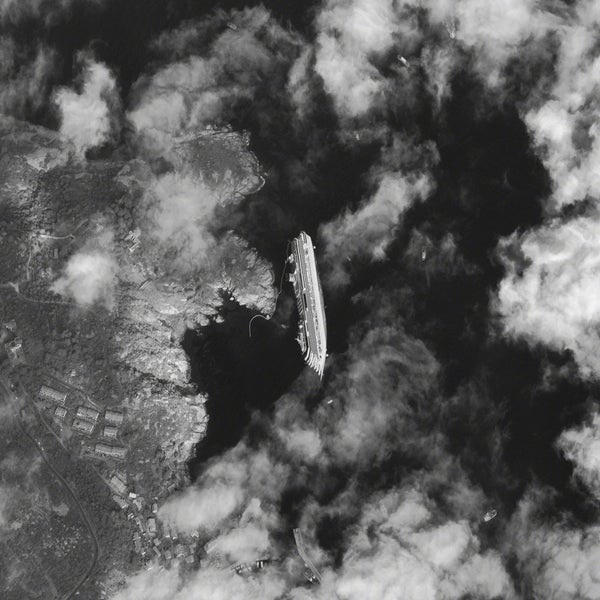
Italy's coast guard suspended the search for people on the Costa Concordia today after the ship slipped farther into the Mediterranean. On Friday, the cruise ship, carrying 4,200 passengers, struck rocks just off the coast of Tuscany. The ship quickly began listing to its side, and soon found itself halfway submerged. In the initial confusion, many passengers jumped into the water, while others boarded lifeboats or waited for rescuers to arrive. So far, 23 people are missing and eleven have been confirmed dead.
Now, the focus has shifted to draining the ship of fuel and minimizing the potential for more environmental damage to the region. But that process will most likely take weeks, experts say, so the Concordia won't be going anywhere anytime soon.
In the meantime officials are trying to decide how to deal with Capt. Francesco Schettino, who steered the vessel too close to the shore, then reportedly abandoned ship during the evacuation.
On supporting science journalism
If you're enjoying this article, consider supporting our award-winning journalism by subscribing. By purchasing a subscription you are helping to ensure the future of impactful stories about the discoveries and ideas shaping our world today.
—Rose Eveleth
Subscribe to Support Independent Journalism
Great science journalism requires human expertise, time, effort and creativity. And it costs money. That’s why I and the journalists here at Scientific American hope you’ll join our community.
When you subscribe, you are supporting staff and freelance journalists who are passionate about telling science stories that are true, important and compelling. Our editors and reporters are often experts in their fields, which means they understand the nuances of big discoveries and can untangle the breakthroughs from the hype. With a subscription, you are also supporting rigorous fact-checking to ensure the words we publish are precise and accurate. And you’re supporting original illustrations, graphics and photos that bring you closer to an advanced laboratory, an ice sheet in Antarctica or a space mission in orbit. You’re helping us craft other types of high-quality journalism as well: Our newsletters are carefully written, edited and curated by staffers you have or will come to know and love. Our Science Quickly podcast is based on original reporting, collaboration with editors and scientists and exacting production.
Subscriptions keep this engine running so we can continue to deliver thoughtful, rigorous and independent science journalism to you. In an era of viral misinformation, this work is crucial. If you value what we do, I hope you’ll consider joining us as a subscriber