
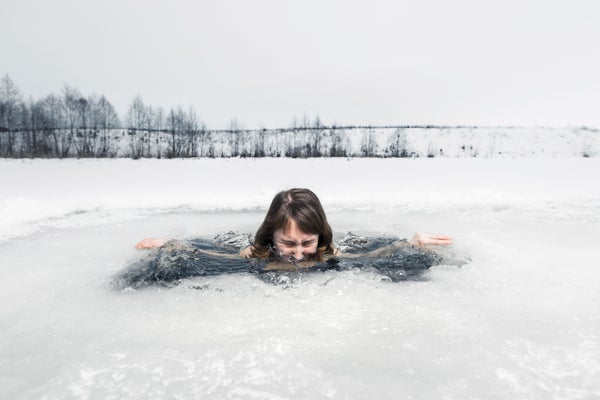
Cold-water swimming is surging in popularity, particularly in northern Europe, where groups such as the BluetitsChill Swimmers eschew tropical beach vacations in favor of frigid winter dips. Celebrity practitioners, including actors Kate Winslet and Bradley Cooper, have enhanced this icy pastime’s cachet.
As far back as 400 B.C.E., Hippocrates claimed that cold-water swimming relieves fatigue. Aficionados have since credited it with benefits ranging from improved sleep to enhanced libido.
In a recent survey of 1,114 female cold-water swimmers, published in Post Reproductive Health, more than one third reported that their hobby eased mood swings associated with menstruation and menopause. Among menopausal respondents, 47 percent said it reduced anxiety, 30 percent said it reduced hot flashes, and 20 percent said it reduced night sweats.
On supporting science journalism
If you're enjoying this article, consider supporting our award-winning journalism by subscribing. By purchasing a subscription you are helping to ensure the future of impactful stories about the discoveries and ideas shaping our world today.
Cold-water bathers have also reported pain relief from musculoskeletal injuries and decreased symptoms of depression, as well as feeling more alert and attentive overall. In one study, they reported improvements in mood after just one dip.
“You never find anybody who’s doing this activity who says it isn’t great,” says James B. Mercer, an emeritus physiologist at UiT the Arctic University of Norway and lead author of a scientific review of 104 studies on cold-water immersion. “They all swear by it. They think it’s the most wonderful thing in the world.”
But Mercer adds that the health claims about cold-water swimming have been “quite difficult” to assess, partly because most studies on the subject have been small, with generally healthy participants and widely varying water temperatures and salinity levels. Researchers have struggled to tease out whether the cold water itself is helpful or whether the benefits come from, say, having an active lifestyle and socializing with friends.
“Most claims have no or very weak evidence,” says Heather Massey, a physiologist at the University of Portsmouth. Besides co-authoring several cold-water-immersion papers, Massey has swum the English Channel and dabbled in competitive “ice swimming” (in water colder than 41 degrees Fahrenheit).
Still, science doesn’t simply throw cold water on the perceived benefits. Although more research is needed, rigorous studies have suggested that regular cold-water exposure might combat obesity, cardiovascular disease, inflammation, muscle soreness and diabetes, and it may also prepare the body to cope with other stressors. Mental health improvements have been largely anecdotal; one 2018 case study followed a young woman who weaned herself off antidepressants with a cold-water-swimming regimen. Recruiting is currently underway for a randomized, controlled trial on outdoor swimming and depression.
Cold-water swimming does carry risks: it can cause hypothermia, drowning and cardiac arrhythmia, and experts caution that people with health conditions should consult their doctors before trying a polar bear plunge. They also suggest easing in slowly when possible and not going alone.
Adherents insist there’s no replacement for “that feeling of euphoria and then peace,” says University College London reproductive researcher Joyce C. Harper, lead author of the menstrual and menopause survey.
“I recently swam in a semifrozen lake, and I was overcome with uncontrollable laughter,” Harper says. When water’s too warm, she adds, it “loses some of its buzz.”