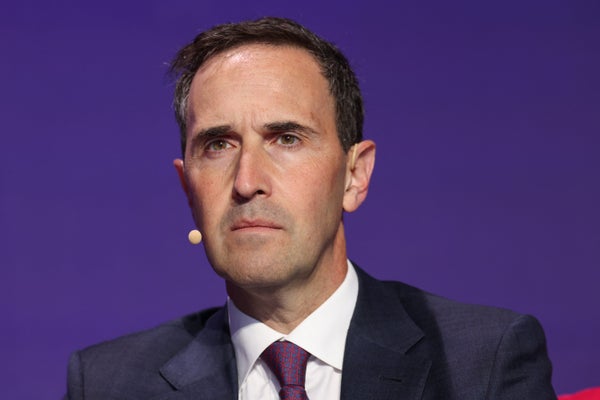
Jonathan Levin is an American economist and academic leader who has been serving as president of Stanford University since 2024. He previously led the Stanford Graduate School of Business and is known for research in industrial organization, market design and contract economics.
[This interview was edited for length and clarity.]
How would you describe the current state of American science?
On supporting science journalism
If you're enjoying this article, consider supporting our award-winning journalism by subscribing. By purchasing a subscription you are helping to ensure the future of impactful stories about the discoveries and ideas shaping our world today.
I think the U.S. has the most successful science-and-technology strategy of any country in the world, and it relies on three components, which are world-leading research universities, a vibrant private sector and a supportive federal government. If those three sectors can all work together in the coming years, we will continue to have the most innovative economy and successful science and innovation capabilities in the world. We have to keep working together in order for the country to be successful.
What needs to change in American science?
Fifty years ago, if you looked at U.S. investment in research and development, two thirds of it was [from] the federal government, and one third was [from] the private sector. That has reversed. Today 30 percent is [from] the federal government; 70 percent is [from] the private sector. So going forward, we’re going to have an innovation ecosystem that’s driven more by the private sector and less by the federal government, unless the federal government radically increases its investment. So we have to think about how a successful innovation ecosystem works with the creative ideas that come from universities, federal support and the scaling of the private sector.
What gives you optimism right now?
It’s a remarkable time for scientific discovery and innovation. I walk around the Stanford campus, and everywhere I walk, we have young people who are hugely excited by the advances in computation and data and the new questions that can be asked and the way that can lead to new scientific discoveries and the way those ideas can be taken out into all kinds of applications. There are lots of risks to worry about. But there’s also the potential for major improvements in human health and well-being in the coming decades.
What’s your best advice for an early-career scientist?
It’s not that different than it’s always been, which is: don’t give up. Research is hard work. You hit a lot of dead ends. Many successes look like they were achieved overnight but actually took years. And so the more young scientists can just keep working at things, stay positive and focused, keep going, whatever the challenges that they face, and try to take some joy in what they’re doing, the more likely they are to be successful.
How has your field changed in the past few years?
I started my career as an economist and have seen my home field of economics become much more empirical and data-driven and more applied—the young faculty and students are excited about solving big problems in the world.
In my current field of university leadership, it’s a really important moment to affirm the fundamental purpose and values of great universities in terms of the ideas that we create and the students that we educate for meaningful lives of citizenship and leadership. It’s a time to be bold and innovative in trying to chart a path forward so that the U.S. can continue to have the world’s leading universities that people all over the planet will aspire to come to.