
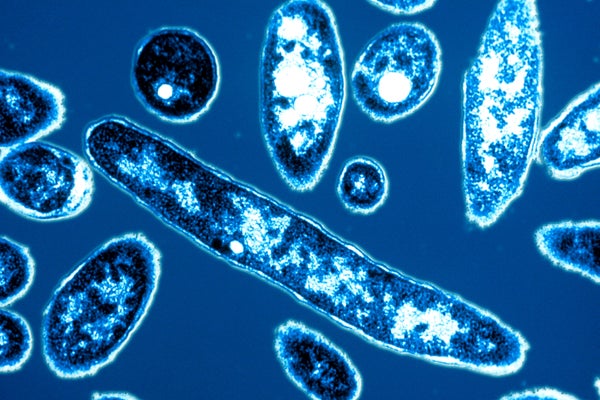
A little-known illness called Legionnaires’ disease has infected at least 58 people in New York City’s Central Harlem neighborhood in the past two weeks. Two people have died during the outbreak, which has been tied to cooling towers that tested positive for the disease-causing bacterium Legionella pneumophila, according to a statement from city health officials on August 4.
The disease is a severe pneumonia and one of two infections caused by bacteria in the genus Legionella, according to the U.S. Centers for Disease Control and Prevention. (The bacteria can also cause a milder illness called Pontiac fever, which can manifest with fever, muscle aches and headaches.) When diagnosed early, Legionnaires’ can be treated successfully with antibiotics.
Health care providers report about 6,000 cases of Legionnaires’ disease annually in the U.S., although some cases are likely mistaken as other types of pneumonia. In addition, the infection often does not cause symptoms in healthy people. Individuals who are aged 50 or older, as well as current or former smokers and people with underlying lung or immune issues, are most vulnerable to Legionnaires’. The disease became five times more prevalent between 2000 and 2018 for reasons experts have struggled to identify.
On supporting science journalism
If you're enjoying this article, consider supporting our award-winning journalism by subscribing. By purchasing a subscription you are helping to ensure the future of impactful stories about the discoveries and ideas shaping our world today.
Legionnaires’ does not typically spread between people directly; instead people catch the infection by inhaling mist that contains the pathogen. The bacterium particularly thrives in stagnant water between 77 and 113 degrees Fahrenheit (25 and 45 degrees Celsius). Water systems such as cooling towers, large air-conditioning systems, spas and hot tubs can then aerosolize the microbe, making bacterial control in these types of structures a vital prevention measure.
When the current outbreak was first identified, New York City health officials directed an investigation into all cooling towers in the affected neighborhood. These towers evaporate water to dispel heat, and they are a common feature in large buildings in the city. But such structures have long been known to cause some of the largest Legionnaires’ outbreaks on record. New York City laws require cooling towers to be registered, tested and disinfected regularly to reduce the presence of Legionella bacteria.
Legionnaires’ was first identified at a convention of the American Legion’s Department of Pennsylvania (hence the name) that was held in late July 1976. Scientists who helped identified the Legionella bacterium that caused an outbreak among at least 221 people at the convention called the detective work “one of the largest and most complex investigations of an epidemic ever undertaken” in an article published in the October 1979 issue of Scientific American.
Scientists had to rule out potential causes, including foodborne pathogens and metal poisoning, among other challenges, before managing to identify the previously unknown bacterium. Simultaneously, investigators pored through reports of other then recent, mysterious outbreaks of pneumonialike diseases, piecing together an image of an infection that “has turned out to be not very rare after all,” the researchers wrote in their 1979 article.