
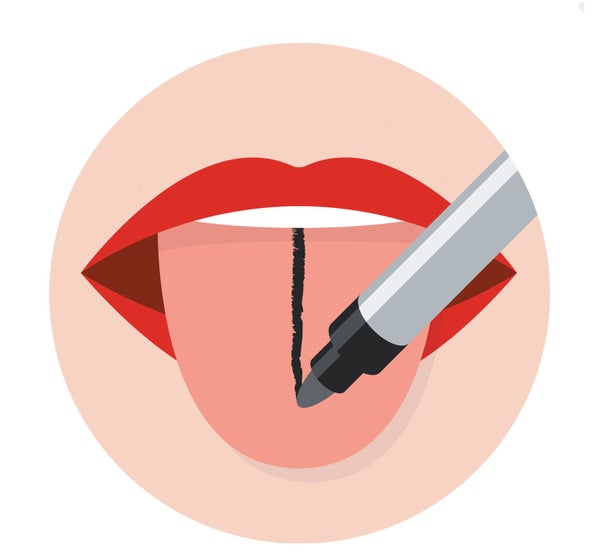
Simple swabs and vials play crucial roles in transporting blood, saliva and other fluids during medical lab tests. Samples on cotton swabs dry out rapidly, however, and vials can require an additional transfer step before analysis. Now researchers have found that a felt marker's fibrous tip—without ink, of course—can double as an effective, long-lasting sampler.
Physicist Igor Popov and his team at the Moscow Institute of Physics and Technology bought replacement tips, designed to hold inks for long periods without drying, that are used in a popular commercial marker. After soaking these highly porous tips in blood or saliva spiked with the painkiller acetaminophen, the researchers successfully tested their MacGyvered samplers to identify the drug and determine its concentration—even after seven days of room temperature storage. Popov says such samplers would work best for tests to detect drugs and hormones that do not break down quickly. “This technology could be utilized for medical investigations in difficult conditions, such as facilities far away from large cities,” he adds. The tool's use is detailed in Acta Astronautica and in Molecules.
Another potential implementation: space travel. Popov says samplers used to test astronauts on the job must be compact, lightweight and usable without intensive training. Samples must also be easily storable for return to Earth; space station astronauts currently use vials that take up valuable freezer space.
On supporting science journalism
If you're enjoying this article, consider supporting our award-winning journalism by subscribing. By purchasing a subscription you are helping to ensure the future of impactful stories about the discoveries and ideas shaping our world today.
The marker idea “is a new application I've never seen for this purpose before,” says University of South Carolina chemist Susan Richardson, who was not involved in the study. She adds that future research should test how long compounds of interest remain viable in bodily fluids such as saliva, which might host microorganisms that degrade them.
Next the researchers will compare various marker types to see which qualities contribute to better sample storage—testing nibs of every composition, shape and size.