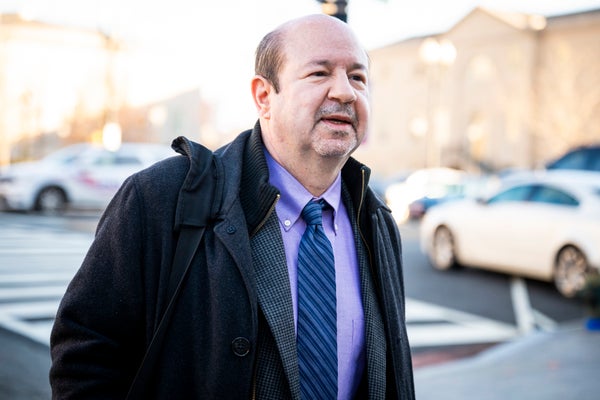
Michael E. Mann is an American climatologist and geophysicist and a professor at the University of Pennsylvania. His research focuses on climate change and past temperature patterns, including the widely known “hockey stick” reconstruction of historical global temperatures.
[This interview was edited for length and clarity.]
How would you describe the current state of American science?
On supporting science journalism
If you're enjoying this article, consider supporting our award-winning journalism by subscribing. By purchasing a subscription you are helping to ensure the future of impactful stories about the discoveries and ideas shaping our world today.
Fraught. And I should be clear about that—science itself, especially [among] young scientists, is incredibly strong. There are so many great young scientists across the spectrum. But unfortunately, science is under siege. We’re seeing bad actors and political entities trying to suppress science, defund science and create a difficult environment. Scientists need to continue to do great science and communicate its importance to the public and policymakers.
What needs to change in American science?
We need an infrastructure for the defense of science and scientists who are under assault. We need incentives and support—especially for young scientists—to communicate science and be defended against attacks. This responsibility falls on universities, government institutions, scientific societies and the National Academies [of Sciences, Engineering, and Medicine].
What gives you optimism right now?
It’s young folks coming into science who are passionate not just about science but about communicating it. I teach Gen Z students, and while they face tremendous anxiety, I see resilience, courage and a willingness to speak truth to power. That gives me hope and energy to continue fighting for science and science‑informed policy.
What’s your best advice for an early‑career scientist?
It’s a challenging time; there’s less financial support and cuts to science agencies. My advice is to focus on learning, doing science and preparing for the future. Have faith that conditions will improve. Don’t be deterred by the challenges.
How has your field changed in the past few years?
Artificial intelligence, big data, machine learning—it’s fundamentally reshaping science and society. It offers tremendous opportunities but also challenges. The key will be leveraging AI without becoming vulnerable to its liabilities.