
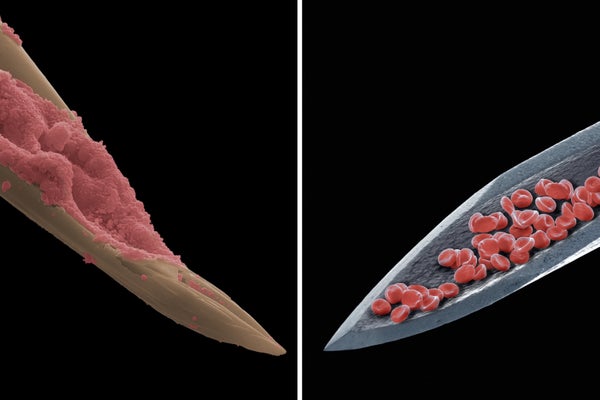
Calling the red welt a mosquito leaves behind on your arm a “bite” is really a misnomer. A more realistic term might be “injection”: the structure the insect uses to puncture our skin bears an uncanny resemblance to a syringe tip, as these two close-up photographs show.
Medical injection technology has come a long way. After all, some of the first subcutaneous drug delivery options involved shoving a pellet of medication under the skin with a darning needle. But when these clunky needles were considered cutting-edge science, mosquitoes had already been plunging their blood-sucking mechanism into animals for millions of years. All the insects have this tool, called a proboscis, but only females suck blood because they need the fluid’s protein for egg production. The proboscis is a Swiss Army knife appendage of six separate instruments that facilitate blood collection. Of these instruments, five function to saw into our skin, push open the hole and drop saliva that keeps our fluids drinkable. Pictured here is the sixth piece, called the labrum, which funnels out blood. The system is so efficient and painless, engineers still look to mosquitos to inspire future medical devices, such as needles used to biopsy internal tumors.
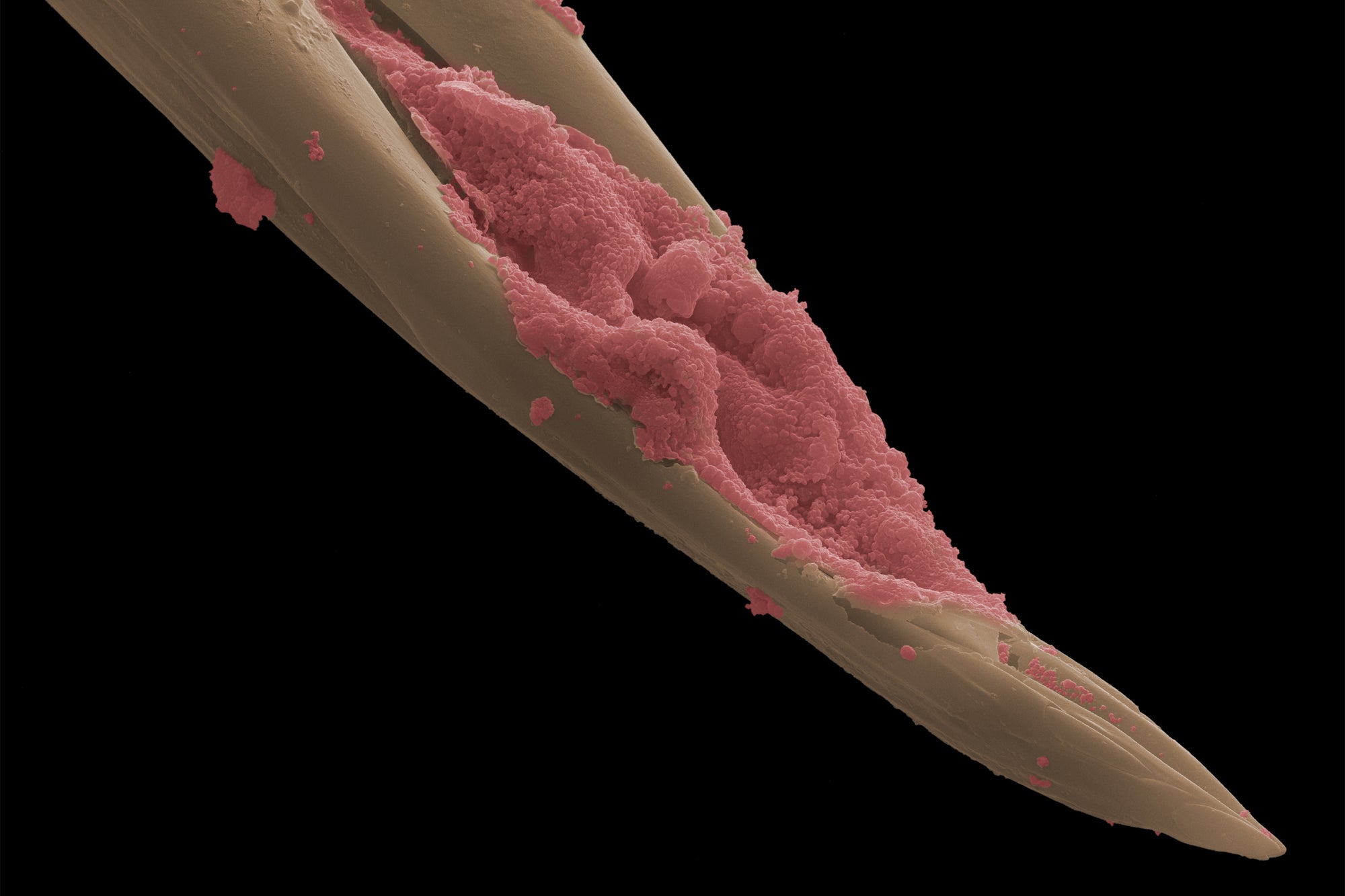
Tip of the labrum of a female mosquito (a member of the family Culicidae). This sharp tool is used to suck blood from animals. Though they are invisible in the photograph, the mosquito has sensing hairs at the end of its personal syringe that detect where best to plunge. Credit: Ted Kinsman Science Source
On supporting science journalism
If you're enjoying this article, consider supporting our award-winning journalism by subscribing. By purchasing a subscription you are helping to ensure the future of impactful stories about the discoveries and ideas shaping our world today.
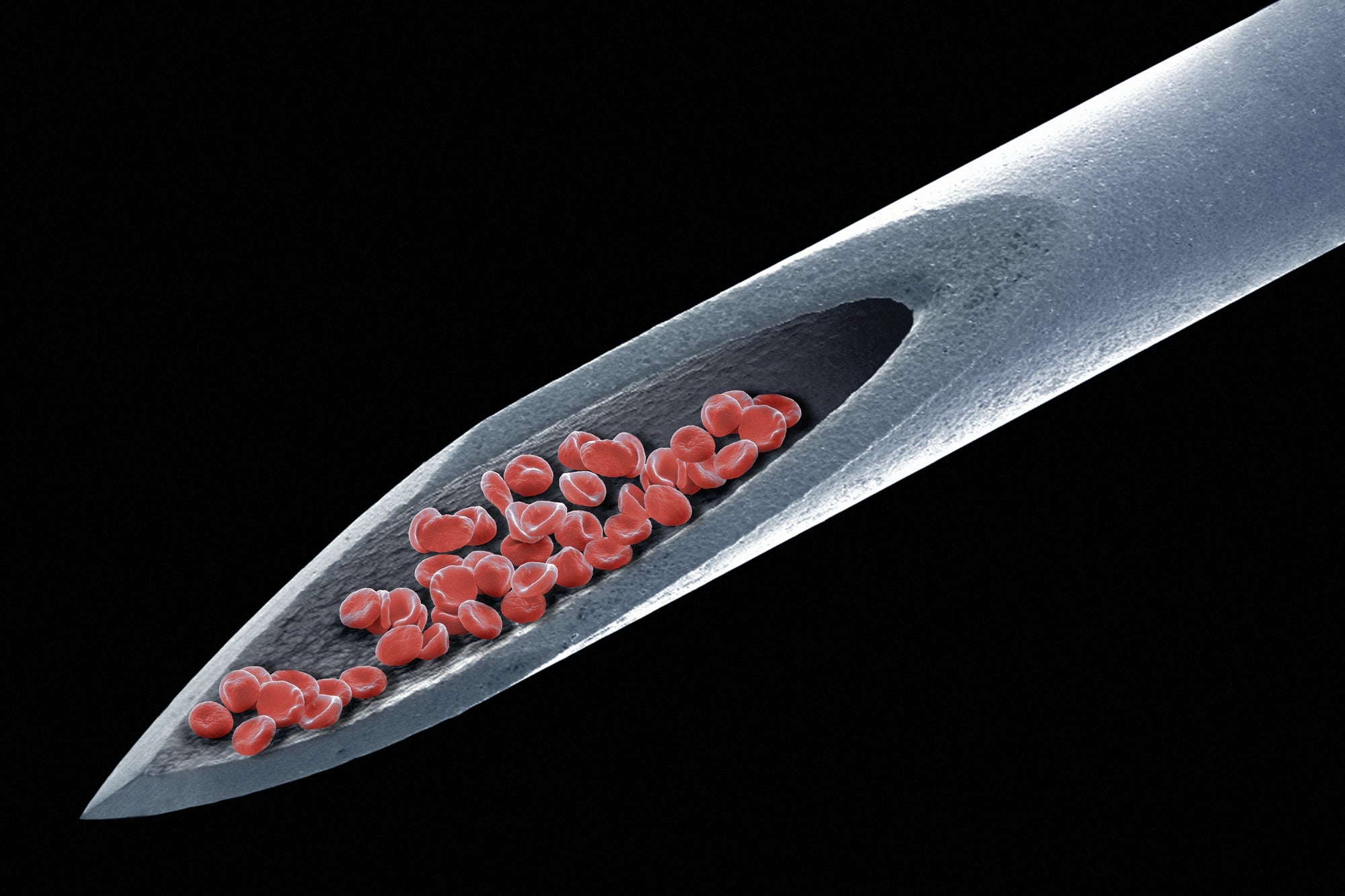
Composite colored scanning electron micrograph of a needle with red blood cells on its tip. Credit: Steve Gschmeissner Science Source