
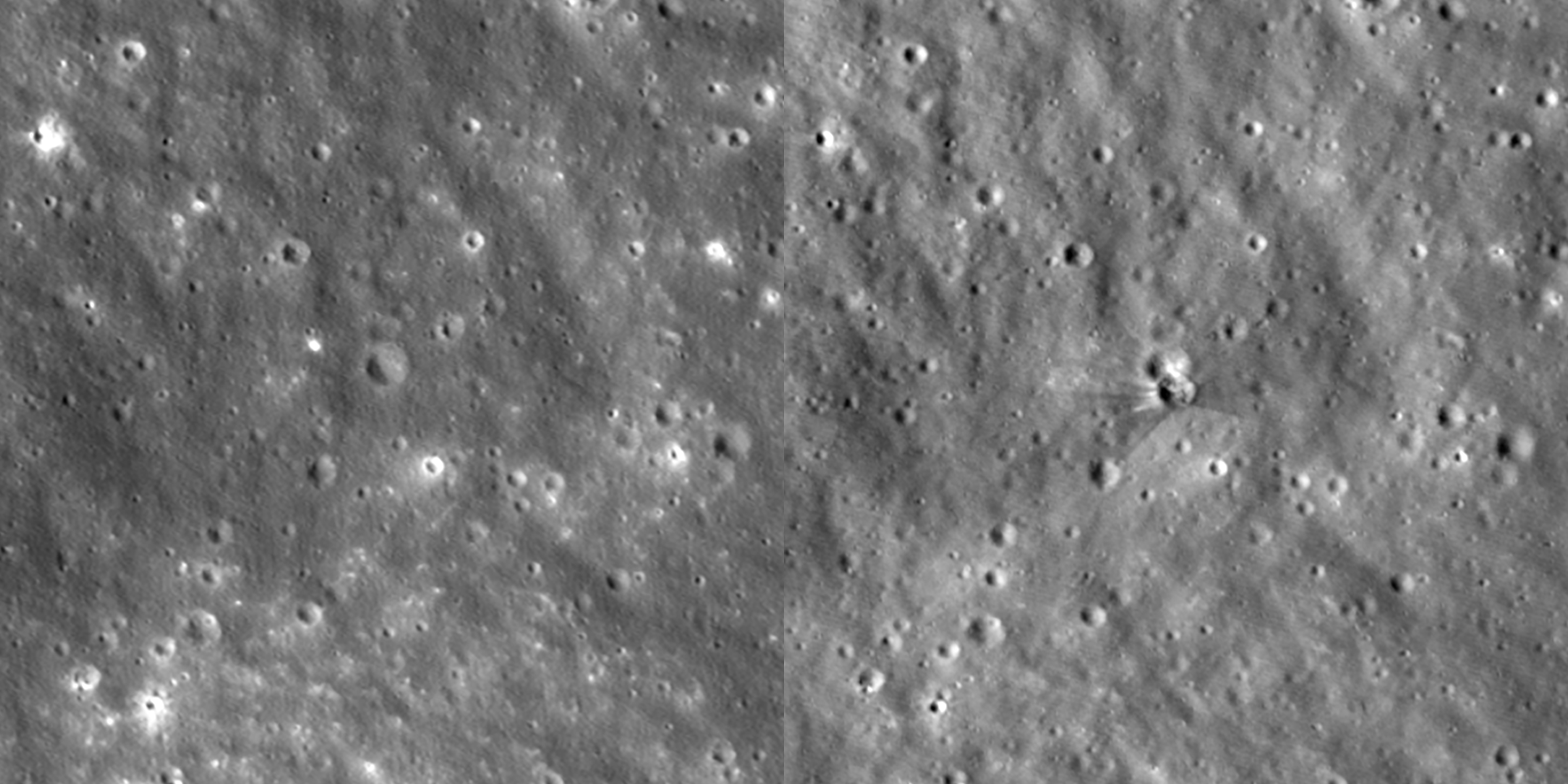
The moon officially has a new crater. On August 5 the upper stage of a SpaceX Falcon 9 rocket smacked into the face of our natural satellite at an estimated 5,400 miles an hour—several times the speed of sound. Astronomers predicted the crash would cause a plume of debris to rise up from the moon, leaving a crater behind for posterity. And now we can see the damage for ourselves.
On August 11 and 12 NASA’s Lunar Reconnaissance Orbiter (LRO) spotted the crater and snapped pictures from around 60 miles above the lunar surface. The crater is around 60 feet in width and less than 10 feet in depth. In the images, bright rays can be seen emanating from the crater's rim—these are likely material from deep below the surface, blasted up by the rocket fragment as it hit the moon.

Collected between August 11 and 12 by NASA’s Lunar Reconnaissance Orbiter six days after a Falcon 9 upper-stage booster impacted the moon, these images were taken from different viewing angles, bringing out different features.
NASA Goddard/Intuitive Machines
On supporting science journalism
If you're enjoying this article, consider supporting our award-winning journalism by subscribing. By purchasing a subscription you are helping to ensure the future of impactful stories about the discoveries and ideas shaping our world today.
The LRO is not the only telescope to see the impact and its aftermath—the European Southern Observatory previously announced that its Very Large Telescope had detected sodium and lithium in the debris cloud thrown up by the crash. And a South Korean lunar orbiter also previously spotted the crater.
The Falcon 9 upper stage was never supposed to hit the moon. The four-metric-ton (4.4-ton) vehicle was meant to burn up in Earth's atmosphere after successfully launching two lunar landers in January 2025. But that didn't happen. Instead, it entered orbit around Earth at about the same distance as the moon, putting it on a collision course with our natural satellite. An amateur astronomer, Bill Gray, spotted the rocket fragment in September of that year. Since then, astronomers around the world watched the object as it neared its demise.
Tracking such pieces of space junk is hard. NASA's Center for Near Earth Object Studies traces space rocks such as asteroids in our vicinity, and the U.S. Space Surveillance Network keeps tabs on errant spacecraft and some debris. But most space junk particles are too small to be tracked.