
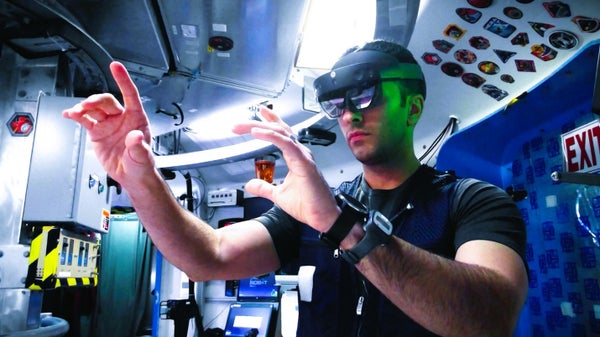
More than 50 years after humanity’s last trip to the moon’s surface, NASA is preparing for its triumphant return as soon as 2028—and laying the groundwork for the first crewed mission to Mars. But before astronauts can venture further into space, NASA needs volunteers to spend a year pretending they’re already there.
The agency has opened applications for its next Moon & Mars Exploration Analog (MMEA) mission, a year-long simulation that recreates the isolation, confinement and day-to-day challenges of long-duration space exploration. The goal isn’t to demonstrate rockets or spacesuits, but rather to put humans to the test.
Participants will live and work inside specially designed habitats while researchers study everything they can, from crew dynamics and mental health to habitat operations and mission procedures. The crew will carry out scheduled maintenance tasks, complete scientific experiments, respond to simulated emergencies and settle into routines that could define life millions of miles from Earth.
On supporting science journalism
If you're enjoying this article, consider supporting our award-winning journalism by subscribing. By purchasing a subscription you are helping to ensure the future of impactful stories about the discoveries and ideas shaping our world today.
NASA does this because getting humans to Mars isn’t just about building a big enough rocket—it’s about making sure every aspect of life so far away from Earth is optimized for success.
Perks of the MMEA mission include virtual reality spacewalk simulations and a mandatory social media detox.
The program builds on two existing NASA analog missions: HERA (Human Exploration Research Analog), which studies the effects of isolation during spaceflight, and CHAPEA (Crew Health and Performance Exploration Analog), which simulates life on the Martian surface. The MMEA mission is expected to begin no earlier than August 2027, giving NASA time to select and train the crew for their year of isolation.