
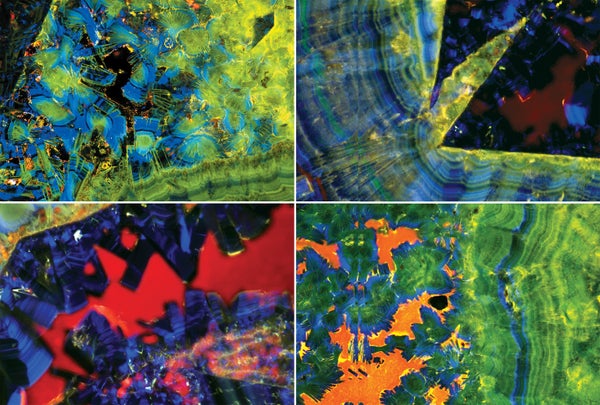
Medical researchers are poised to map the entire process of kidney stone formation for the first time, thanks to insights from an unlikely source: geology. Combining this framework with a suite of cutting-edge microscopic tools and a new device that grows kidney stones in the laboratory, they are developing novel ways to stop or slow down the stones’ growth.
Stone disease occurs when jagged mineral crystals form in urine within the kidney. This excruciating problem affects roughly one in 10 adults and is steadily rising, especially in women and adolescents. “It’s common, debilitating and costly, both to the health-care system as well as individuals. To top it off, it’s also recurrent—if you’ve had one, there’s about a 50 percent chance of having another soon,” says urologist Margaret Pearle, who treats stone disease at the University of Texas Southwestern Medical Center and did not participate in the new research.
Geobiologist Bruce Fouke turned his microscope lens from coral reefs to kidney stones about a decade ago. Working with biologists and doctors at the Mayo Clinic and the University of Illinois at Urbana-Champaign, he found that kidney stones form similarly to many other stones in nature: they partially dissolve and re-form many times rather than crystallizing all at once. “That’s when we realized that stones are quite dynamic and have phases where they’re dissolving, so maybe there’s a way to harness that dissolution phase and treat stones,” says Fouke’s collaborator Amy Krambeck, a urologist at Northwestern Medicine.
On supporting science journalism
If you're enjoying this article, consider supporting our award-winning journalism by subscribing. By purchasing a subscription you are helping to ensure the future of impactful stories about the discoveries and ideas shaping our world today.
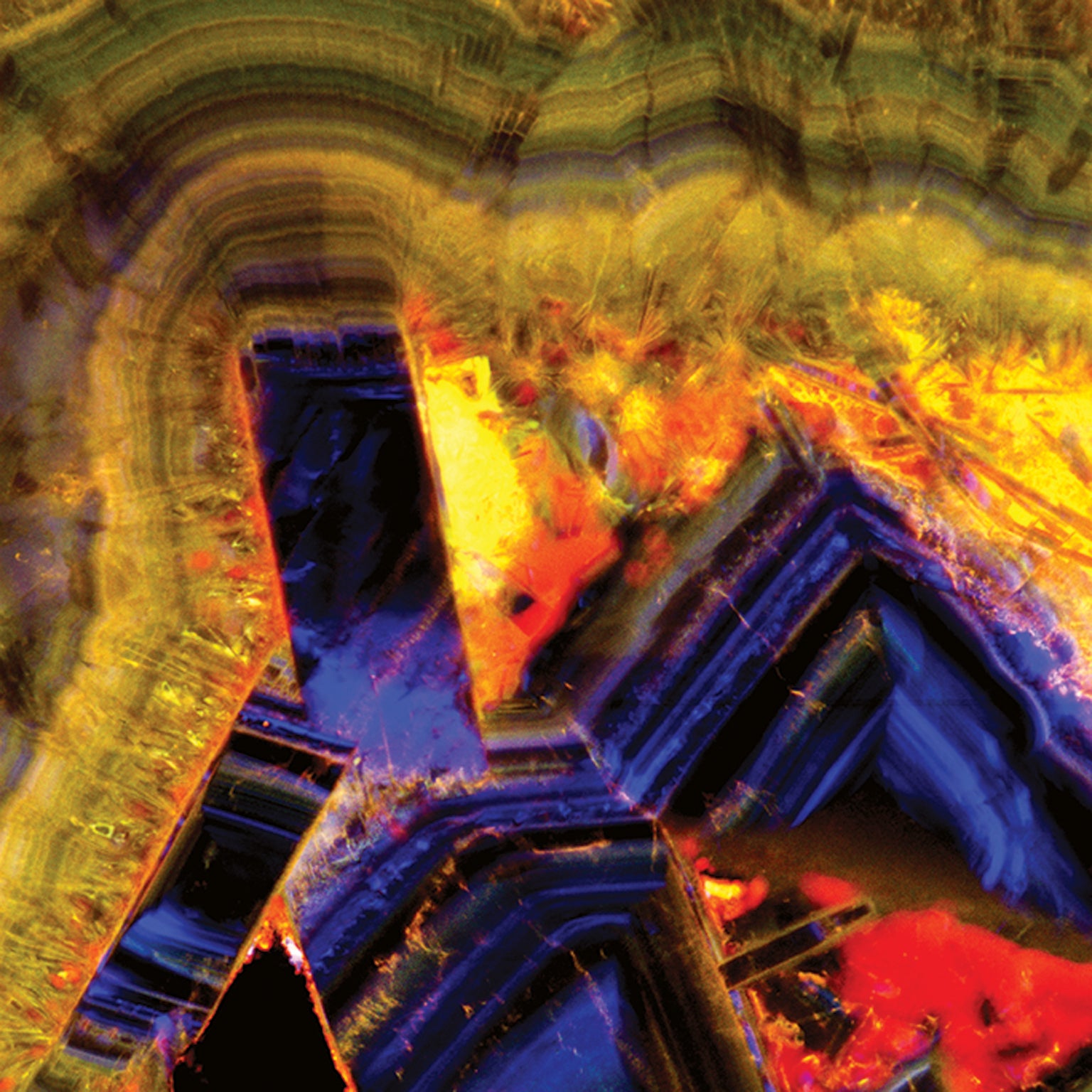
Section of a kidney stone. Credit: Mayandi Sivaguru and Bruce Fouke
There have been few good animal or lab models to study kidney stone formation, Krambeck says. So the team developed a new device called the GeoBioCell, a cartridge designed to mimic the kidney’s intricate internal structures. It lets scientists measure and link how various factors—including kidney cell activity, as well as the urinary microbiome, chemistry and flow—can affect stone growth. Varying any one factor can make stones develop and dissolve differently.
In their recent research, summarized in Nature Reviews Urology, the researchers primarily used GeoBioCell to study growing calcium oxalate crystals, which account for about 70 percent of kidney stones. Until Fouke’s preliminary work, these crystals were thought to be almost impossible to dissolve—but he and his colleagues found the stones do, in fact, partially dissolve in the body before regrowing. The scientists are now using GeoBioCell to examine precisely how stones form, and they hope to identify ways of initiating or prolonging the dissolution phase with drugs. They are also using the new device to test a variety of proteins (including the bone-related osteopontin) that could potentially inhibit growth if administered as a drug. Additionally, they are investigating the impact that specific microorganisms and microbial communities might have on stone formation.
This research has tremendous potential to identify kidney processes that can be targeted with drugs or other interventions, Pearle says, and will likely improve doctors’ ability to predict and treat stone recurrence.