
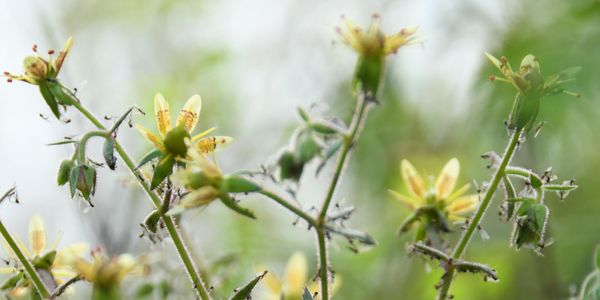
A small, yellow-flowered plant that grows in the mountainous forests of China may not look intimidating. But beneath its bright exterior, Saxifraga candelabrum is hiding a bloodthirsty secret.
This plant species is carnivorous, which means it can attract, trap and digest insect prey and absorb their nutrients. Through a lengthy process of observation, genetic analysis and a fruit fly feast, scientists “left no stones unturned” to prove the plant has a hidden taste for flesh, says Mark Chase, a botanist at England’s Royal Botanic Gardens, Kew, who was not involved in the research.
“Most papers cover only one or two aspects of the carnivorous syndrome, but this study does it all, from observations in the field to isotope work and genomics in the lab,” Chase says.
On supporting science journalism
If you're enjoying this article, consider supporting our award-winning journalism by subscribing. By purchasing a subscription you are helping to ensure the future of impactful stories about the discoveries and ideas shaping our world today.
The discovery supports a 150-year-old hypothesis from the father of evolutionary biology: Charles Darwin predicted in 1875 that some members of the Saxifraga genus could be carnivorous. Though the species he predicted are distinct from S. candelabrum, they share microscopic hairs on their surface. Darwin based his prediction on those hairs, S. candelabrum uses them to trap insects.
Most other carnivorous plants have “highly specialized trapping structures,” says Hang Sun, lead author of the paper and a botanist at the Kunming Institute of Botany at the Chinese Academy of Sciences. This species’ tiny, sticky traps offer a new example of how carnivorous plants might function.
“The discovery of Saxifraga candelabrum reminds us that many inconspicuous carnivorous plants, or plants with partial carnivorous traits, may still exist in nature,” he says.
After observing S. candelabrum plants trapping insects in their natural habitat, the researchers analyzed the plants’ genetic makeup and found similarities to other carnivorous species. They also fed fruit flies to the plants and identified a digestive enzyme that absorbs the insects’ nitrogen. The study was published on Tuesday in Nature Communications.
The discovery of a new carnivorous species is “definitely not an everyday thing,” says Qianshi Lin, a biologist at Lakehead University in Ontario, who was not directly involved in the research but peer-reviewed the study before publication. The last carnivorous plant discovery was announced almost five years ago. Broader genetic understanding of these plants, Lin says, could be “important for the future of agriculture” because transferring certain genes from carnivorous plants into crops could provide a natural pesticide.
The “transformation from prey to predator is a striking adaptive innovation,” the authors write in the study. But exactly how plants evolve to be carnivorous remains a mystery. Answering this question, Chase says, is the next step in the world of these unassuming, murderous plants.