
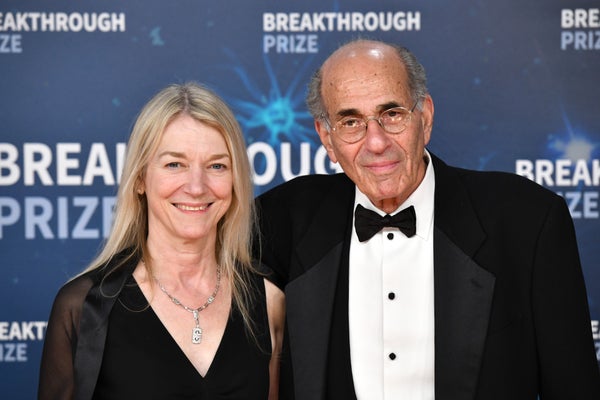
On Tuesday Nobel Prize winner Richard Axel resigned as co-director Columbia University’s Mortimer B. Zuckerman Mind Brain Behavior Institute over his decade-long association with convicted sex offender Jeffrey Epstein. A molecular biologist, Axel shared the 2004 Nobel Prize in Physiology or Medicine for his work revealing how the brain identifies odors.
“My past association with Jeffrey Epstein was a serious error in judgment, which I deeply regret,” Axel said in a statement. He also announced he would no longer be an investigator with the Howard Hughes Medical Institute. “I apologize for compromising the trust of my friends, students, and colleagues,” Axel said in the same statement.
Axel’s resignation came after the Columbia University student newspaper, the Columbia Spectator, reported earlier this month that Axel and his wife were invited to Epstein’s island in 2011—three years after the financier’s conviction for soliciting prostitution from a minor—but that the scientist did not go.
On supporting science journalism
If you're enjoying this article, consider supporting our award-winning journalism by subscribing. By purchasing a subscription you are helping to ensure the future of impactful stories about the discoveries and ideas shaping our world today.
Axel and Epstein, who died in 2019 while awaiting trial on federal sex trafficking charges, had a long, public friendship, with the scientist praising Epstein in a 2007 New York Magazine article. The name “richard axel” appears 933 times in the Department of Justice’s recently created Epstein file library. (Numerous people are mentioned in the files, and their appearance alone does not indicate any wrongdoing.)
Axel is among several high-profile scientists to have been connected to Epstein, who was known for cultivating close connections with academics and science media, including Scientific American. Axel has in the past written two articles for Scientific American; the most recent was published in 1995 and republished in 2006.
In a statement released on Tuesday, Columbia University said that “the University has seen no evidence that Dr. Axel violated any University policy or the law.” Axel will continue his research at the university, according to the statement. In response to Scientific American’s request for comment from Axel, a representative of Columbia cited the statements from him and the university.
Editor’s Note (2/25/26): This is a developing story and may be updated.