
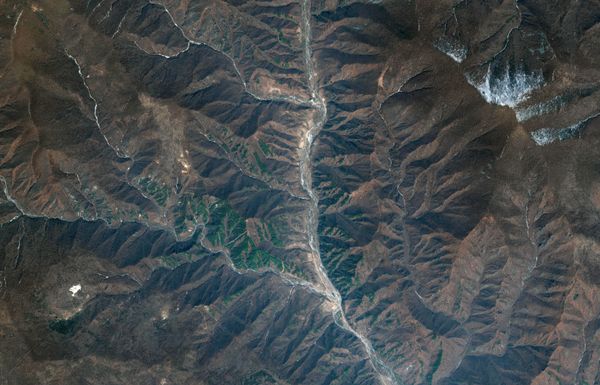
North Korea’s Mount Mantap is being rocked by earthquakes—and the reason appears to be the pariah state’s nuclear tests.
It’s been almost 10 years since North Korea last conducted an underground thermonuclear test at the mountain, which is also known as Mantapsan—yet the geology of the site appears to have been critically altered by intense explosions, according to a new study based in part on photographs taken space.
“Repeated underground nuclear tests [have] progressively disturbed and damaged the surrounding rock and changed the stresses acting on pre-existing faults,” says seismologist and geophysicist Kwang-Hee Kim of South Korea’s Pusan National University. The most recent nuclear test, in 2017, caused the most damage—and after some seismic faults on the mountain were disturbed, it started a domino effect, he says.
On supporting science journalism
If you're enjoying this article, consider supporting our award-winning journalism by subscribing. By purchasing a subscription you are helping to ensure the future of impactful stories about the discoveries and ideas shaping our world today.
Kim is a co-author of the study, published 17 September in Science, which details Mount Mantap’s ongoing seismic activity. Almost 1,400 earthquakes have occurred there between 2008 and 2025, and they have increased in frequency and magnitude since September 3, 2017—the date of the last known nuclear test there. It had an estimated yield equivalent to between 100 and 250 kilotons of TNT—or up to 20 times as much energy as the blast that leveled Hiroshima in 1945.
It’s normal for underground tests to spawn local earthquakes in the weeks that follow as the disturbed ground subsides. But an unusual earthquake on Mount Mantap a few minutes after the 2017 test raised experts’ concerns, and the new study reveals a fresh worry: “The phenomena they’ve identified and documented is a bit surprising,” says Columbia University seismologist Paul Richards, who wasn’t involved in the research. The situation is “potentially dangerous,” he says: “Will it lead to even bigger earthquakes?”
Mount Mantap is an archetypal “tired mountain”—a Cold War term for a nuclear test site where the ground is so fractured by massive underground explosions that it becomes useless and can no longer trap radioactive gases from the blasts. The 2017 thermonuclear test effectively collapsed the top of Mount Mantap. The damage means there are no known plans to do future tests beneath the peak itself, but others may still be conducted at different underground sites at the Punggye-ri test complex surrounding the mountain.
North Korea gives few details about the Punggye-ri complex, and the new study is based mainly on data from seismographs in China and South Korea and satellite photographs of the terrain. Kim and his co-authors warn that the mountain’s persistent earthquakes will affect international monitoring efforts for genuine nuclear explosions: “Seismicity occurring years after detonation may complicate attribution and blur distinctions between explosion-related and tectonic events,” they write.