
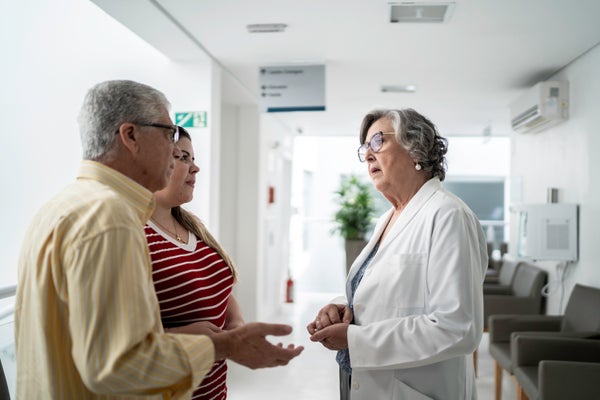
No matter how conscientiously the post-operation discharge instructions were crafted, I worried how my Spanish-speaking patient would refer to the “warning signs”—written in English—if questions arose at home. And I was right to worry: her arrival eight days later to the emergency department with a serious but preventable infection demonstrated the challenges that over 25 million American residents face whenever they interact with our English-centered health system. While this system aims to provide optimal care for all its patients, it often falls short for non-English speakers.
Language discordance—the situation when providers and patients speak different languages—is all too common throughout the United States. Limited English proficiency impacts the patient-physician-system interaction by undermining communication, trust and health literacy. This miscommunication leads to suboptimal care, decreased understanding of diseases and treatments, difficulties in shared decision-making and lower satisfaction with care. Patient-provider language discordance is associated with worse chronic disease management, longer hospital stays and increased hospital readmission rates.
Even in Massachusetts, where there is a high rate of insured residents, patients with limited English proficiency tend to have higher risks of being uninsured or underinsured, which leads to worse health access and outcomes. With the increasing revelation of medical inequities in the face of COVID-19, it is critical we emphasize improving communication between the health system and non-English speakers.
On supporting science journalism
If you're enjoying this article, consider supporting our award-winning journalism by subscribing. By purchasing a subscription you are helping to ensure the future of impactful stories about the discoveries and ideas shaping our world today.
Medical interpreters demonstrably improve care and are our best method to address disparities arising from patient-provider discordance. Executive Order 13166 and the Affordable Care Act Section 1557 mandate the use of an interpreter with patients who do not speak English well. Title VI of the Civil Rights Act notes that this language assistance must be free of charge. However, since insurance companies rarely pay for interpreter services, providers and hospital systems are required to pay for the services themselves, leading to poor compliance with only 65 to 75 percent of U.S. hospitals offering language services. State-level advocacy for legal insurance reimbursement for this essential service would improve hospital compliance and effective patient care while potentially driving innovation and reducing overall costs.
In addition to changes in reimbursements, local and regional investments in newer technologies that allow immediate and easy interpretation from a smartphone may encourage more frequent and consistent interpreter use. In the hospital or clinic, obtaining an in-person or telephone interpreter can take precious minutes that can lead to long wait times or delays in urgent care. COVID has created a market for advancing telehealth technologies, where patients and providers are becoming more comfortable communicating over video. Novel and affordable applications on patients’ ever-present smartphones can provide immediate access to a certified medical interpreter, which may be better than relying on a family member to come with them or the provider to preemptively engage a medical interpreter.
Written discharge instructions in Spanish might have prevented my patient’s emergent return to the hospital. This example of misunderstanding is unfortunately just one of many in Massachusetts and across the country. Automatic and medically valid translation of all patient instructions should be a legal requirement so that patients can read and understand their instructions at home, not just with an interpreter at the clinic appointment or hospital discharge. Admittedly, these solutions have some barriers, but we believe these barriers are breaking down. Ensuring increased interpreter compliance in line with the law would result in more monitoring and consequences and regulations for noncompliant entities. Adjusting reimbursement structures impacts the financial health care system and health insurance payment structures, which may lead to increased premiums.
Finally, although this is a growing workforce with pay significantly above minimum wage, there must be greater efforts to continue expanding the interpreter workforce, especially in areas of greatest need. Despite these costs, investments in translation services will save health care resources and lives through improved communication. In fact, not investing in these resources that promote clear understanding may increase future risks to patient safety. A translator in time saves nine.
Hospitals and health systems across the United States should utilize the technology advancements and the novel telehealth environment brought on by the COVID-19 pandemic to reassess their interpreter services. Improving access to timely medical interpretation is a moral imperative in a society looking for a more just system in and out of healthcare.
The opinions expressed in this article are solely the authors’ and do not reflect the views and opinions of Brigham and Women’s Hospital.
This is an opinion and analysis article.