


The following essay is reprinted with permission from The Conversation, an online publication covering the latest research.
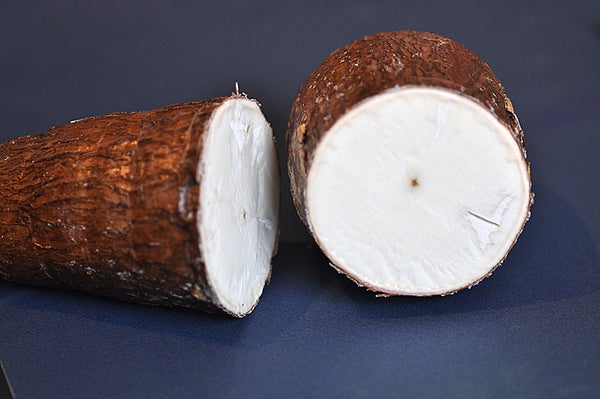
Cassava is one of the developing world’s most important crops. Its starchy roots and leaves are a staple food for more than 500 million people in Africa each day. And Africa produces half of the world’s total cassava output; the continent’s main growers are the Congo, Côte d'lvoire, Ghana, Nigeria, Tanzania and Uganda.
On supporting science journalism
If you're enjoying this article, consider supporting our award-winning journalism by subscribing. By purchasing a subscription you are helping to ensure the future of impactful stories about the discoveries and ideas shaping our world today.
It’s also climate resilient, as it is predicted to improve yield in higher temperatures. Its role as a staple food will become ever more important, then, as climate change continues to take hold.
But cassava, like many other crops, is vulnerable to viruses and other plant diseases. These diseases can affect cassava yields, cost farmers money, and threaten food security in sub-Saharan Africa. Two diseases, cassava mosaic disease and cassava brown streak disease, have become the largest constraints to cassava production and food security in sub-Saharan Africa resulting in losses of over US$1 billion every year.
These plant diseases are not new to Africa and have been causing losses for many decades. However, a lack of infrastructure and engagement by trained plant disease experts with farmers means the farmers are not trained to recognise them in their early stages. That’s why we set out to create a disease-recognition app for smartphones. We tested the ability of an image recognition model, called a convolutional neural network, to accurately identify up to five different cassava diseases.
The model is deployed using a mobile device’s camera. What’s novel about it is that it can run entirely on a smartphone without the need for a wireless connection, or access to large processing power. Once farmers have identified the disease using the app, we provide the necessary information so they can go ahead and treat their plants.
Our results, based on research conducted in Tanzania, show that the image recognition model had up to 98% accuracy in identifying cassava diseases in the field.
These results are promising as our method is much simpler to implement than traditional computer vision models. The model was also trained on a desktop with vastly smaller computing power than the typical supercomputer used in training image recognition models. These results highlight our method’s potential to be a reliable, fast, affordable and easily deployable strategy for digital plant disease detection.
We were also able to deploy the model on a smartphone without an Internet connection, something no other mobile app for plant disease diagnosis has been able to do. For the continent of Africa where data costs are high for smallholder farmers the ability to provide a diagnosis offline is critical.
Creating a dataset
Traditional disease identification approaches rely on the support of agricultural experts visiting a field and checking on crops. But these approaches are limited in countries with low logistical and human infrastructure capacity, and are expensive to scale up.
In such areas, smartphones offer new tools for in-field plant disease detection based on automated image recognition that can aid in large scale early detection. This is a viable tool for Africa: smartphone adoption is on the continent.
Our technique is suitable for providing help to smallholder farmers, for several reasons. Firstly, it is fast: a disease can be identified with the model in less than one second. Because the app is on a mobile device, it is also easily deployed over large areas—farmers no longer need to wait for an agricultural expert to visit them and check their plants
We put the model, which works on Android phones, to the test in collaboration with research staff at the International Institute for Tropical Agriculture in Dar es Salaam, Tanzania.
There were six class labels for the model: three disease classes, two mite damage classes and one healthy class (that is, a lack of disease or mite damage on the leaf.)
We then trained our model to identify the three diseases and two types of pest damage, or lack thereof. After training the model and loading it on to a phone app, researchers went out to test the app in the field. Staff from the institute would walk around fields holding the phone up to different cassava plants to see how the app responds. If no disease is recognised the app says the leaf is healthy.
The model was able to identify diseases, pest damage and healthy plants with a high degree of accuracy—up to 98% in some classes.
This particular model is now being used by researchers at the institute. Planned steps in 2018 include designing the app to make it suitable for farmers in East Africa, especially female farmers. For example, the app is currently being designed in English and Swahili, with both text and voice features. Our app is linked to PlantVillage which is the largest source of free knowledge on crop health in the world.
Huge chance for change
This kind of technology can be transformative for smallholder farmers, who produce 70% of Africa’s food supply. With access to information about diseases in their fields, this tool is an efficient extension system that can reach smallholder farmers with targeted diagnoses and advice.
This article was originally published on The Conversation. Read the original article.