
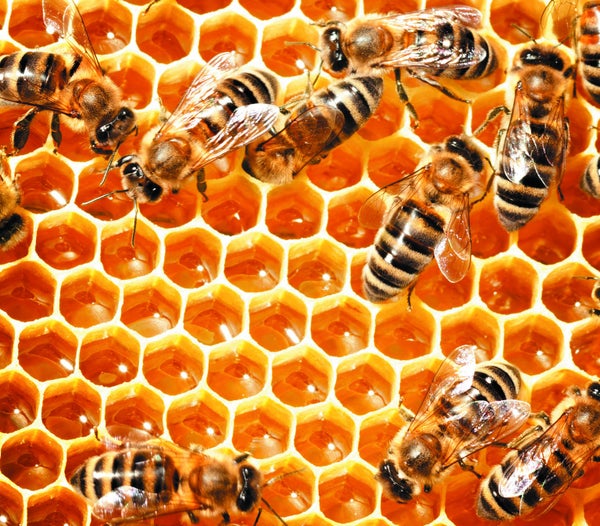
A honeybee queen mates only during one brief period of her life, storing sperm in a sac inside her body for later use. But if she fails to keep that sperm viable, her colony may collapse. This “queen failure” is a main factor in the U.S. drop-off in bee numbers. Identifying reasons for queen failure has proved difficult; queens show no clear symptoms when it happens. But a new study offers a way to zero in on causes, which could lead to a valuable diagnostic tool for beekeepers.
The queen is the only female in her colony who can reproduce. If she cannot lay viable eggs that produce both drone and worker bees, the colony's population plummets, says Alison McAfee, first author of the study and a bee researcher at North Carolina State University.* This is a significant concern for humans; as pollinators of crops such as blueberries and apples, “honeybees are responsible for around between $16 billion and $20 billion worth of economic contribution to agriculture,” says McAfee, who also works for the University of British Columbia. Climate change further threatens honeybees' survival, with previous research showing that high temperatures are also associated with colony loss.
To examine queen failure, McAfee and her colleagues performed a “molecular autopsy” in which they analyzed the fluid inside sperm-storing sacs after exposing queens to extreme heat, extreme cold or pesticides. They found that each stressor was associated with elevated levels of different proteins in the fluid.
On supporting science journalism
If you're enjoying this article, consider supporting our award-winning journalism by subscribing. By purchasing a subscription you are helping to ensure the future of impactful stories about the discoveries and ideas shaping our world today.
The researchers identified the two most elevated proteins as indicators for each stressor. When they looked for these in failed queens donated by British Columbia beekeepers, they found proteins indicating exposure to pesticides and extreme heat but not extreme cold. The results were published in BMC Genomics.
McAfee and her colleagues are using these results to develop a diagnostic test that distinguishes between different causes of queen failure. This tool is in its early stages, but Susan Cobey, a bee researcher at Washington State University, who was not involved in the study and runs a bee-insemination business, is excited by its potential: “If you can determine what's going on with [the queens] and take some preventive control … and avoid losses in the field, that would be awesome.”
*Editor’s Note (1/14/21): This sentence was edited after posting to correct the description of bee reproduction.