
No Man’s Land: The Trailblazing Women Who Ran Britain's Most Extraordinary Military Hospital during World War I
by Wendy Moore
Basic Books, 2020 ($30)
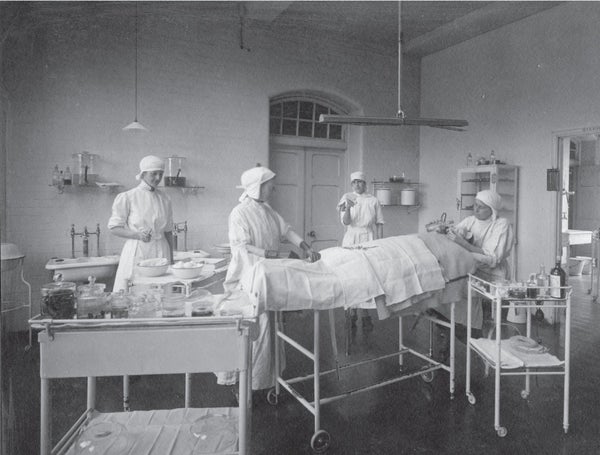
When World War I began, the relatively few English women who had medical degrees were effectively blocked from practicing in prominent hospitals and were relegated to low-paying and low-profile positions. Doctors Louisa Garrett Anderson and Flora Murray were therefore astonished when, in 1915, the British Army requested that they assemble a 1,000-bed military hospital in London. Journalist Moore eloquently brings to life the story of the two women who fought for women's rights and set up Endell Street Hospital—nicknamed the Suffragettes' Hospital and staffed entirely by women. Despite receiving accolades for their achievements, when peacetime came, most women doctors met with the same prejudices and sexism they had faced before the war. As Moore writes, the sad and brutal truth was that many of these women looked back on wartime as the happiest days of their lives.
How Innovation Works: And Why It Flourishes in Freedom
by Matt Ridley
Harper/HarperCollins 2020 ($29.99)
On supporting science journalism
If you're enjoying this article, consider supporting our award-winning journalism by subscribing. By purchasing a subscription you are helping to ensure the future of impactful stories about the discoveries and ideas shaping our world today.
The 18th-century Englishwoman Lady Mary Wortley Montagu did not invent inoculation, the practice of exposing people to disease to generate immunity. But after she learned about it on a trip to Constantinople, the smallpox-scarred writer championed its adoption in the Western world. With stories like Montagu's, journalist Ridley focuses less on the invention of a new concept and more on “the long struggle to get an idea to catch on, usually by combining it with other ideas.” By tracing this struggle for a variety of concepts, from public health techniques to creations such as the steam engine and the computer, Ridley constructs a fascinating theory of innovation, including its prehistoric roots, how it will shape the future and what makes it successful. Sheer dumb luck may help. —Sophie Bushwick
A Furious Sky: The Five-Hundred-Year History of America’s Hurricanes
by Eric Jay Dolin
Liveright, 2020 ($29.95)
A single hurricane can alter the paths of (or end) countless lives and overwrite entire cities, but only by looking at storms in aggregate can humans begin to grasp their magnitude. Writer Dolin employs both perspectives, detailing individuals' journeys through noteworthy U.S. (and non-U.S.) hurricanes, as well as how the tempests shaped history—plus how changing technology affected what scientists learned about each of them. From word of mouth to telegram, radar to hurricane-chasing plane, and computer modeling to orbiting satellite, every new development brought humans closer to understanding the source and structure of these storms—and predicting where they will go next. As powerful hurricanes become more common, Dolin writes, honing our reactions to them will be more important than ever. —Sarah Lewin Frasier
The Woman Who Cracked the Anxiety Code: The Extraordinary Life of Dr. Claire Weekes
by Judith Hoare
Scribe, 2020 ($20)
After a misdiagnosis led to a stay at a tuberculosis sanatorium in the late 1920s, heart palpitations caused Claire Weekes constant worry. Confiding in a friend who had been a WWI soldier, she learned what she had was “nerves”—what we now call anxiety—and was essentially the fear of fear. Journalist Hoare chronicles Weekes's life, from an early career in zoology to an attempt at singing professionally to becoming a doctor at age 42. Eventually she developed a simple but effective treatment for her ailment. In best-selling books, she explained the biology of fear and how to retrain the response to it, advocating for accepting and “floating” through the experience instead of fighting it. This biography restores Weekes's often overlooked contributions to anxiety treatment. —Andrea Thompson
