
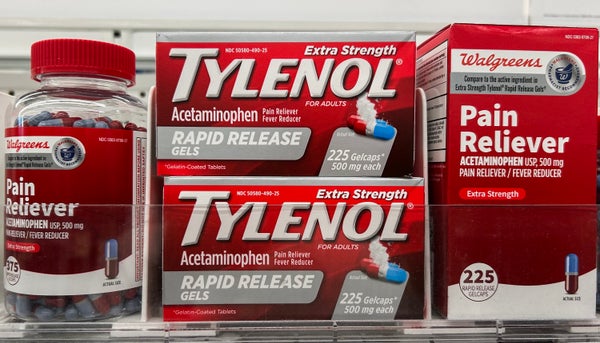
Today, in a cabinet meeting, U.S. secretary of health and human services Robert F. Kennedy, Jr., claimed that there is a link between autism and circumcision. “There’s two studies that show children who are circumcised early have double the rate of autism. It’s highly likely because they are given Tylenol,” he stated, without citing the studies.
Kennedy was probably referring to a 2013 study of eight countries and a 2015 study from Denmark, both of which claimed to show a link between circumcision and autism rates. Helen Tager-Flusberg, an autism researcher and a professor emerita at Boston University, calls the methods used in those studies “appalling.” Tager-Flusberg leads the Coalition of Autism Scientists, a group that advocates for high-quality autism research.
Neither study shows a causal link between circumcision—or the pain relief medications that are often prescribed along with the procedure—and higher rates of autism. In the decade-plus since each was published, autism researchers have heavily criticized these studies. And after reviewing both studies, scientists last year found no evidence supporting the claim that circumcision leads to autism or any other adverse psychological effects.
On supporting science journalism
If you're enjoying this article, consider supporting our award-winning journalism by subscribing. By purchasing a subscription you are helping to ensure the future of impactful stories about the discoveries and ideas shaping our world today.
There is also very little evidence that giving acetaminophen (sold under the brand name Tylenol) to babies or children increases their risk of being diagnosed with autism. There is also very little evidence, as the secretary of health and human services recently suggested, that acetaminophen taken during pregnancy increases a baby’s risk of developing autism.
For the 2013 study, researchers compared rates of circumcision in eight countries, including the U.S., with rates of autism. They found that countries with higher rates of autism tended to have higher rates of circumcision. “They are looking at an association involving a sample size of eight countries,” an extremely small number for establishing such a link, “and they don’t take into consideration any other factors about those countries,” Tager-Flusberg says. Factors such as the average age of becoming parents in each country, as well as genetics are known to affect autism rates. Awareness of autism and diagnostic practices also vary between countries. All of these factors could explain the correlation, but they weren’t controlled for in the analysis. “I’m ashamed that there are colleagues in my field who would actually go out and conduct a study that is so flimsy and that it was actually published,” Tager-Flusberg says.
Experts say that circumcision rates are not a reliable stand-in for acetaminophen use in babies anyway. The researchers of the 2013 study explained they chose to look at circumcision because acetaminophen is often prescribed following the procedure. The medication is commonly taken for numerous childhood ailments, and it may not always be prescribed for circumcision. This means that relying on circumcision to estimate acetaminophen use in newborns is flawed, Tager-Flusberg says.
Scientists who conducted the 2015 study examined rates of autism among 3,347 predominantly Jewish and Muslim boys who were ritually circumcised in the hospital or in doctor’s clinics. That study showed a higher likelihood of being diagnosed with autism among that group than among those who hadn’t been circumcised. “That study is riddled with flaws, which others have written about,” said psychologist David S. Mandell in a statement sent to Scientific American on behalf of the Coalition of Autism Scientists. It had a small sample size, limiting the power of its conclusions, and did not account for many Muslim circumcisions that are not done by doctors, which likely skewed the results. The association between circumcision and autism was only significant for those aged 0 to 4 years old, not those aged 5 to 9 years old, which suggests there may be an alternative explanation for the results.
These kinds of observational studies are inherently limited—even if they show a link between two variables, they cannot explain what causes it. Relying on weak evidence like this to make claims about the causes of autism is “terribly alarming,” Tager-Flusberg continues, and is ultimately confusing and distressing to families.