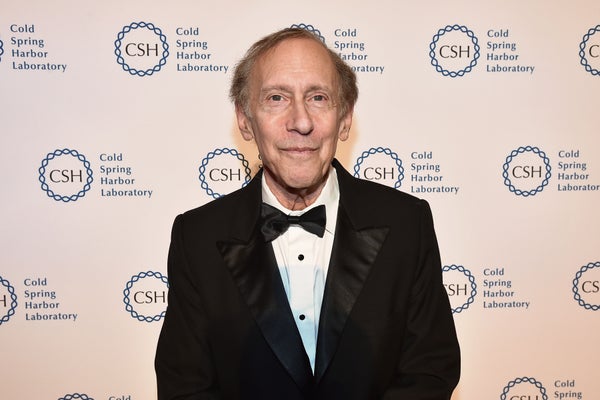
Robert Langer is a chemical engineer and an Institute Professor at the Massachusetts Institute of Technology who specializes in materials science, biotechnology and biomedical engineering. He holds or has pending more than 1,500 patents, and he won the 1998 Lemelson-M.I.T. Prize “for being one of history’s most prolific inventors in medicine.”
[This interview was edited for length and clarity.]
How would you describe the current state of American science?
On supporting science journalism
If you're enjoying this article, consider supporting our award-winning journalism by subscribing. By purchasing a subscription you are helping to ensure the future of impactful stories about the discoveries and ideas shaping our world today.
Overall, it’s outstanding. I think there are concerns about funding and other things. For example, students that would go to certain universities in the U.S. are going overseas, you know, to Germany, China, and so forth, and I think some professors are also doing the same thing. Ultimately that is the biggest issue to me—the talent that we have at different levels and the fostering of that talent. But I still think what American science has done over the past 50, 100 years has been remarkable.
What do you think needs to change in American science right now?
There's a thing people sometimes say: a society gets what it celebrates. I think other societies sometimes celebrate science more than we do, and that affects young people deciding what careers they are going to choose. This has a lot to do with the media—people celebrate actors and actresses and sports heroes, and people aspire to become those people. I think [this is] important for science as well, and [we should make] education and science a major priority.
I'll give you a practical example: the National Medal of Science is the highest scientific honor in the U.S. And for many years, the government, both Republicans and Democrats, made a big deal over that. You'd go to the White House, and the president would give you this award. And yet I’d say, if you look at the past three administrations: The Trump administration now, they don’t seem to be giving that award. The Biden administration didn’t give it for three and a half years. They did do it in 2024, in the beginning of 2025, before he left. And then the Trump administration before that did not give it. [That award is] a real example of celebrating [science]—you know, that you have a national honor that is in science—whereas they certainly are giving other, you know, honors to celebrities. And I’m not against that. I think that’s all great. You know, I think celebrating lots of things is good, and science should be top of that list.
What gives you optimism right now?
I’m just a big believer in the resilience of people. I look at the history of American innovation and education over the past 250 years, and it’s been spectacular. Plenty of times there’ve been setbacks. We’ve had world wars, you know, we’ve had depressions, and people keep persisting and keep learning. They keep discovering and they keep inventing. So that gives me a lot of cause for hope. This is not the worst time by any means.
What is your best advice for an early-career scientist?
You have two choices: you can do something that’s incremental and secure, or you can do something that might be a really big idea and could change the world, but it’s risky, and there’s certainly a chance of failure. I tell people, “Do the second. Try to do something important.”
How has your field changed in the past few years?
I think the big things are advances in biology, genetics and cell biology, which include regenerative medicine and engineered cells to treat cancer and other diseases, but also materials science coming into engineering. Genetic therapies, in my opinion, would not exist without materials science—nanoparticles to deliver them and things like that. Millions of people would have died without some of these things. And another thing is cross-field collaboration. I sometimes say: If you go to different colleges, they’ll have a building for math, a building for chemistry, a building for English. But now there are a number of buildings or institutes that have many different disciplines mixed together. And I think that leads to new ideas, new cross-fertilizations.