
Wake up, astronomers—the universe is calling.
The astronomical observatory equipped with world’s largest camera hit a key milestone on February 24, when a complex data-processing system pushed hundreds of thousands of alerts out to scientists eager to pore over its most exciting sightings.
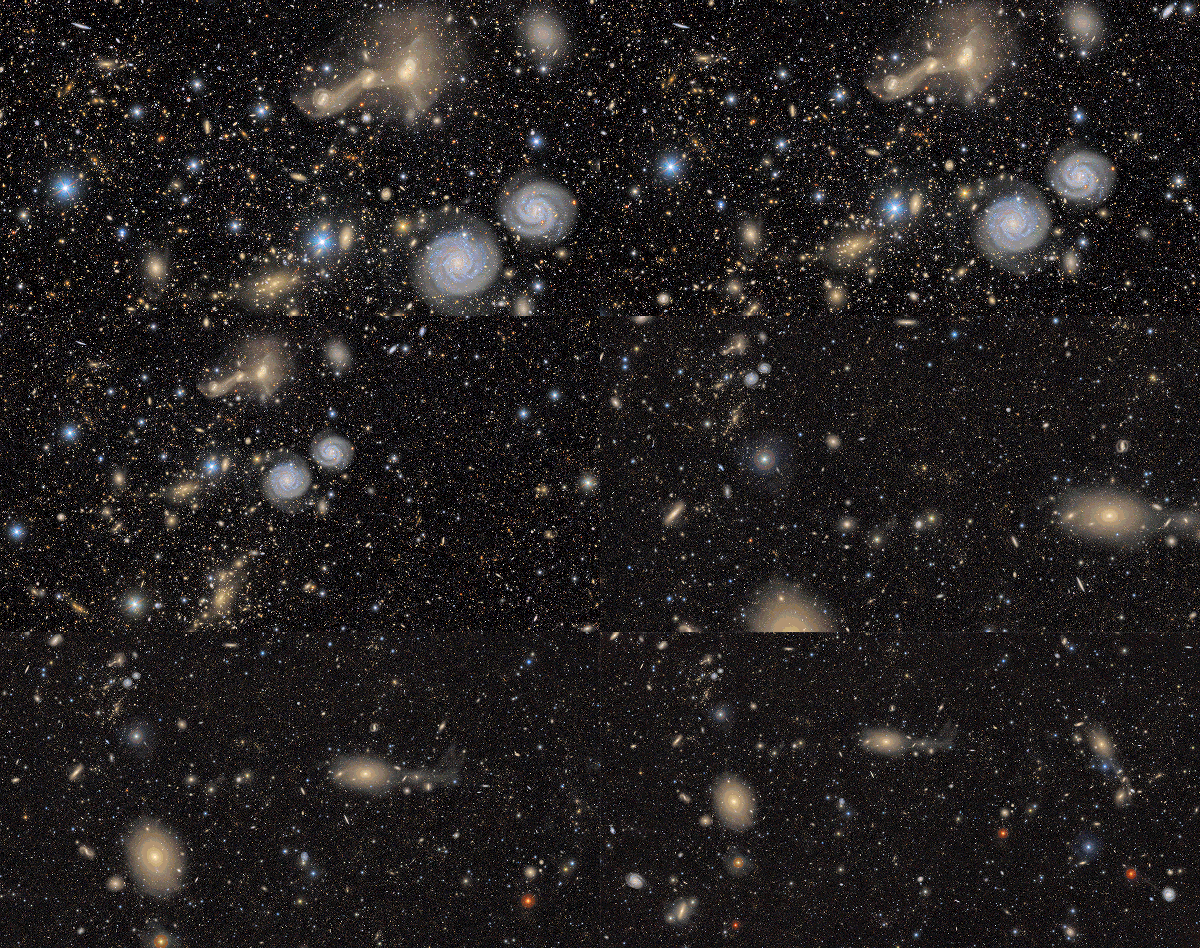
The Vera C. Rubin Observatory began operations last year, capturing stunning, panoramic time-lapse views of the cosmos with ease. Rubin’s first images, based on just 10 hours of observations, let space fans zoom seemingly forever into an overwhelmingly starry sky. But watchful astronomers were always awaiting the next step: the system that would automatically alert them to the most promising activity in the overhead sky amid the 1,000 or so enormous images that Rubin’s telescope captures every night.
On supporting science journalism
If you're enjoying this article, consider supporting our award-winning journalism by subscribing. By purchasing a subscription you are helping to ensure the future of impactful stories about the discoveries and ideas shaping our world today.
“We can detect everything that changes, moves and appears,” said Yusra AlSayyad, an astronomer at Princeton University and Rubin’s deputy associate director for data management, to Scientific American last summer. “It’s way too much for one person to manually sift through and filter and monitor themselves.”
READ MORE: Astronomers Brace for 10 Million Alerts a Night from Rubin Observatory
So even as they were designing and building the Rubin Observatory itself, scientists were also designing an alert system to help astronomers navigate the flood of data. As soon as the telescope began observations, the team started constructing a static reference image of the entire sky in impeccable detail.
Now the data processing systems that support the observatory are starting to automatically compare every new Rubin image to the corresponding section of that background template. The systems identify all of the differences, each of which is individually flagged. The algorithms can also distinguish between a potential supernova and a possible newfound asteroid, for example.
Alerting the scientific community is the final, crucial step. Astronomers—as well as members of the public—can sign up for notifications based on the type of sighting they’re interested in and the brightness of the observation in question. And now that the alerts system has gone live, users receive a tiny, fuzzy image with some astronomical metadata of each observation that fits their criteria—all just a couple of minutes after Rubin captures the original image.
On February 24, the first night of public access, the system created and distributed some 800,000 alerts, sending out notifications for swooping asteroids, exploding stars, flaring supermassive black holes and other transient celestial events. That number is expected to grow to millions of alerts every single night.
“The scale and speed of the alerts are unprecedented,” said Hsin-Fang Chiang, a software developer at the SLAC National Accelerator Laboratory, which co-operates Rubin, in a press release. “After generating hundreds of thousands of test alerts in the last few months, we are now able to say, within minutes, with each image, ‘here is everything’ and ‘go.’”