
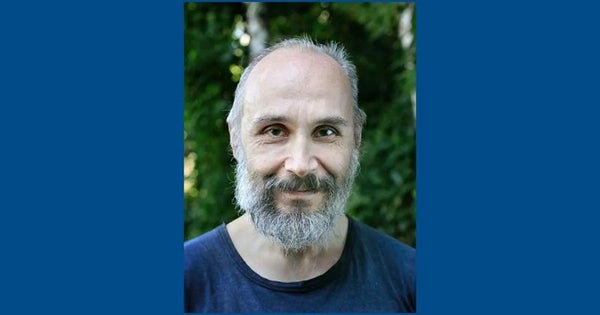
Prominent Russian mathematician Mikhail Verbitsky was arrested by Armenian authorities last week, international sources reported over the weekend. Russia has called for his extradition to face charges of inciting terrorism. Verbitsky was visiting Armenia to attend a high school graduation, according to a Facebook post from his daughter.
Verbitsky is known for his work in complex geometry, the study of alien, multidimensional shapes, as well as his outspoken political blog. Russia opened a criminal case against him in response to his harsh criticism of the country’s 2022 invasion of Ukraine and accused him of inciting terrorist attacks. Since 2017 he has been a professor at Brazil’s Institute for Pure and Applied Mathematics (IMPA).
Word of Verbitsky’s arrest spread throughout the math community over the weekend, and a number of top mathematicians signed petitions demanding his immediate release. The field has been critical of Russia since the nation’s invasion of Ukraine began in 2022; that year organizers of the discipline’s largest conference canceled a plan to hold the meeting in Saint Petersburg.
On supporting science journalism
If you're enjoying this article, consider supporting our award-winning journalism by subscribing. By purchasing a subscription you are helping to ensure the future of impactful stories about the discoveries and ideas shaping our world today.
Yesterday the French Mathematical Society posted an official statement that called on Armenian authorities to refuse Russia’s request for extradition. It appears that the community’s efforts may have prevailed: reports emerged today that Armenian authorities have at least temporarily freed Verbitsky and are not complying with Russia’s demand, although no official details are available.