New Issue: Orbital Catastrophe Ahead? Read Now

Massive Saharan dust storm brings risk of ‘blood rain’ and fiery skies to southern Europe

Known as “La Calima,” this desert dust plume could hit Spain, Portugal and France, bringing with it grit-laden, rust-colored rainfall

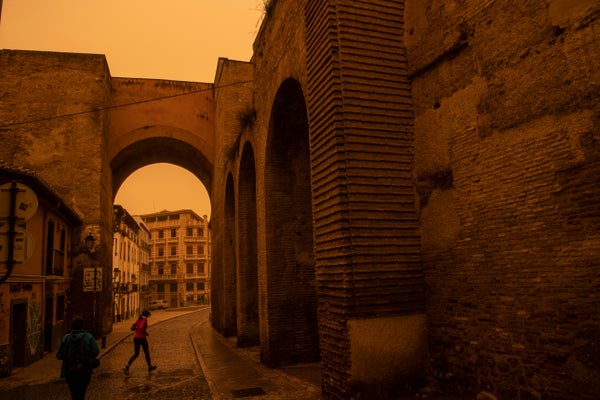
A woman walks across the street in Granada, where Saharan dust has turned the sky orange.

Saharan dust turns the sky orange in Spain in 2022.

Carlos Gil Andreu/Getty Images

Join Our Community of Science Lovers!

A hard rain is going to fall. Dust plumes, whipped up by winds over the Sahara Desert, are moving over western Europe. This annual phenomenon—known in Spanish as “La Calima,” which literally translates to “the haze”—means a plume of dust and sand is threatening an area covering Spain, Portugal and France.

“Blood rain”—essentially falling red mud created by the sand and precipitation mixing together—is expected, as are hazardous air conditions and, of course, a red haze. The conditions could last days, according to some forecasts. The rain, despite its name, is not harmful in itself. But public health authorities are urging older people, children and people with respiratory issues to limit their time outdoors so as not to inhale the dust.
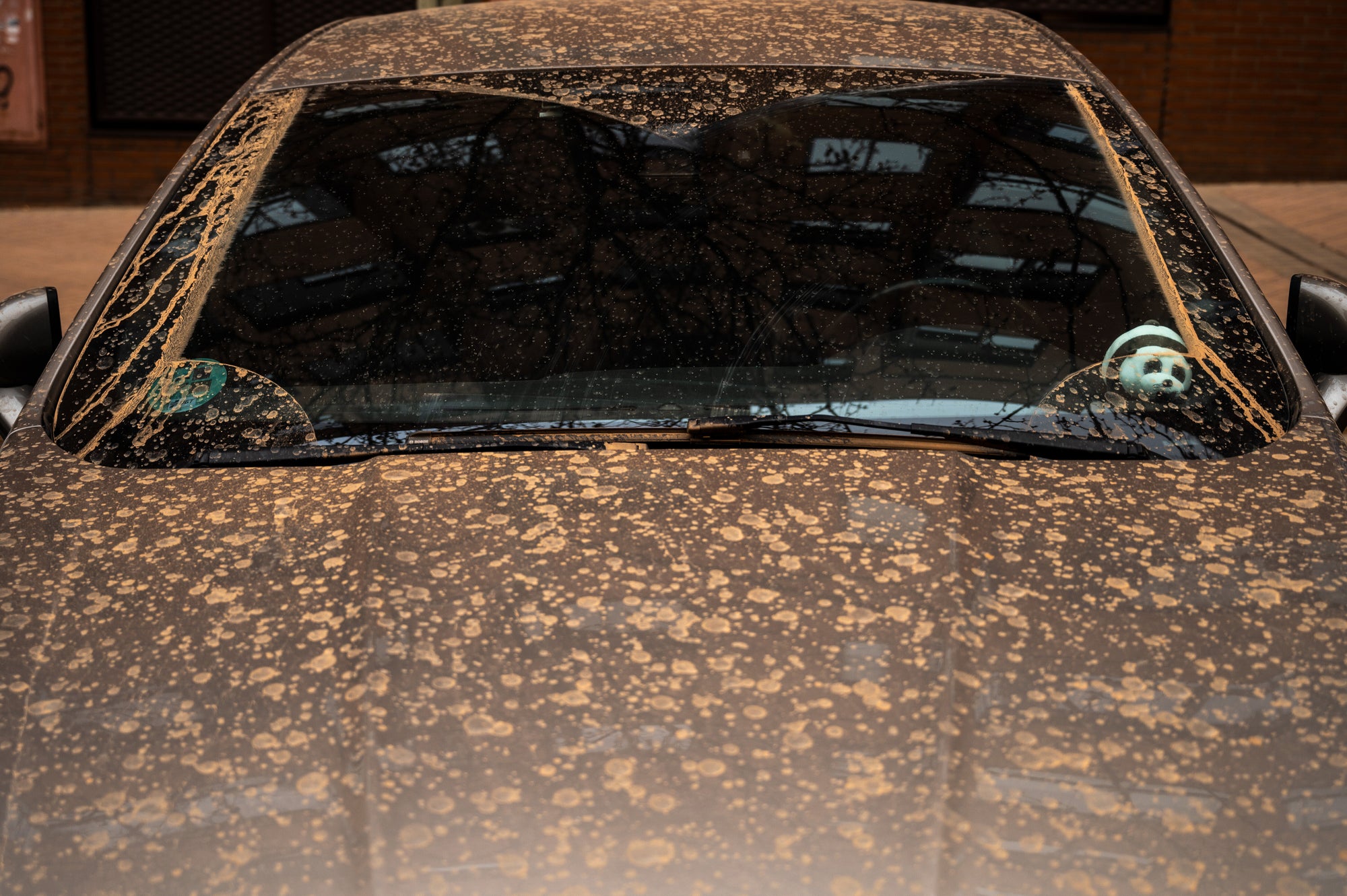
A car is seen covered with brown dust generated by a high amount of dust particles in suspension coming from the Sahara

Dust from the Sahara covers a car in Madrid in 2022.

Marcos del Mazo/LightRocket via Getty Images


On supporting science journalism

If you're enjoying this article, consider supporting our award-winning journalism by subscribing. By purchasing a subscription you are helping to ensure the future of impactful stories about the discoveries and ideas shaping our world today.


Every year tens of millions of tons of particulate matter from the Sahara is swept up into the air and dispersed across the globe, with some dust even reaching the Americas.

This plume appears to be driven by a local weather phenomenon known as DANA (an acronym for “isolated depression at high levels” in Spanish), which is an isolated high-altitude depression that forms when cold air meets warm air above the Mediterranean Sea, causing hotter air to rapidly rise and form dense clouds. When a DANA and La Calima combine, they can create severe and even dangerous weather conditions over the region.

Subscribe to Support Independent Journalism

Great science journalism requires human expertise, time, effort and creativity. And it costs money. That’s why I and the journalists here at Scientific American hope you’ll join our community.

When you subscribe, you are supporting staff and freelance journalists who are passionate about telling science stories that are true, important and compelling. Our editors and reporters are often experts in their fields, which means they understand the nuances of big discoveries and can untangle the breakthroughs from the hype. With a subscription, you are also supporting rigorous fact-checking to ensure the words we publish are precise and accurate. And you’re supporting original illustrations, graphics and photos that bring you closer to an advanced laboratory, an ice sheet in Antarctica or a space mission in orbit. You’re helping us craft other types of high-quality journalism as well: Our newsletters are carefully written, edited and curated by staffers you have or will come to know and love. Our Science Quickly podcast is based on original reporting, collaboration with editors and scientists and exacting production.

Subscriptions keep this engine running so we can continue to deliver thoughtful, rigorous and independent science journalism to you. In an era of viral misinformation, this work is crucial. If you value what we do, I hope you’ll consider joining us as a subscriber

Thank you,

Jeanna Bryner, Editor in Chief, Scientific American

Subscribe