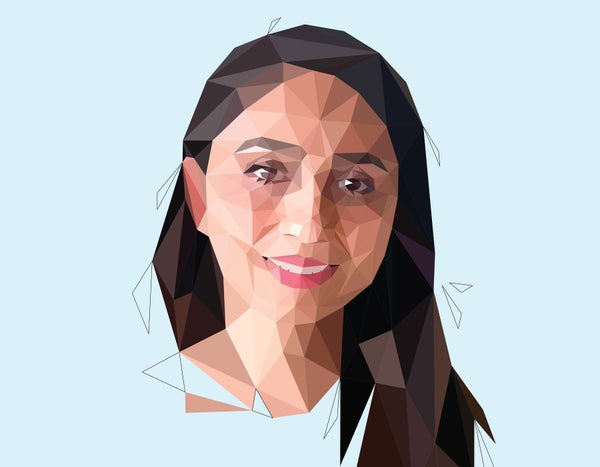
Samagya Banskota grew up in a family of doctors in Nepal, aware from a young age of how physicians could change people’s lives. Today she is a biomedical engineer at Boston University, studying ways to create safer, more effective therapies for a multitude of diseases.
Banskota is creating so-called viruslike particles to deliver gene-editing technologies to cells. These engineered particles have protein structures that resemble those of viruses and can target specific cells in the body, but they lack any genetic material of their own, so they’re not infectious. By packaging gene-editing tools in this way, her team has been able to avoid the problems associated with using actual viruses to deliver therapies.
On supporting science journalism
If you're enjoying this article, consider supporting our award-winning journalism by subscribing. By purchasing a subscription you are helping to ensure the future of impactful stories about the discoveries and ideas shaping our world today.

Tony Luong
Other investigators have shown that viruslike particles can deliver gene-editing machinery to cells in petri dishes. But Banskota and her colleagues were the first to successfully demonstrate this approach in living organisms at a therapeutic level, restoring partial visual function in mice with genetic blindness. “Proteins have the shortest half-life, so they go in, they do the job, and they just get destroyed within a few hours,” she explains. “We don’t have to worry about any other side effects that may come from prolonged expressions of these systems.”
These viruslike particles could be used to deliver therapies other than gene-editing materials, Banskota notes. Antibody drugs such as Herceptin, for breast cancer, are lab-engineered proteins. They can be very powerful, but they work by targeting proteins on the outside of cells. The drivers of a lot of human diseases—including several cancers and neurological diseases—are located inside cells, where such therapies can’t reach them. “With our delivery system being so good for protein delivery,” Banskota says, “I think it opens up a whole new category of medicines for diseases that we potentially can treat.”
This article is part of “The Young American Scientists,” an editorially independent project that was produced with financial support from Regeneron. Special thanks to the Museum of Science in Boston, where Banskota's portrait and video interview were captured.