
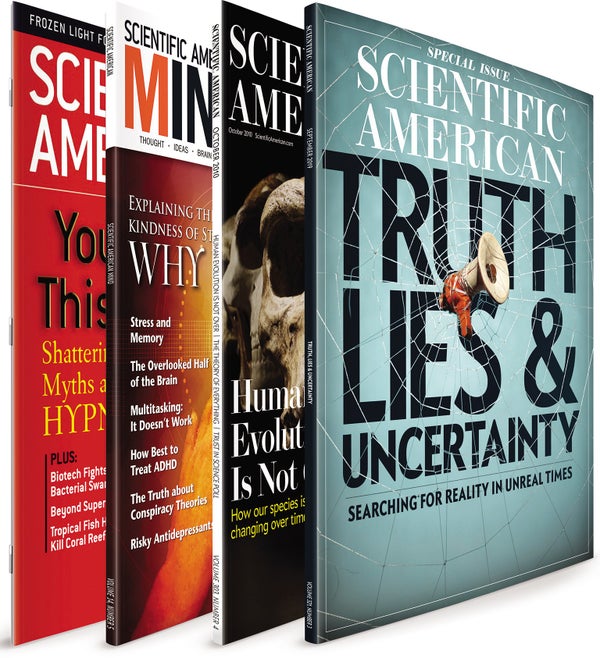
The scientific process, as I have often said, is an engine of human prosperity. For centuries it has been a driving force behind the advances in knowledge and well-being that we’ve enjoyed as a species. But none of us can benefit from that evidence-based engine if we don’t first communicate well with one another. We need to be able to share new ideas and the products of research. The recipients need to be able to trust that the information is true and to understand an innovation’s possible advantages or drawbacks so that we can make sound decisions as a society about what to do with it. If we cannot impart what we are learning to one another in this foundational way, we simply won't continue to progress.
Today, unfortunately, we live in a world where this exchange of information can be fraught. Opinions based on false claims, misunderstandings and actual scientific uncertainties sweep over social media unremittingly. Countering the miasma of dreck feels more important than ever. Fortunately, research can provide helpful insights on that effort, too, as you’ll learn in this single-topic issue on “Truth, Lies and Uncertainty.”
The stories in the feature well run from what physics can tell us (and not tell us) about the reality and the fundamental laws of the universe to the innate deceptions of a wide variety of animals (not just humans) to how we can productively confront actual unknowns. We hope you will find this special edition as thought-provoking and fascinating to read as we found it while creating it.
On supporting science journalism
If you're enjoying this article, consider supporting our award-winning journalism by subscribing. By purchasing a subscription you are helping to ensure the future of impactful stories about the discoveries and ideas shaping our world today.
Supporting better communication isn’t just something that’s nice to do. It’s vital to ensure a better future for humanity. And it seems fitting that this issue’s theme should be my last, after 18 years on staff at Scientific American, the past 10 as its editor in chief. By the time you read this, I will be just starting my new role as dean of the College of Communication at Boston University, my alma mater. If I am successful at all in supporting my new colleagues—and, more important, the students who will form the next generation of communicators—it will be because of my good fortune in having served at the 174-year-old national treasure that is Scientific American.
Working with the editorial and business teams, collaborating with our researcher and journalist authors and board of advisers on articles, and interacting with all of you—our readers—has been amazing. You’ve all taught me so much, and I thank you.