
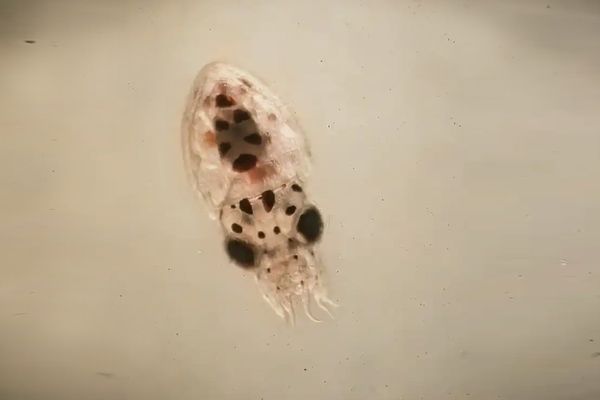
Embattled Mediterranean fisheries and ecosystems may soon be saved by an eight-limbed army. Italian scientists have released 130,000 common octopuses (and counting) to fight blue crabs that have proliferated in parts of the Mediterranean, to the detriment of local species. These octopuses, born in the lab, are in their freshly hatched “paralarval” state and just a few millimeters long—but those that grow up will be fierce predators of the invasive crustaceans.
Though blue crabs are a prized local seafood in the mid-Atlantic region of the U.S., they are invasive species elsewhere. The crabs were first spotted in the Mediterranean Sea in the last century but really began wreaking havoc only around a decade ago, when their population surged, posing a threat both to native biodiversity and to the fishing industry. Italy’s government has funded efforts to “contain and combat” their aggressive spread as hundreds of fisheries have closed down across the country’s coastline. Researchers released the octopuses’ paralarvae into the Adriatic Sea, the Mediterranean’s narrow northern arm, to boost natural populations. Under optimal circumstances, a one-kilogram adult can consume four medium-sized blue crabs a day, the experts behind the project say.
“We are not introducing a new species but working on strengthening the population of a native species already naturally present in the Adriatic,” says Antonio Casalini, an aquaculture research technician at the University of Bologna in Italy, which runs the project together with the Emilia-Romagna region’s government.
On supporting science journalism
If you're enjoying this article, consider supporting our award-winning journalism by subscribing. By purchasing a subscription you are helping to ensure the future of impactful stories about the discoveries and ideas shaping our world today.

The project, named Octo-Blu, started in 2024 with a first phase of lab experimentation that included determining how to rear the baby octopuses. This summer researchers released around 130,000 paralarvae in the Adriatic off the towns of Cesenatico and Riccione—an area hit by the blue crab—and also installed artificial dens to provide additional shelter to the newly arrived cephalopods.
Gianluca Sarà, a marine ecologist at the University of Palermo in Italy, who is not involved in the project, says that the idea behind the project is “powerful; it’s great”—but it’s possible the impact will be “absolutely negligible.” Usually octopuses’ paralarvae have a mortality rate of around 99.9 percent, Sarà says, meaning that from thousands of them, only a few individuals will reach adulthood.
Casalini notes that the team chose the common octopus because it is particularly hardy and quick-reproducing—females can produce hundreds of thousands of eggs—and because this infusion can help to supplement an existing population. The researchers plan to release more as they produce more paralarvae. The results will be seen in the long term, Casalini says. He stresses that rather than fully eliminating the invasive crab, this approach will help control the populations in conjunction with other management strategies, such as existing fishing initiatives.