
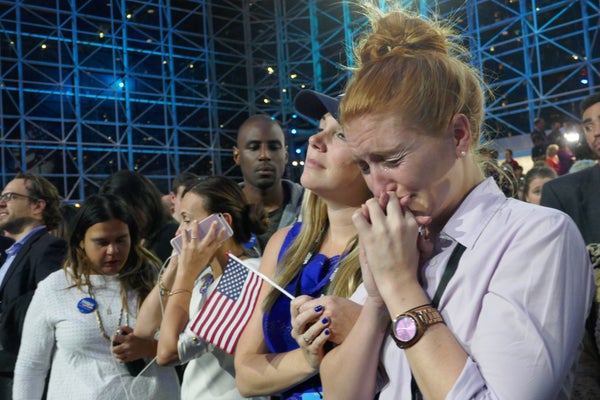
From the moment Donald Trump was declared the president-elect, many on the losing side—about half the nation—have been stunned. Gone is the future they expected. Disappeared the America they believed in, the country that represented their values and all they hold dear. In New York City some saw the faces of people on the subway or walking through Times Square as reminiscent of the shock and sadness they had seen in the immediate aftermath of the 9/11 terror attacks. In cities across the country from Boston to Seattle crowds carried placards denying the reality that Donald Trump is to be our president.
It was “like a collective trauma, a shared sense of loss and grief,” says psychologist Jack Saul, director of the International Trauma Studies Program in New York City. Throughout the campaign, he notes, voters had a sense that a large group of their fellow citizens did not share their values. But the fact of the victory and the numbers of people who supported it was shattering to many. Grief is an apt descriptor for what many people are feeling, Saul says, as well as fear for the future. The bereaved have lost their vision of what the U.S. is as they confront the new reality.
The trauma is collective, Saul says. Recovery from it requires a collective response, but he offers these tips for things individuals can do on their own to heal:
On supporting science journalism
If you're enjoying this article, consider supporting our award-winning journalism by subscribing. By purchasing a subscription you are helping to ensure the future of impactful stories about the discoveries and ideas shaping our world today.
How to Heal
—Take care of yourself. Give yourself breaks from thinking about the election and what is to come. Take time to relax and enjoy yourself. Harness the peace that mindfulness and yoga can bring. Take actions that will affirm your values—for example, reaching out to help an immigrant. Write letters or make art to advocate for what you believe in.
—Join with like-minded people to give and receive social support. “Renew and strengthen your bonds with others with a similar sense of reality,” Saul suggests. This will help you feel neither alone nor abnormal. Demonstrating can be healthy because it is a shared activity for expressing your feelings, but demonstrating is just a beginning step in the process of recovery.
—Take action with a group. You can join advocacy organizations that act to protect people you may feel are now threatened, including immigrants or Muslims or women. For example, Saul says, the American Civil Liberties Union is now preparing to act if constitutionally protected rights are threatened.
Acknowledge the Divide
The truth with which this election confronts us, Saul says, is that “we have this social rupture between groups that feel a very different sense of reality. That’s the collective trauma that needs to be healed.”
How? Hillary Clinton gave some guidance in her concession speech, he says, when she asked people to look at the things both sides can agree on, such as rebuilding our infrastructure and finding ways we can work together to do this.
We have to get together, not just with people who think the way we do, he says, but with those who think differently. During the election campaign many people demonized those on the other side. That is destructive, he says. Creating groups that focus on issues the two sides can agree on could be a crucial, constructive step toward healing our social rupture.
Healing grief, however, requires all of us to accept reality, rather than deny it and try to hold on to what is lost. “It’s important,” Saul says, “to accept the reality that half the country sees things differently. It’s important to recognize the legitimacy of what electors of Trump have been feeling. Things need to change for them. They’ve been feeling left out.”
Perhaps the grief we are feeling can even give us an insight into the sense of loss the current campaign victors were feeling so powerfully before this historic election.