
The following essay is reprinted with permission from  The Conversation, an online publication covering the latest research.
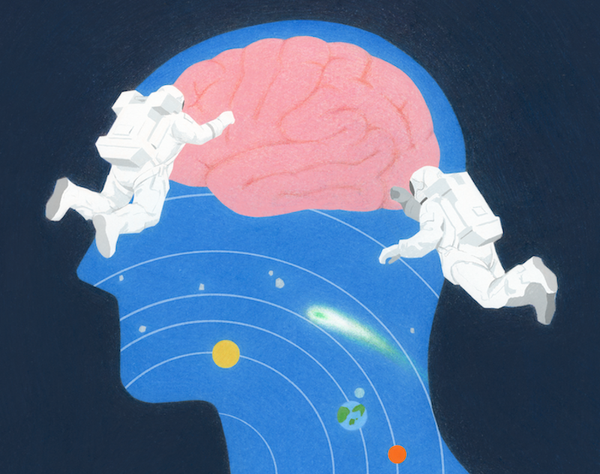
Going to space is harsh on the human body, and as a new study from our research team finds, the brain shifts upward and backward and deforms inside the skull after spaceflight.
The extent of these changes was greater for those who spent longer in space. As NASA plans longer space missions, and space travel expands beyond professional astronauts, these findings will become more relevant.
On supporting science journalism
If you're enjoying this article, consider supporting our award-winning journalism by subscribing. By purchasing a subscription you are helping to ensure the future of impactful stories about the discoveries and ideas shaping our world today.
Why it matters
On Earth, gravity constantly pulls fluids in your body and your brain toward the center of the Earth. In space, that force disappears. Body fluids shift toward the head, which gives astronauts a puffy face. Under normal gravity, the brain, cerebrospinal fluid and surrounding tissues reach a stable balance. In microgravity, that balance changes.
Without gravity pulling downward, the brain floats in the skull and experiences various forces from the surrounding soft tissues and the skull itself. Earlier studies showed that the brain appears higher in the skull after spaceflight. But most of those studies focused on average or whole brain measures, which can hide important effects within different areas of the brain.
Our goal was to look more closely.
How we do our work
We analyzed brain MRI scans from 26 astronauts who spent different lengths of time in space, from a few weeks to over a year. To focus on the brain’s movement, we aligned each person’s skull across scans taken before and after spaceflight.
That comparison allowed us to measure how the brain shifted relative to the skull itself. Instead of treating the brain as a single object, we divided it into more than 100 regions and tracked how each one had shifted. This approach enabled us to see patterns that were missed when looking at the whole brain, on average.
We found that the brain consistently moved upward and backward when comparing postflight to preflight. The longer someone stayed in space, the larger the shift. One of the more striking findings came from examining individual brain regions.
In astronauts who spent about a year aboard the International Space Station, some areas near the top of the brain moved upward by more than 2 millimeters, while the rest of the brain barely moved. That distance may sound small, but inside the tightly packed space of the skull, it is meaningful.
Areas involved in movement and sensation showed the largest shifts. Structures on the two sides of the brain moved toward the midline, which means they moved in the opposite direction for each brain hemisphere. These opposing patterns cancel each other out in whole brain averages, which explains why earlier studies missed them.
Most of the shifts and deformations gradually returned to normal by six months after return to Earth. The backward shift showed less recovery, likely because gravity pulls downward rather than forward, so some effects of spaceflight on brain position may last longer than others.
What’s next
NASA’s Artemis program will mark a new era of space exploration. Understanding how the brain responds will help scientists assess long-term risks and develop countermeasures.
Our findings don’t mean that people should not travel to space. While we found that larger location shifts of a sensory-processing brain region correlated with postflight balance changes, the crew members did not experience overt symptoms – such as headaches or brain fog – related to brain position shifts.
Our findings do not reveal immediate health risks. Knowing how the brain moves in spaceflight and subsequently recovers allows researchers to understand the effects of microgravity on human physiology. It can help space agencies to design safer missions.
The Research Brief is a short take on interesting academic work.
This article was originally published on The Conversation. Read the original article.