
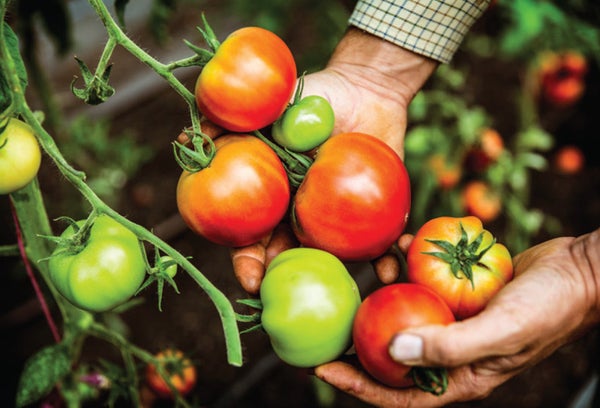
Tomatoes come in a dizzying array of shapes, sizes and flavors—and a new study uses state-of-the-art DNA-sequencing technology to finally trace the genetic underpinnings of these differences. The comparison of 100 tomato varieties' genetic sequences reveals more than 230,000 variations within their DNA.
Understanding how these mutations modify tomatoes will give breeders and scientists new tools to refine this crop and others, says Zachary Lippman, a plant biologist at Cold Spring Harbor Laboratory and a senior author on the study, published in July in Cell. The scientists sequenced and compared the genomes of a wide range of tomatoes, including wild and vintage heirloom varieties as well as more modern ones. They used a technique called long-read sequencing to track down large stretches of tomato DNA that had been copied, deleted or moved. These structural variations, which significantly change the genome, were impossible to pinpoint using previous technologies that allowed scientists to read only small snippets at a time.
Scientists had known the DNA of a given species can have significant structural variations, but this is the first comprehensive determination of their extent and nature, says Boyce Thompson Institute plant biologist Jim Giovannoni, who was not involved in the study.
On supporting science journalism
If you're enjoying this article, consider supporting our award-winning journalism by subscribing. By purchasing a subscription you are helping to ensure the future of impactful stories about the discoveries and ideas shaping our world today.
Once the researchers identified the numerous mutations, they examined how these variations influence tomato characteristics. They focused on three particular traits—flavor, size and ease of harvesting. In one test, the team identified a gene that infuses a smoky flavor, presenting breeders with a target attribute to enhance or eliminate at will. In another experiment, the scientists used the gene-editing tool CRISPR to modify the DNA structure and changed fruit size by making more copies of a particular gene. Finally, they investigated how variations influence a trait that makes tomatoes grow in an easier-to-harvest formation but results in lowered fruit production. The researchers showed how four structural variations together can tune relevant genes that maintain the trait without reducing fruit productivity, establishing a protocol to breed for that balance.
The study “reveals thousands of other gene-associated structural variations that may explain many important tomato traits—disease response, stress tolerance, yield, performance and quality—that can now be accessed,” Giovannoni says. Knowing which gene to mutate for tuning a particular trait is a “holy grail” for agricultural plant breeders and geneticists, Lippman says, noting that studies like these can set the stage to improve crops using predictable, accurate breeding.