
CLIMATEWIRE | The Energy Department is creating a "SuperLab" to test the electric grid by using simulated climate disasters.
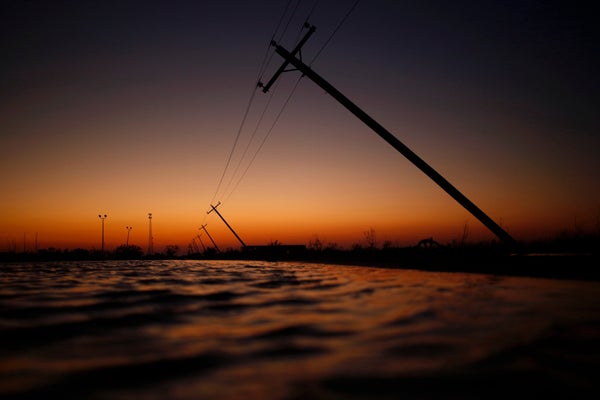
The initiative, to be launched next year, will include seven DOE laboratories. It will mimic catastrophes such as a cyberattack aimed at causing shock and chaos in a critical area or a blackout caused by a hurricane or large Western wildfire that topples power lines.
Some of the groundwork has already been created, including previous SuperLabs and a recent research platform that can share information by technical staff from the seven far-flung labs as if they were one.
On supporting science journalism
If you're enjoying this article, consider supporting our award-winning journalism by subscribing. By purchasing a subscription you are helping to ensure the future of impactful stories about the discoveries and ideas shaping our world today.
One goal is to determine how to move the right mix of available clean electricity and stored power from batteries, hydrogen and hydroelectric systems to the right places.
An equivalent effort in the Pentagon would likely be called a war game. The goal of the energy exercise, as one DOE official described it, is to ensure “everyone brings their best game and we all work together.”
That hasn’t always happened. In 2017, according to a recent DOE report, the first SuperLab was too slow and suffered from “varying latency.” For another one held in 2021, the ambition was small: It focused on rapidly fixing the power problems of a small Alaskan city.
One held in January involved only two DOE labs, used a lot of simulation and lasted only an hour.
The SuperLab planned for late 2024 will be much larger.
“We’ll unlock the full potential of our national laboratories,” said Rob Hovsapian, an engineer and research lead at the National Renewable Energy Laboratory.
The exercise is designed to help scientists explore the capabilities and the gaps in the emerging clean energy systems, including the potential danger from natural and human-made threats. It will deal with “a large problem of national interest that no one lab could handle by themselves,” Hovsapian explained in an interview.
Hovsapian, mechanical engineer who spent the first 20 years of his career working for defense-related companies and later for the Office of Naval Research, said experts in the military and industry had begun to realize that dealing with climate change will create some new vulnerabilities.
Pulling away from gasoline and diesel fuel, for example, could eventually lead to cities with large fleets of electric vehicles that may have no place to recharge in a lengthy blackout.
“This is an international problem,” Hovsapian said, adding that the availability of wind and solar power is often far from where it's needed in crowded cities, raising the prospect that increasingly larger storms could knock out newly built distribution lines.
Hovsapian noted that U.S. cities can currently withstand long winter storms by generating heat and electricity from large fossil fuel power plants, but there will be a need to replace them with utility-scale storage facilities that are able to hold renewable energy and nuclear power.
As Hovsapian put it, the new power systems will require protections, including from cyberattacks.
“Every day, you’re coming into work knowing you are anticipating new problems that are going to happen in the future, even though it’s sometimes difficult to articulate," he said. "But it’s important to create new tools and the next generation of scientists.”
Reprinted from E&E News with permission from POLITICO, LLC. Copyright 2023. E&E News provides essential news for energy and environment professionals.