
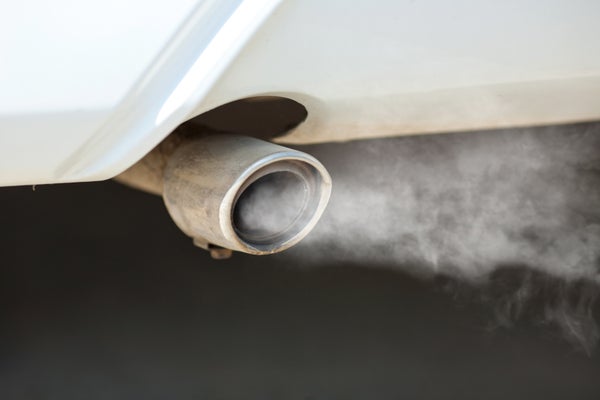
CLIMATEWIRE | Cutting pollution from cars and trucks would save more than 89,000 lives and billions of dollars in health care costs, according to a report from the American Lung Association.
That makes it crucial for EPA to adopt strict limits on tailpipe pollution and allow California and other states to implement their own rules to cut transportation emissions, the group said in the report, released earlier this month.
ALA staff projected the health impacts of two scenarios: one in which most passenger cars in the U.S. are powered by gasoline, and another where the majority of cars are electric. They found that reducing pollution would prevent 89,300 premature deaths, and save $978 billion in health care costs by 2050. It would also prevent 2.2 million asthma attacks and 10.7 million lost work days, according to the report.
On supporting science journalism
If you're enjoying this article, consider supporting our award-winning journalism by subscribing. By purchasing a subscription you are helping to ensure the future of impactful stories about the discoveries and ideas shaping our world today.
“When you put it in those human terms, then it begs the question: What are the damages caused right now from our system that’s so heavily reliant on combustion of fossil fuels?” said Will Barrett, one of the report’s authors and ALA's national senior director of advocacy for clean air.
EPA projects that its proposed tailpipe rule could push two-thirds of new cars and light trucks to be electric by 2032, as part of the Biden administration's efforts to address climate change. Transportation is the biggest source of greenhouse gas emissions in the country.
ALA argues that EPA should go even further and adopt a more stringent alternative that would aim for 69 percent of new cars to be electric by 2032. California and several other states have adopted even stricter standards, which call for phasing out sales of new internal combustion vehicles by 2035.
“We know the sources of unhealthy air, and we know the solutions,” Barrett said. “It’s time to take action to really set those policies in place that’ll get us there.”
The report builds on research ALA published in April, which found that more than a third of Americans, or about 120 million people, live in areas with unhealthy levels of ozone or particle pollution. That "State of the Air" report found that the people most affected by air pollution are predominantly low-income, Black and Hispanic residents living in neighborhoods near roads and heavy industry.
The racial disparity in pollution makes it imperative to cut pollution, and to make sure that electric vehicles are available to low-income families, the newest report said.
The Inflation Reduction Act, which President Joe Biden signed last year, includes a $4,000 tax credit for people who buy used EVs. The report calls on the federal government and states to explore other policies to increase access to cleaner forms of transportation.
“This is vital to ensuring all communities — and especially communities bearing the greatest health impact of transportation pollution today — benefit from the shift from combustion,” ALA said in the report.
Reprinted from E&E News with permission from POLITICO, LLC. Copyright 2023. E&E News provides essential news for energy and environment professionals.