
The Arctic is a dramatically different place than it was 20 years ago, when scientists first began giving it an annual checkup—and its current state is dire.
The first Arctic Report Card was released by the National Oceanic and Atmospheric Administration in 2006. Since then the region has warmed twice as fast as the global average. About 95 percent of the oldest, thickest sea ice is gone—the sliver that remains is collected in an area north of Greenland. Even the central Arctic Ocean is becoming warmer and saltier, causing more ice melt and changing how much heat is released into the atmosphere in a way that affects weather patterns around the world.
Those are just some of the stark changes 20 years have wrought. The findings were highlighted in the 2025 Arctic Report Card, released on Tuesday.
On supporting science journalism
If you're enjoying this article, consider supporting our award-winning journalism by subscribing. By purchasing a subscription you are helping to ensure the future of impactful stories about the discoveries and ideas shaping our world today.
“The very first Arctic Report Card in 2006 was issued because things were changing rapidly, and this need for rapid updates was felt keenly,” said Rick Thoman of the International Arctic Research Center at the University of Alaska Fairbanks during a press briefing at the annual meeting of the American Geophysical Union. “Every year does not have a new record, but cumulatively [the report] provides a record of where we’ve been and a guide—just a guide—to where we’re going.”
Between October 2024 and September 2025, surface air temperatures in the Arctic were at their warmest since at least 1900, according to the report. The 10 warmest years in the region have all fallen within the past decade.
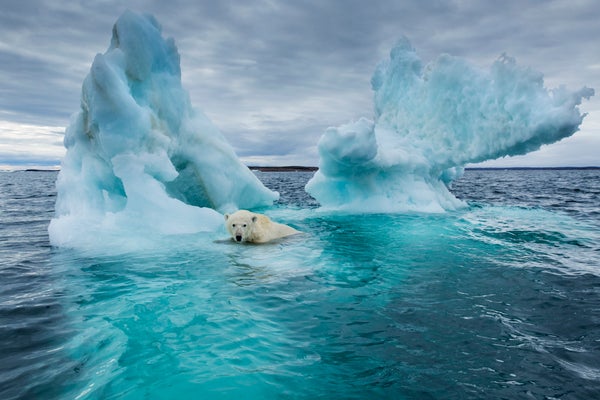
In the ocean, the layer of sea ice that expands each winter as temperatures drop reached a record low annual peak. The summer minimum extent was the 10th lowest in at least 47 years. The disappearing sea ice means that less of the sun’s rays are reflected back to space and are instead absorbed by the ocean, driving a vicious cycle of warming that, in turn, causes more ice loss. The dwindling sea ice also means critical habitats for iconic species such as polar bears and walrus are fast disappearing.
The Arctic Ocean is undergoing what scientists are calling “Atlantification”—a process where warm, salty water from the Atlantic flows north, changing how waters of different temperatures and densities are layered in the Arctic, disrupting ecosystems and altering how heat moves from the water to the air.
A warmer ocean also helped a powerful storm, former Typhoon Halong, maintain strength across the Pacific in October 2025, eventually barreling into Alaska with hurricane-force winds and devastating storm surge. More than 1,500 residents were evacuated, and some villages were all but destroyed.
Glaciers, too, are rapidly melting away, the report found. Glaciers in Alaska have lost 125 vertical feet since the mid-20th century. Greenland’s ice sheet didn’t lose as much ice this year as it did in some previous years. But it continued to pour meltwater into the oceans, raising sea levels.
The Arctic is simply becoming wetter, with more precipitation falling as rain instead of snow. June snow cover over the entire Arctic is half of what it was 60 years ago, the report found.
Permafrost also continues to thaw, releasing once trapped carbon into the atmosphere and disgorging iron and other elements that have turned rivers and streams orange. These “rusting rivers,” found in more than 200 watersheds, are more acidic than normal and have elevated levels of toxic metals that endanger local ecosystems. And as the permafrost thaws, the tundra of the Arctic biome is shrinking, and the boreal forest biome is creeping northward, disrupting ecosystems.
Editor’s Note (12/16/25): This article was edited after posting to better clarify the descriptions of the Arctic Report Card and “rusting rivers.”