
Type 1 diabetics, who do not produce the hormone insulin, must be vigilant about their blood glucose (sugar) levels. Chronic high blood sugar, which results from too little insulin, can lead to nerve and organ damage; low levels can cause seizures or death. The current gold standard in care involves a continuous glucose monitor (a sensor inserted under the skin), an insulin pump (a wearable device that can be programmed to release varying amounts of insulin), and a lot of trial-and-error work by the user—because the monitor and the pump don't talk to each other.
Researchers have been working to make things easier for patients by integrating and automating the steps in the process. The end result—the artificial pancreas—is a system that can figure out how much insulin the body needs in near real time and then deliver that amount on its own. “The artificial pancreas will allow us to live a near-normal life until there is a cure,” says Kelly Dunkling Reilly, a registered nurse and certified diabetes educator who was a subject in a recent clinical trial of Boston-based Beta Bionics's iLet pancreas. “For the first time in my 24 years with diabetes, I was able to exercise whenever I wanted and work with my patients without the constant fear of hypoglycemia.” After more than a decade in development, several artificial pancreas projects are moving into the final stages before they become widely available.
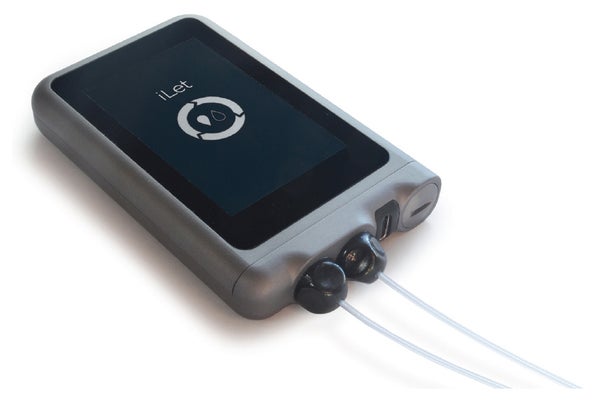
1. In June medical device maker Medtronic filed a premarket-approval application to the Food and Drug Administration for a “hybrid closed loop”—an insulin pump that analyzes data from a continuous glucose monitor and automatically adjusts insulin rates.* Users would still need to input insulin doses to account for meals. A study that followed 124 diabetic participants using the Medtronic device wrapped up in May and showed that the system was safe and could be trusted to autonomously determine doses.2. One of the largest clinical trials so far kicked off at the start of this year with 240 patients based throughout the U.S. and Europe. Led by researchers at the University of Virginia and Harvard University, along with a consortium of organizations, the trial will test the safety and effectiveness of a system that integrates an insulin pump, a continuous glucose monitor and a smartphone. The smartphone relies on an algorithm to analyze blood sugar readings and then instructs the pump on how much insulin to release. Two different algorithms will be tested.3. Beta Bionics is working on a device (above) that administers both insulin and glucagon, the hormone that raises blood sugar. With data from a continuous glucose monitor, its algorithm decides which hormone to release and how much. “Using both insulin and glucagon allows for tighter control of blood sugar levels,” CEO Edward Damiano says. He hopes to start clinical trials in mid-2017. An insulin-only version could receive approval as early as 2018.
On supporting science journalism
If you're enjoying this article, consider supporting our award-winning journalism by subscribing. By purchasing a subscription you are helping to ensure the future of impactful stories about the discoveries and ideas shaping our world today.
*Editor's Note (10/17/16): Medtronic received FDA approval on September 28.