
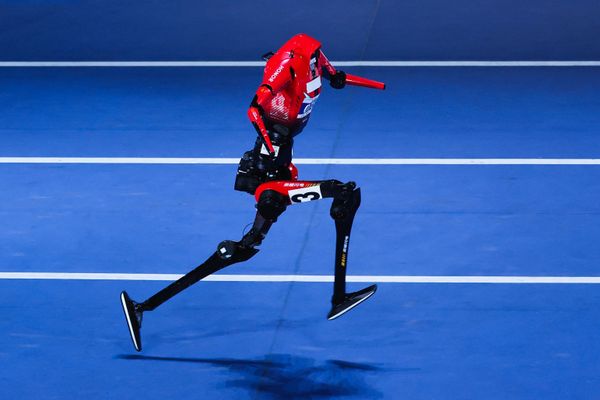
The World Humanoid Robot Games is back for a second year, and the bots are just as unsettling and impressive as they are ridiculous and unwieldy. On the first day of the Games, two humanoid robots beat Usain Bolt’s world record for the 100-meter dash—before crashing into a padded wall. Still, this five-day extravaganza showcases how far and how rapidly humanoid robots have come in even the 12 months since last year’s Games.

Lintao Zhang/Getty Images
The Games are taking place in Beijing and feature 51 events, including kickboxing, table tennis and soccer. Chinese companies produce the majority of humanoid robots, but machines representing 16 countries are participating in the Games this year, including Germany, Japan and the U.S.
On supporting science journalism
If you're enjoying this article, consider supporting our award-winning journalism by subscribing. By purchasing a subscription you are helping to ensure the future of impactful stories about the discoveries and ideas shaping our world today.
In theory, the robots’ superhuman feats are super cool. In practice, a black-and-white hunk of metal sprinting into a wall looks silly. But companies such as X-Humanoid, which created one of the robots that broke Bolt’s record (and got the best time overall), along with another that beat the human record for a standing high jump, are proving that they can achieve extraordinary feats of athleticism. Similar robots, especially those built for such specific purposes, however, may crash and burn (literally) when faced with the unexpectedness of human life—even in tasks as basic as folding laundry.
When a humanoid robot beat the human half-marathon record this April, Rodney Brooks, an emeritus professor at the Massachusetts Institute of Technology, told Scientific American that it’s important to recognize these robots aren’t actually interacting with the real world.
“When you see a performance of an [artificial intelligence] system or a robot on one thing,” he said, “that fools us into thinking that it has the same general competence as a human. And that’s a mistake people make.”
Indeed, most of the robots that ran the 100-meter dash on Saturday crashed into the padded wall at the end. One even caught fire. Another humanoid robot in the weight lifting event crashed into the judges’ table. These machines are far from having the agility, balance and mobility of a human athlete, even if they are faster or stronger in the moment.

Lintao Zhang/Getty Images
Still, they are catching up. One humanoid robot managed to successfully play tennis against a human, anticipating unpredictable moves and showing an ability to adapt in a real-world setting. We may not expect robots at the actual Olympics anytime soon, but they sure are fast—and gaining.