
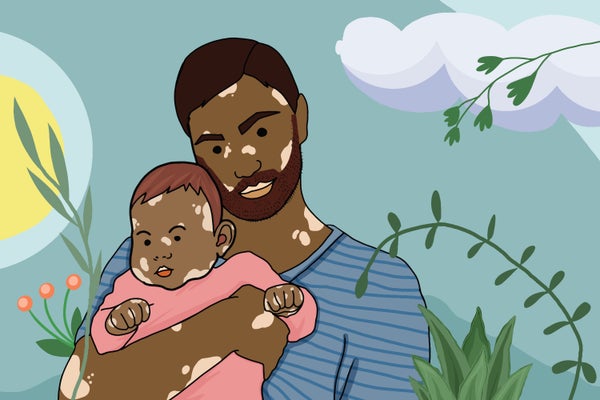
Whether to have kids can be one of the most momentous decisions a person makes. Countless factors can sway this choice. How will it affect your finances, your relationships or your career? Are you feeling pressure from your family or community? But one of the simplest, most personal considerations is whether, and how, having a child will affect your quality of life.
Here psychologists studying well-being have encountered what’s sometimes called the “parenting paradox”: parents report lower mood and more stress and depression in their daily lives than adults without children, and yet parents also tend to report greater life satisfaction in general. How do we make sense of this contradiction?
My colleagues and I have conducted research that can help us answer that question—and, along the way, highlight the complexity of what makes for a good life. I’m an emotion neuroscientist by training, and I want to use brain science to understand the messy and complicated feelings people experience in modern times. Feelings such as bittersweetness in reminiscences about an ex, simultaneous excitement and fear before a performance, or ambivalence about a big life change are not easily quantified with the positive-negative scales scientists use in research—still, they can tell us a lot about how we process emotion when it matters the most.
On supporting science journalism
If you're enjoying this article, consider supporting our award-winning journalism by subscribing. By purchasing a subscription you are helping to ensure the future of impactful stories about the discoveries and ideas shaping our world today.
During my postdoctoral training, I worked at the University of Southern California in a laboratory focused on the parenting brain. That team has been following a group of first-time fathers through their partners’ pregnancy and their development as parents. I realized that studying these new dads over time would give me a chance to investigate how parenting relates to a meaningful life and what occurs in the brain as people’s lives change.
Focusing on “meaning in life” allowed me to study an aspect of well-being that transcends daily stressors—because parenthood is famously stressful. Unfortunately, I cannot tell you what the meaning of life is, but in psychology it’s measured according to people’s subjective reports about whether their life is coherent and has an overarching purpose. This abstract feeling that “things make sense” has been shown to be a powerful predictor of overall well-being and mental health, even when people are going through objectively difficult times. Research has shown that individuals who perceive greater meaning in life are often more resilient against bigger mental health problems that might arise from adverse events such as global pandemics, severe disease and war trauma.
In our study of 88 new fathers, my colleagues and I predicted that about six months after the birth of their first child, most of them would report an increase in meaning compared with their reports during their partner’s pregnancy. Instead we found a roughly even split between participants experiencing an increased or decreased sense of meaning. Clearly, only about half of the fathers felt that life was more purposeful because they had become a parent. But that was just the first of several important insights.
Whether parenthood makes people happier has less to do with the children (sorry, kids) and more to do with long-term goals.
Of our participants, 35 agreed to undergo a form of brain imaging called functional magnetic resonance imaging (fMRI) both before and after the birth of their child. We used these brain scans to calculate how in sync each part of the brain was with the others. For people with strong functional connectivity, when activity increases in one area, it also ramps up in the rest of the brain. Other scientists have conducted fMRI studies with hundreds of people and found that this measure is related to increased meaning in life, potentially because greater connectivity in the temporal lobe and other emotion-related regions of the brain allows for better integration of emotional, self-oriented and abstract thinking.
We wondered whether this connectivity changes during a major life event such as having a child and, if so, whether this change is related to one’s sense of meaning and purpose. By comparing scans before and after our participants became fathers and reviewing their reports about their experiences, we modeled whether functional changes in different parts of someone’s brain predicted either their sense of meaning in life or their (positive or negative) feelings about parenting.
People with positive parenting feelings exhibited more connectivity changes in parts of the brain that are important for self-control (the middle frontal gyrus) and empathy (the supramarginal gyrus). Those with more negative parenting feelings showed changes in the sensory cortex and cerebellum, which may relate to hyperemotional sensitivity to sensory information. (If a baby’s cry always triggers a hyperstressful response, parenting is going to be very difficult.) In fathers whose sense of meaning stayed the same or increased, we noted more brain connectivity in regions such as the insular cortex and the temporal pole. These areas are crucial for integrating a person’s emotions and senses with their broader sense of identity, suggesting that fathers who more effectively engage in this contextualizing process during this new life stage tend to flourish.
With these differences, we can start to think more deeply about the parenting paradox. A father might feel overwhelmed by sleepless nights yet still contextualize this experience as part of a meaningful existence. In other words, the challenging emotions people deal with in the short term can become independent from a long-term sense of satisfaction, potentially because separate brain processes underlie the two feelings. Without this cognitive translation, day-to-day stressors may dictate a person’s overall sense of well-being, or the mix of and shifts between positive and negative parts of parenting may make life seem incoherent overall. Integrative regions such as the temporal poles and insular cortex allow both positive and negative events to fit together, potentially into a framework that facilitates long-term well-being.
This distinction fits into a larger body of research about how people build what scientists call a “coherent self-narrative,” or the story individuals tell about themselves. For example, past research has found that simply viewing oneself as being on a “hero’s journey” increases resilience. When someone can situate their feelings in a story that makes sense to them, it may not matter whether a particular situation is positive or negative as long as it fits into their longer-term goals. It seems that whether parenthood makes people happier therefore has less to do with the children (sorry, kids) and more to do with whether that goal of parenthood aligns with the individual’s thinking.
A recent analysis of data collected from German adults between 1984 and 2021 actually found no average difference in the well-being of middle-aged adults with children versus those without, although there was more variability for parents than there was for nonparents. What was really interesting, however, was the results for young adults. The most important factor for understanding these people’s well-being was not whether they had kids but the importance they placed on the goal of having kids. Childless young adults who placed high importance on becoming parents experienced lower life satisfaction as they grew older—if their perceived importance of this goal remained high as they aged.
But those people were a minority. Most of those child-free adults deemphasized that goal as they aged, and their happiness rating was then no different from that of adults with kids. This finding might highlight the takeaway for our study’s dads and for those questioning whether they want children: meaning can be created regardless of the choice made. Our adaptive brain can shift journeys, reimagine stories and help us thrive even when life throws us a curveball—or a screaming infant at two in the morning.
Are you a scientist who specializes in neuroscience, cognitive science or psychology? And have you read a recent peer-reviewed paper that you would like to write about for Mind Matters? Please send suggestions to Scientific American’s Mind Matters editor Daisy Yuhas at dyuhas@sciam.com.