
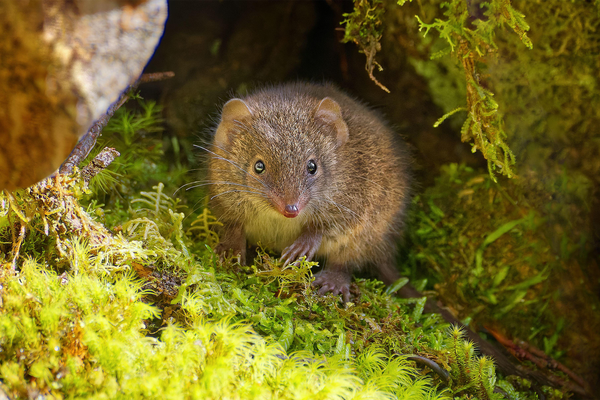
During the breeding season, time is not on a male antechinus’s side. These carnivorous marsupials, which resemble a mousy shrew, have just three weeks to mate with as many females as possible. They won’t get a second shot: once the breeding season ends, male antechinus drop dead.
To capitalize on their first and final breeding opportunity, the males commit nearly all of their time to reproduction—apparently at the expense of a good night’s sleep. In a paper published on Thursday in the journal Current Biology, a team of researchers found that the miniature marsupials sacrifice crucial hours of sleep each day to spend more time pursuing females.
“They stay awake to secure paternity before they die,” says Erika Zaid, a wildlife biologist at La Trobe University in Australia and the study’s lead author. “It’s a huge trade-off, but the most important thing for them is to pass on their genes.”
On supporting science journalism
If you're enjoying this article, consider supporting our award-winning journalism by subscribing. By purchasing a subscription you are helping to ensure the future of impactful stories about the discoveries and ideas shaping our world today.
Prospective antechinus papas aren’t alone in dealing with such pressure. This kind of one-and-done reproductive strategy, known as semelparity, is used by species ranging from cicadas to Pacific salmon. Only a handful of mammal species—all marsupials—practice semelparity. In antechinus, males alone face fatal repercussions; females can live an additional year and can participate in a second breeding season. The mass die-off of males after breeding, known as the “mating syndrome,” can get downright gruesome: scientists recently discovered that some male antechinus snack on their deceased competitors before meeting their own tragic fates.
To determine the toll of antechinus’ rare reproductive strategy, Zaid and her colleagues headed to southern Australia’s Great Otway National Park right before the mating season. The team baited traps with rolled oats, peanut butter, honey and bacon to capture members of two antechinus species. They took blood samples from agile antechinus (Antechinus agilis) before releasing them and collected 15 dusky antechinus (Antechinus swainsonii), 10 of which were males, and housed them in individual enclosures. This allowed the researchers to track the activity of each one before and during the breeding season. The scientists implanted tiny electroencephalographic (EEG) devices into each of the furry marsupials to measure how long they slept.
The team found that during the breeding season, male antechinus slept an average of only 12 hours a day for three straight weeks. While 12 hours sounds like a lot, it’s more than three hours less per day than the 15 hours they spent snoozing daily before the breeding season. One male took it even further, slashing its usual sleeping hours by more than half once the breeding season started. The blood samples from agile antechinus males also revealed reduced levels of oxalic acid. The decline of oxalic acid is a common biomarker associated with sleep loss.
The researchers say their study offers the first evidence for this type of sustained sleep restriction in any terrestrial mammal during its breeding season. But Mathew Crowther, a wildlife biologist at the University of Sydney in Australia, who was not involved in the new research, thinks other species of marsupials may also lose sleep when they are pressured to reproduce. “Antechinus are the most extreme, but I would not be surprised if other semelparous [species] sleep less during their breeding season,” he says. “They are so focused on mating with as many females, for as long as they can.” Some species, including antechinus, even forgo eating.
Despite running on limited shut-eye each night, the antechinus managed to maintain their torrid pursuit of mates—and researchers have recorded these animals participating in marathon mating sessions lasting 14 straight hours. Other animals have also exhibited similar feats of wakefulness; scientists have observed male Pectoral Sandpipers, members of a migratory shorebird species, spending up to 95 percent of their time awake and active during their three-week breeding season. And that extra activity appears to pay off: the sandpipers that sleep the least sire the most offspring.
Compared with these sandpipers, antechinus might seem relatively well-rested. “We actually expected these animals to lose more sleep,” Zaid says. With their demise imminent, it would make sense for male antechinus to forgo sleep entirely in order to maximize the chances of passing on their genes.
According to Zaid, the fact that male antechinus do still need to doze off “actually underlines the importance of sleep.” Even when they are racing against the clock, these doomed marsupials still require at least some shut-eye.