New Issue: Orbital Catastrophe Ahead? Read Now

Thomas Rosenbaum

The Caltech president on recommitting to American science

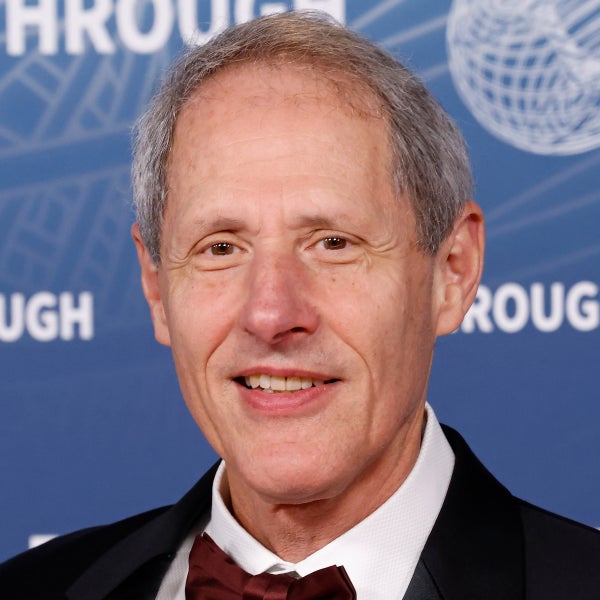
Thomas Rosenbaum photographed at the Breakthrough Prize Gala.

Taylor Hill/FilmMagic/Getty Images

This article is part of “The Young American Scientists,” which includes stories of 28 extraordinary scientists poised to change the world, as well as a deep look at the past, present and future of science and innovation in the U.S.

Join Our Community of Science Lovers!

Thomas Rosenbaum is president of the California Institute of Technology and a physicist known for his research in quantum mechanics and condensed matter physics. He became Caltech’s ninth president in 2014 after serving as provost of the University of Chicago.

[This interview was edited for length and clarity.]

How would you describe the current state of American science?


On supporting science journalism

If you're enjoying this article, consider supporting our award-winning journalism by subscribing. By purchasing a subscription you are helping to ensure the future of impactful stories about the discoveries and ideas shaping our world today.


Marked by high levels of funding uncertainty, which can be incapacitating; a lack of vision for dreaming big at the federal level; and deleterious overtones of politics. At the same time, a juggernaut of discovery and innovation.

What needs to change in American science?

A recommitment to being the destination of choice for the most talented, creative individuals from every background, perspective and geographical location.

What gives you optimism right now?

The problems to be explored are compelling, and the tools available to push the boundaries of exploration have never been as powerful. Are we alone in the universe? What can quantum computers do that no classical computer can approach? How will artificial intelligence change the boundaries of disciplinary inquiry? How can genomics and proteomics and the immune system be harnessed most effectively to treat disease? We may know the answers to all these questions in the next decade or two.

What’s your best advice for an early-career scientist?

Stay true to your passions. Future generations depend on you.

How has your field changed in the past few years?

Unprecedented opportunity but also too much of a herd mentality.

Subscribe to Support Independent Journalism

Great science journalism requires human expertise, time, effort and creativity. And it costs money. That’s why I and the journalists here at Scientific American hope you’ll join our community.

When you subscribe, you are supporting staff and freelance journalists who are passionate about telling science stories that are true, important and compelling. Our editors and reporters are often experts in their fields, which means they understand the nuances of big discoveries and can untangle the breakthroughs from the hype. With a subscription, you are also supporting rigorous fact-checking to ensure the words we publish are precise and accurate. And you’re supporting original illustrations, graphics and photos that bring you closer to an advanced laboratory, an ice sheet in Antarctica or a space mission in orbit. You’re helping us craft other types of high-quality journalism as well: Our newsletters are carefully written, edited and curated by staffers you have or will come to know and love. Our Science Quickly podcast is based on original reporting, collaboration with editors and scientists and exacting production.

Subscriptions keep this engine running so we can continue to deliver thoughtful, rigorous and independent science journalism to you. In an era of viral misinformation, this work is crucial. If you value what we do, I hope you’ll consider joining us as a subscriber

Thank you,

Jeanna Bryner, Editor in Chief, Scientific American

Subscribe