
In C.E. 331, Te K’ab Chaak ascended to the throne as the first ruler of the ancient Maya city of Caracol in what is today Belize. Archaeologists have learned about him through writings from years after his death as they have excavated the city over the past 30 years. But it wasn’t until this year that they found his tomb—completely by chance.
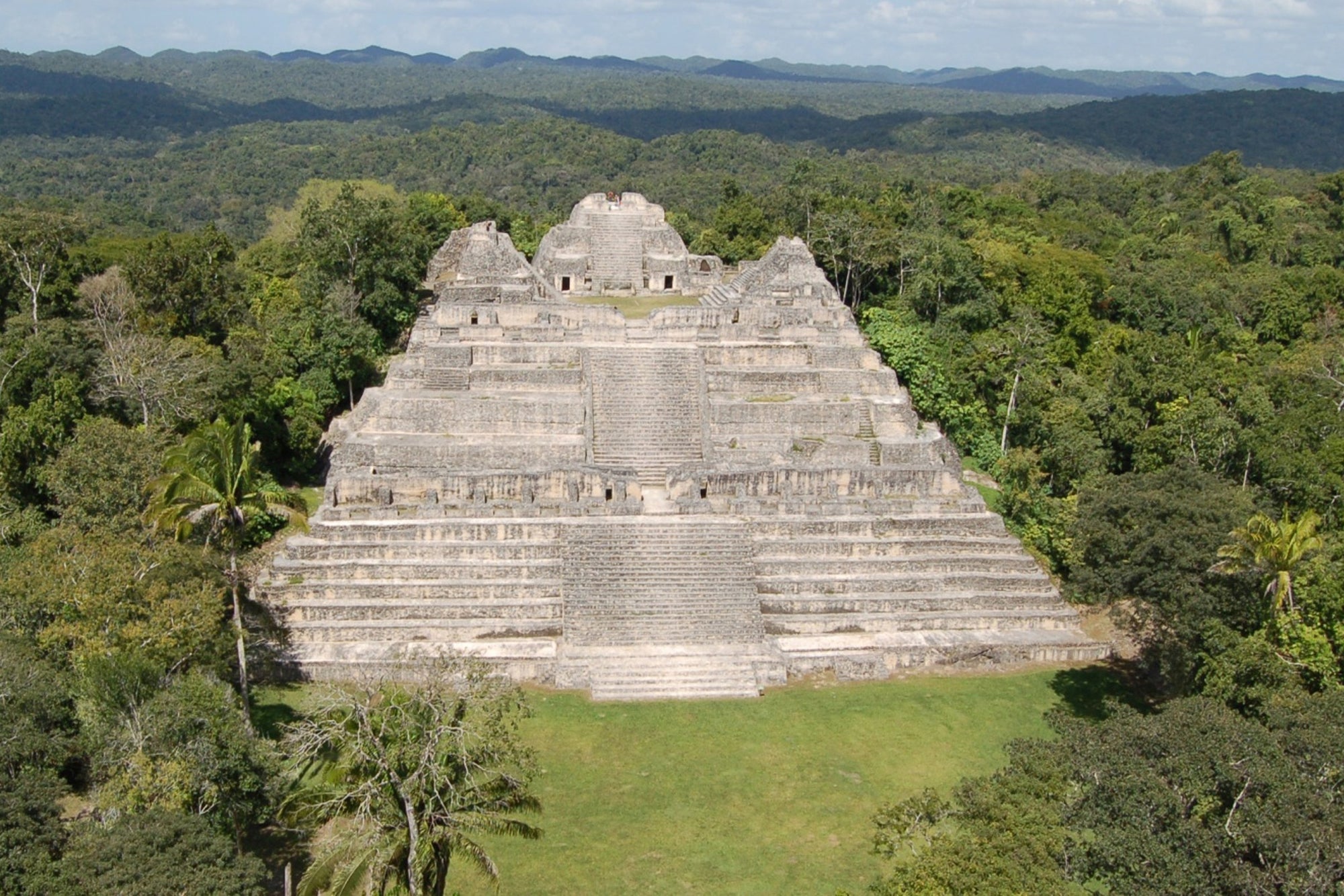
Caana, the central architectural complex at Caracol, Belize, rises 43.5 meters above ground level. Te K’ab Chaak's tomb was found under the canopy in an acropolis to the immediate right of Caana.
Caracol Archaeological Project/University of Houston
The Maya civilization began around 2000 B.C.E. and endured for more than 3,000 years. It included multiple city-states, such as Chichen Itza in modern-day Mexico and Tikal in modern-day Guatemala. Caracol began as a collection of small settlements that coalesced around 650 B.C.E, and it later became one of the largest cities in Maya history.
On supporting science journalism
If you're enjoying this article, consider supporting our award-winning journalism by subscribing. By purchasing a subscription you are helping to ensure the future of impactful stories about the discoveries and ideas shaping our world today.
In February married archaeologists Diane and Arlen Chase, both at the University of Houston, were digging in a site they had excavated many times before. As they broke through the bottom of one tomb, they discovered another chamber underneath. “If we continued one of our [excavations] 40 centimeters, we would have [found] it in a previous season,” Diane Chase says.
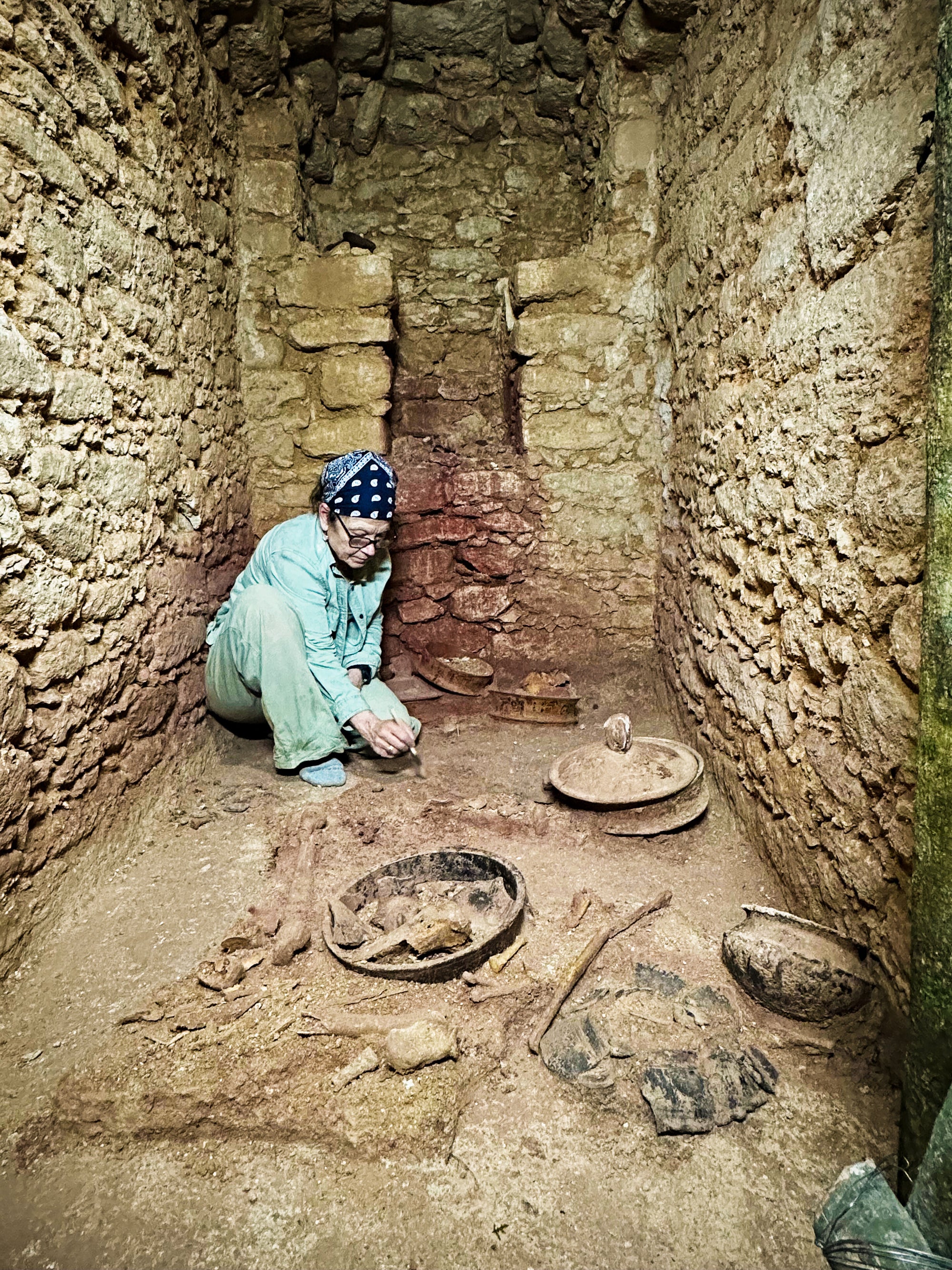
Diane Chase of the University of Houston investigates the tomb of Te K’ab Chaak, with vessels in the foreground and a jadeite mask to the left. Red cinnabar colors the wall behind her.
Caracol Archaeological Project/University of Houston
After forming a small hole in the chamber wall, the team was able to peek inside and quickly confirm this was the tomb of someone special. “We knew there was a body in there. We could see vessels; we could see red cinnabar [a red mineral powder]. It was pretty amazing, but it was covered with dirt, so we could see just the tops of this stuff poking out,” Arlen Chase says.
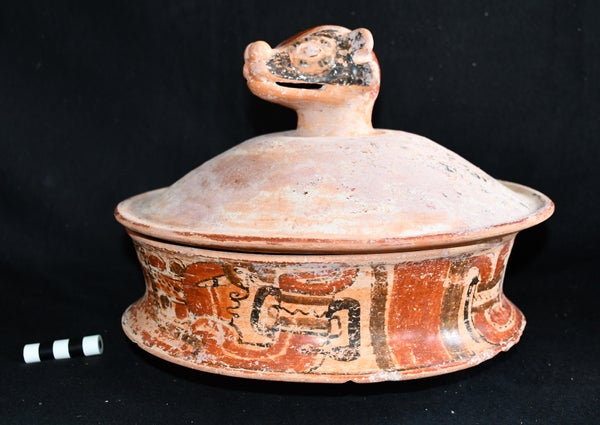
Once they gained entry into the tomb, the researchers found pottery vessels, intricately carved bone tubes, jade jewelry and—rarest of all—a mosaic death mask. In 40 years of work, the team has only found one other death mask—at a different Maya site. Death masks “are not that common,” Diane Chase says. “There are not that many in the Maya world, so that told us [that the person buried in the tomb was] a ruler.”
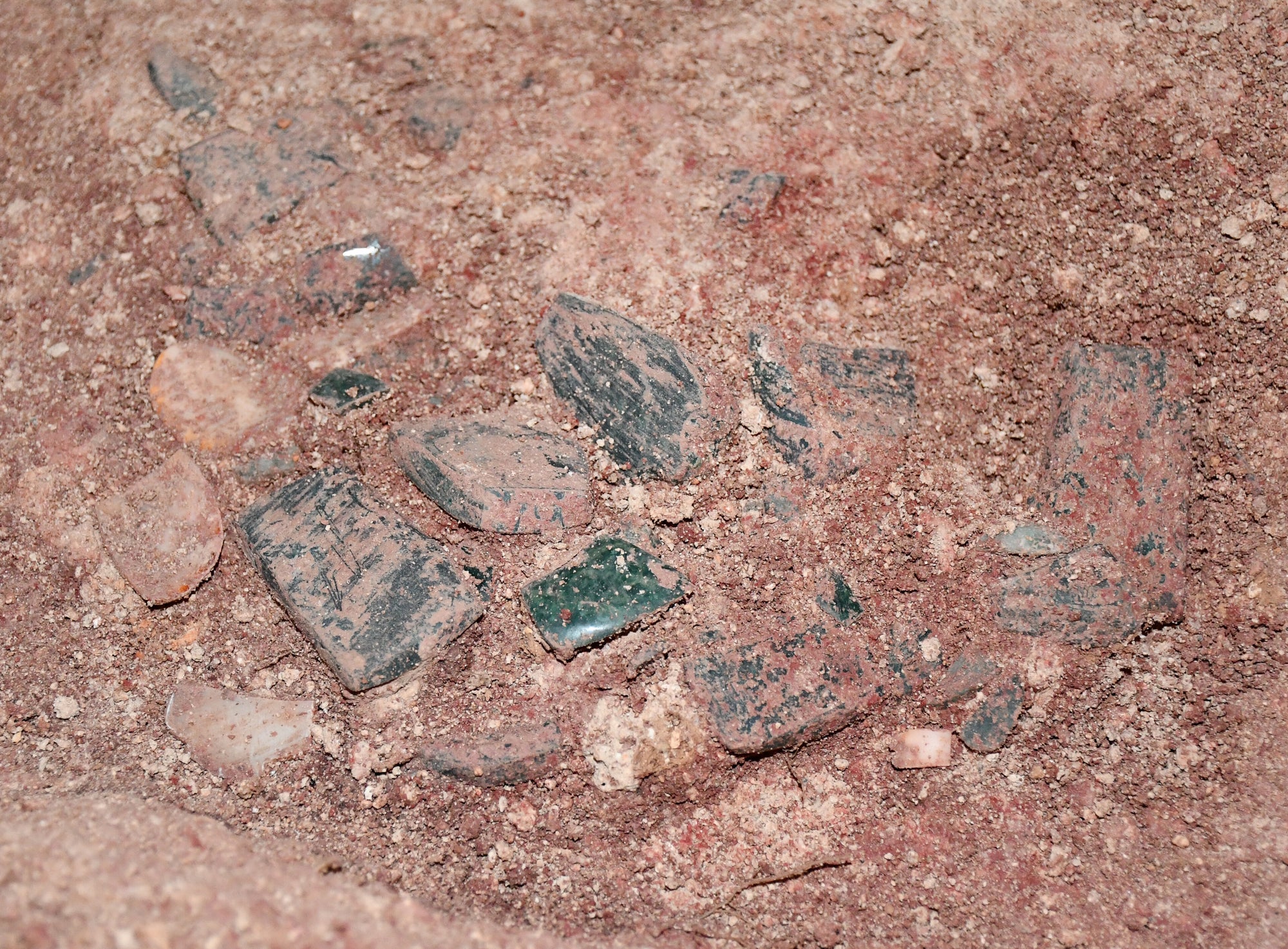
The rare jadeite mosaic mask, as it was discovered, rests within the tomb’s dirt floor at Caracol. Large pieces of jade are visible. The mask is now being carefully reconstructed—from 89 pieces of jade and 26 pieces of shell—to restore its original form.
Caracol Archaeological Project/University of Houston
Although the tomb was distinctively Maya, previous findings from the site suggest that Te K’ab Chaak supported diplomatic relations between Maya people and those in Teotihuacan, an independent, non-Maya city in what is now Mexico that was later occupied by the Aztecs. Despite the 1,200 kilometers separating the two cities, burials the team had previously uncovered at the same site showed a cremation style that is distinctively Teotihuacan, not Maya, which placed the start of Teotihuacan interactions in the Maya region around C.E. 350, earlier than was previously estimated. And although previous theories posited that the people of Teotihuacan had invaded Maya cities, the artifacts from Caracol suggest the situation was far more nuanced, with both cultures being aware of and influenced by each other’s practices.
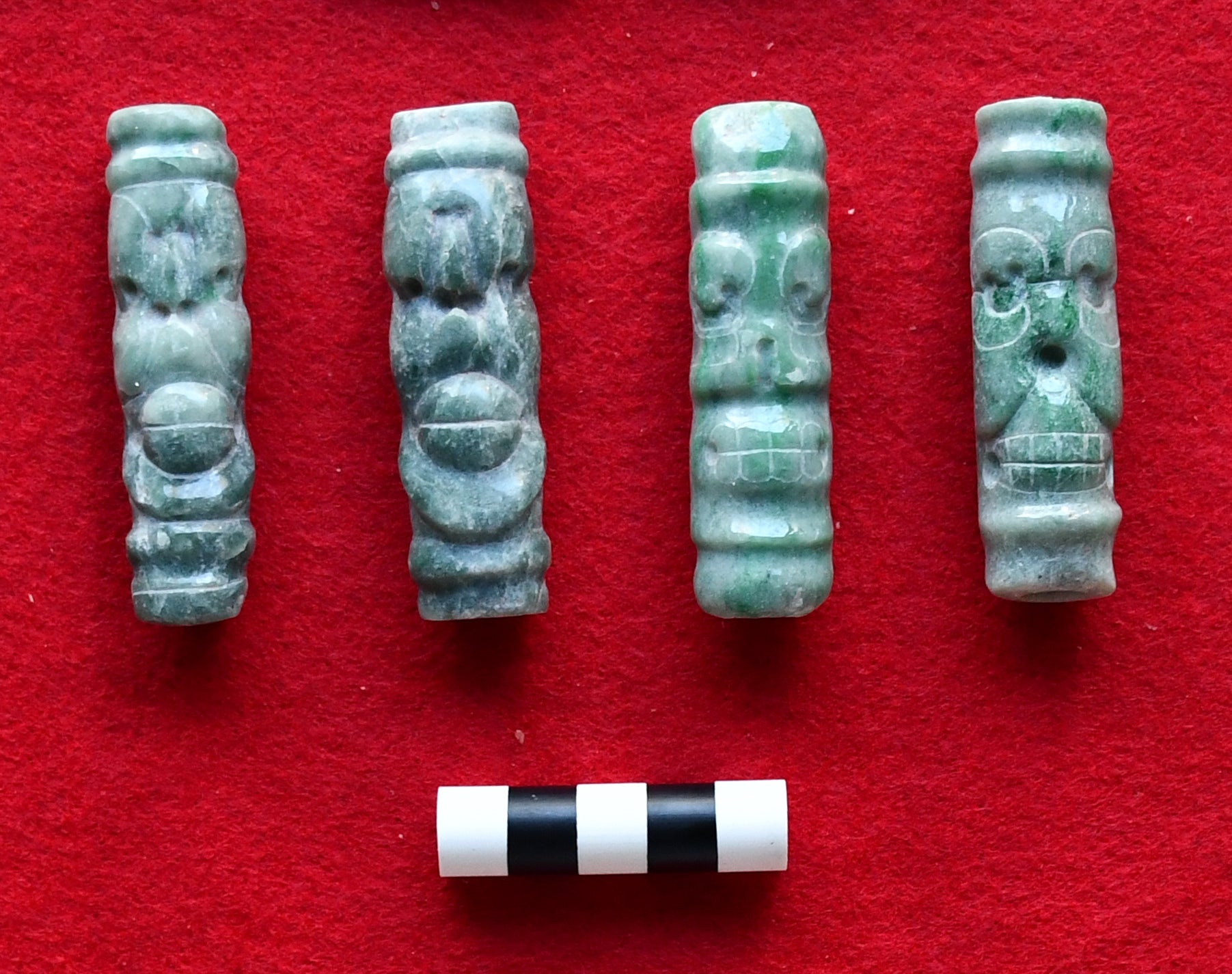
Inside the tomb were four jadeite tubular beads showing live and dead spider monkeys.
Caracol Archaeological Project/University of Houston
“This is quite a significant discovery, considering that after 40 years of research, this is the first time a jadeite death mask has been recovered in the context of a royal tomb,” says Melissa Badillo, director of the Institute of Archaeology in Belize. Badillo was not involved in the discovery, but the Institute of Archaeology provided the research permit for the site. “We anticipate that with continued research and analyses, we will learn a lot more about Te K’ab Chaak and his role in the development of Caracol.”
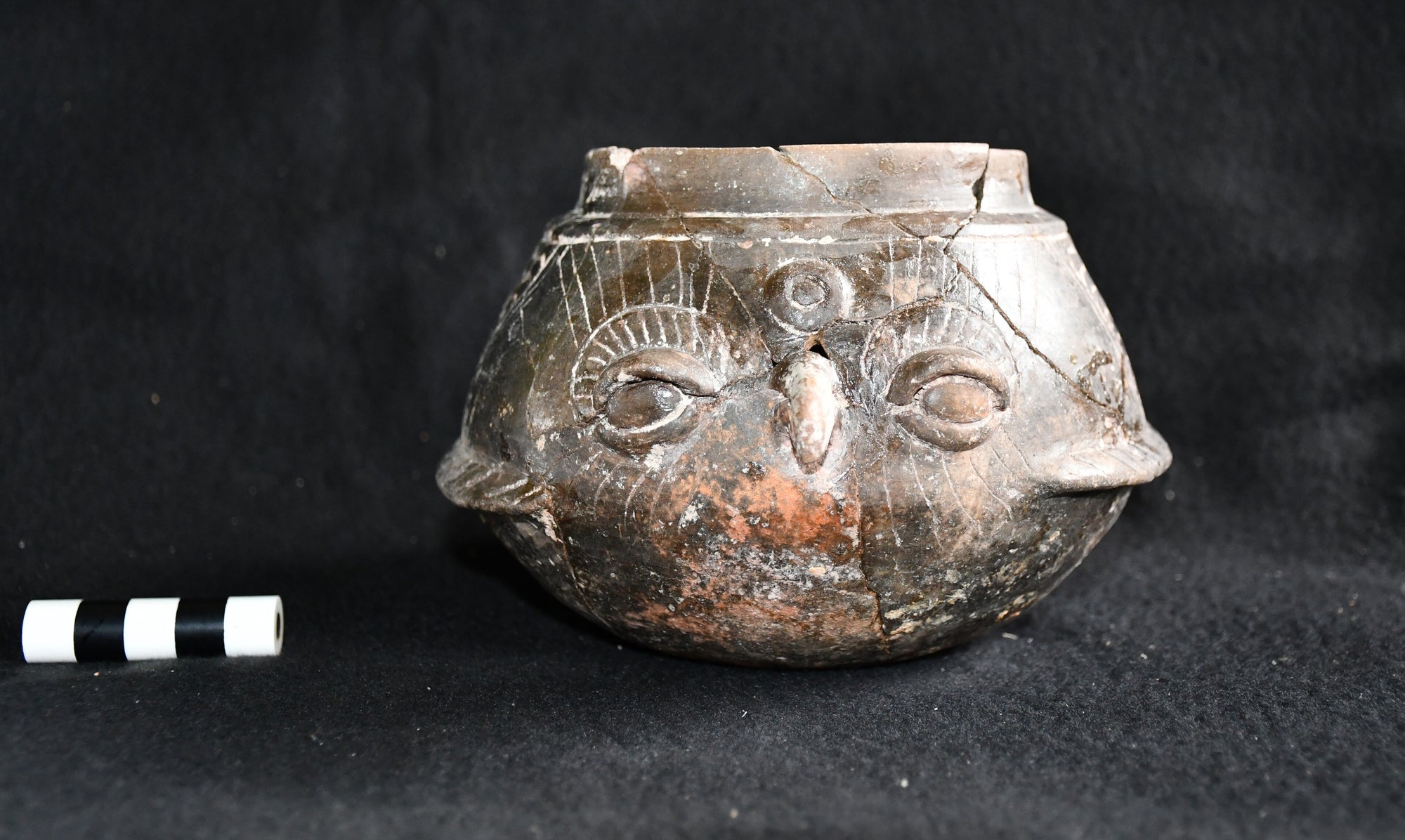
The team found a ceramic vessel modeled in the form of an owl in the tomb. It matches the Early Classic period archaeologists Diane and Arlen Chase were investigating, enabling them to date the tomb to around C.E. 350.
Caracol Archaeological Project/University of Houston
The research team is still analyzing the contents of the burial chamber, reconstructing the jade death mask, and conducting DNA and isotope analyses on the skeletal remains. The researchers plan to present their findings in August at a meeting at the Santa Fe Institute.