
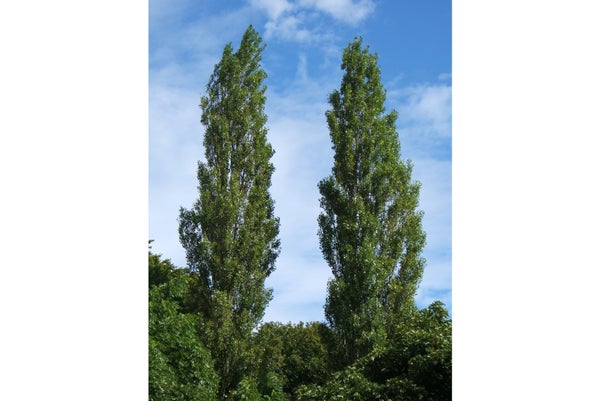

Groundwater pollution might have a new nemesis: trees with a boosted microbiome. Scientists recently harvested a particularly effective strain of toxin-degrading bacteria from a specific poplar tree and transferred it to others. This improved the trees’ natural ability to break down the carcinogen trichloroethylene (TCE)—an industrial solvent that has leached into underground sources near waste sites across the U.S. Study results, published in September in Environmental Science & Technology, suggest such trees could be planted over areas of heavily tainted groundwater as an efficient and affordable cleanup method.
Ordinary poplars are sometimes planted to help remove TCE from lightly contaminated groundwater. But that does not always degrade the chemical fully, and heavier cleanups may require bioremediation machines that involve often prohibitive sums between $700,000 and $3 million for installation alone. In earlier research, Sharon Doty, a plant microbiologist at the University of Washington, and her colleagues had genetically modified a poplar to cope with high TCE levels. Like all GM plants, however, it required lengthy environmental impact testing that deterred potential planters.
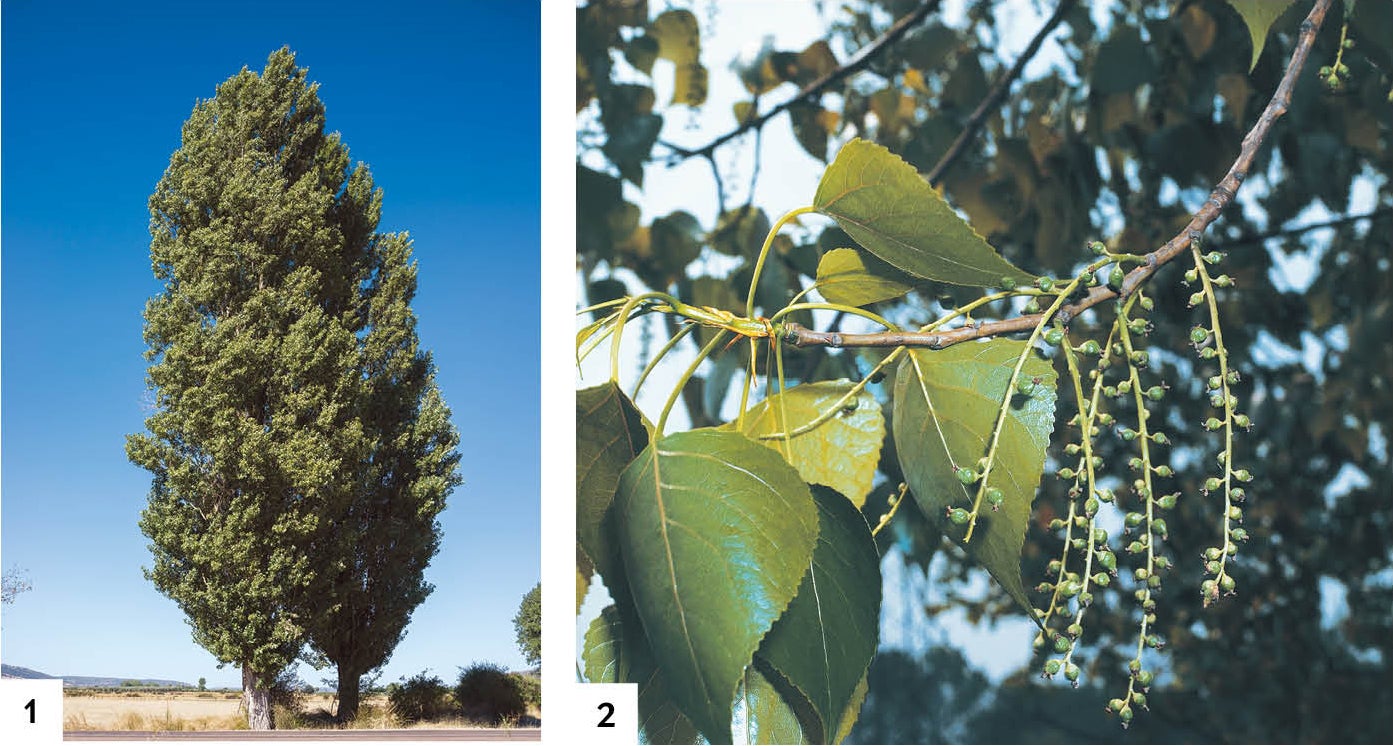
Black poplars (Populus nigra) (1) and their leaves and catkins (2). Credit: Getty Images
On supporting science journalism
If you're enjoying this article, consider supporting our award-winning journalism by subscribing. By purchasing a subscription you are helping to ensure the future of impactful stories about the discoveries and ideas shaping our world today.
This time around, no such testing would be necessary. Doty and her team first crossbred two poplar species. One of Doty's students collected the microbe, an Enterobacter strain dubbed PDN3, from a Wisconsin poplar cutting. The researchers soaked their hybrid saplings in the bacteria, then planted them alongside untreated trees at three heavily TCE-contaminated Superfund sites—hazardous waste sites targeted for cleanup by the U.S. government—near San Francisco.
Three years later the benefits were obvious. Soil surrounding the inoculated poplars had 50 percent more chlorine ions—the harmless remnants of degraded TCE molecules—than the dirt around their untreated counterparts. The microbe-enriched trees also had about 30 percent wider trunks, indicating healthier growth. Jerry Schnoor, an environmental engineer at the University of Iowa, who was not involved in the study, says the team's methods are impressive. He notes that the trees lowered the surrounding TCE concentration below the EPA-mandated drinking-water limit. “I think that is a big story,” he says.
Doty and her colleagues are now sleuthing out the gene that enables PDN3 to accomplish this feat. They are also measuring other benefits the bacterium may convey to the plants. Doty says she has high hopes for the trees’ future: “Turn Superfund sites into parks?”