
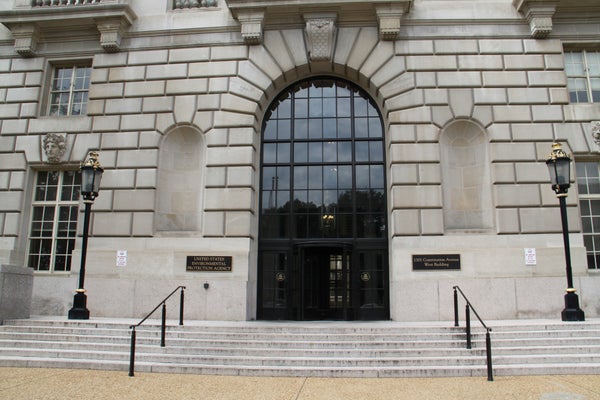
Officials from President Donald Trump's administration are currently reviewing the content of the U.S. Environmental Protection Agency's website, but have no immediate plans to remove the website content on climate change, The Hill quoted an EPA spokesman as saying on Wednesday.
Sources at the EPA had told Reuters on Tuesday that administration officials asked the agency to take down the climate change page on its website, and that EPA staff had pushed back in an effort to convince the administration to preserve it.
"We're looking at scrubbing it up a bit, putting a little freshener on it, and getting it back up to the public,” spokesman Doug Ericksen told political website The Hill. "We're taking a look at everything on there."
On supporting science journalism
If you're enjoying this article, consider supporting our award-winning journalism by subscribing. By purchasing a subscription you are helping to ensure the future of impactful stories about the discoveries and ideas shaping our world today.
Ericksen did not immediately respond to requests from a Reuters reporter for comment.
A source at the EPA, who asked not to be named, told Reuters on Wednesday that the EPA's Office of General Counsel was now "walking through pages on the site" to see what was legally removable, and what legally needed to remain.
The page includes links to scientific research, emissions data from individual industrial facilities, and the multi-agency Climate Change Indicators report, which describes trends related to the causes and effects of climate change.
Myron Ebell, who helped guide the EPA's transition after Trump was elected in November until he was sworn in last week, said he expected the climate page to eventually be taken down, but that the "links and information will be available."
Some EPA staff have expressed concern that Trump, a climate change doubter, could seek to sideline scientific research showing that carbon dioxide emissions from burning fossil fuels contributes to global warming.
Trump campaigned on a pledge to boost the U.S. oil and gas drilling and coal mining industries by slashing regulation. He also promised to pull the U.S. out of a global pact to fight climate change - a position he has softened somewhat since his election by saying he would "keep and open mind" on the deal.
National Public Radio reported earlier on Wednesday that scientific findings by EPA staff will likely face a case-by-case review by the Trump administration before being released, citing EPA spokesman Ericksen. He also did not say whether such a review would be permanent.
Trump appointed Oklahoma Attorney General Scott Pruitt, a longtime foe of the EPA who has led 14 lawsuits against it, as the agency's administrator. The Senate environment committee held a tense seven-hour confirmation hearing for Pruitt last week. No vote on his nomination has been scheduled yet.
(Reporting by Valerie Volcovici, Susan Heavey and Ian Simpson; Editing by Alan Crosby